Let's Play Native American: A Preschool Teaching Dilemma
Amy Rothschild, a past contributor to The Remake, returns with a reflection on a challenging situation that arose on her school's newly built nature playscape. How do we as educators, committed to giving children voice, navigate situations in which children's choices challenge our adult assumptions about inclusion and justice?
One autumn morning in Washington, DC, I stood on the playground spotting my students, ages four to six, on the monkey bars. I observed one girl pull her friend on the floral-patterned fleece. “Cora, come on!” she said. “Let’s play Native Americans.” The two ran off together. Immediately I turned towards them. Immediately I thought of my mom, her voice chagrined with shame, telling me how the neighborhood kids used to play “Cowboys and Indians” in the nineteen-fifties. I pictured black-and-white country Westerns and shooting games and war whoops – dehumanizing caricatures used to justify genocide.
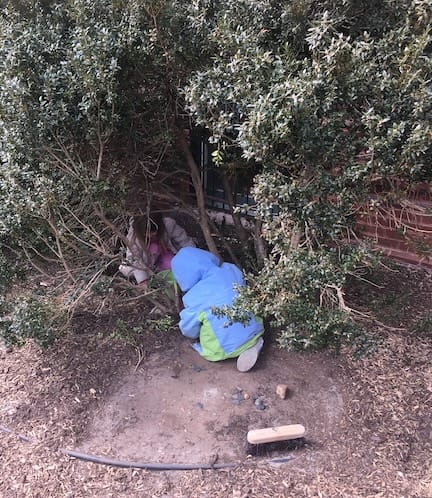
As I watched these girls squat near a bush, I saw something quite different. One child used a stick to dig a small hole, and the other ran off to the playground’s edge, towards a scattering of prickly brown sweetgum pods. With one hand she held out the hem of her cotton shirt, creating a bowl to collect them. Watching her, I recalled my childhood afternoons circling a holly tree in my backyard, picking small red berries and placing them in a plastic beach pail. I had called my enterprise, “prairie days.” Now, my student balanced sweetgum pods on her outstretched shirt and made her way back to her friend.
I remember asking the girls what they meant, and them shrugging me off, absorbed as they were in their play. I don’t remember how much I pressed that day, but I do remember mulling the issue, turning it over and spreading it before me like the trifold paper towels I set out on trapezoid tables at snack time, laying it out like so many red and blue vinyl rest mats, weighing it as I scooped counting bears into the cups of a balance scale.
The truth is when I heard these White preschoolers say they were playing “Native Americans” I didn’t just picture kids in the fifties, or country Westerns. I pictured the group of colleagues whom I was working with to strengthen the school’s diversity, equity, and inclusion curriculum that year, 2017, and how their eyebrows might jump if they walked by and heard my students playing “Native American.” I thought of mentors of mine who led campaigns to abolish Columbus Day in favor of Indigenous Peoples' Day, how disappointed they would be. I thought of the kids going home and telling their parents they were playing Native Americans, and some of the parents wondering what kind of school this was.
These scenes I imagined were overstated — but they reveal to me now, nearly ten years later, the ways my ego informed my teaching. I viewed myself as a certain kind of teacher, and this kind of teacher did not have her students trace their hands in the shape of turkeys on Thanksgiving or teach the finger play I had learned as a kid, “Ten Little Indians.” This kind of teacher did not have students who played “Native American.”
Then it occurred to me: of course the girls were playing Native Americans. Both had older siblings in second grade, a class immersed in an extended social history of our school’s region. Objective: Students can identify Eastern Woodland and Plains Indian regions on a map. Objective: Students understand that geographical groupings of Indigenous Tribes are made up of many individual groups with their own traditions and languages. Furthermore, our school had just installed— yes installed — a teepee on the playground, a spot where the girls sometimes sat counting those sweetgums.
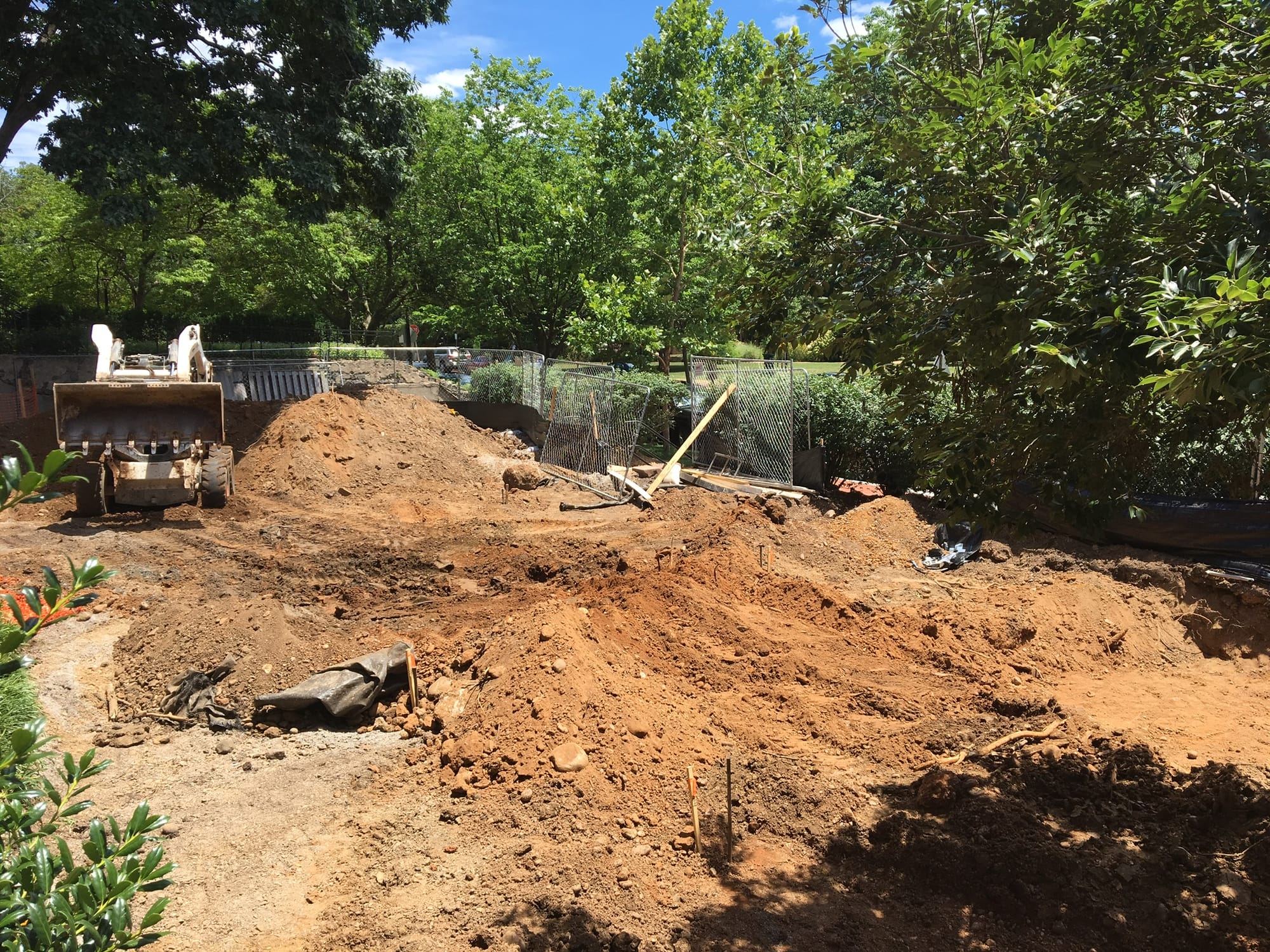
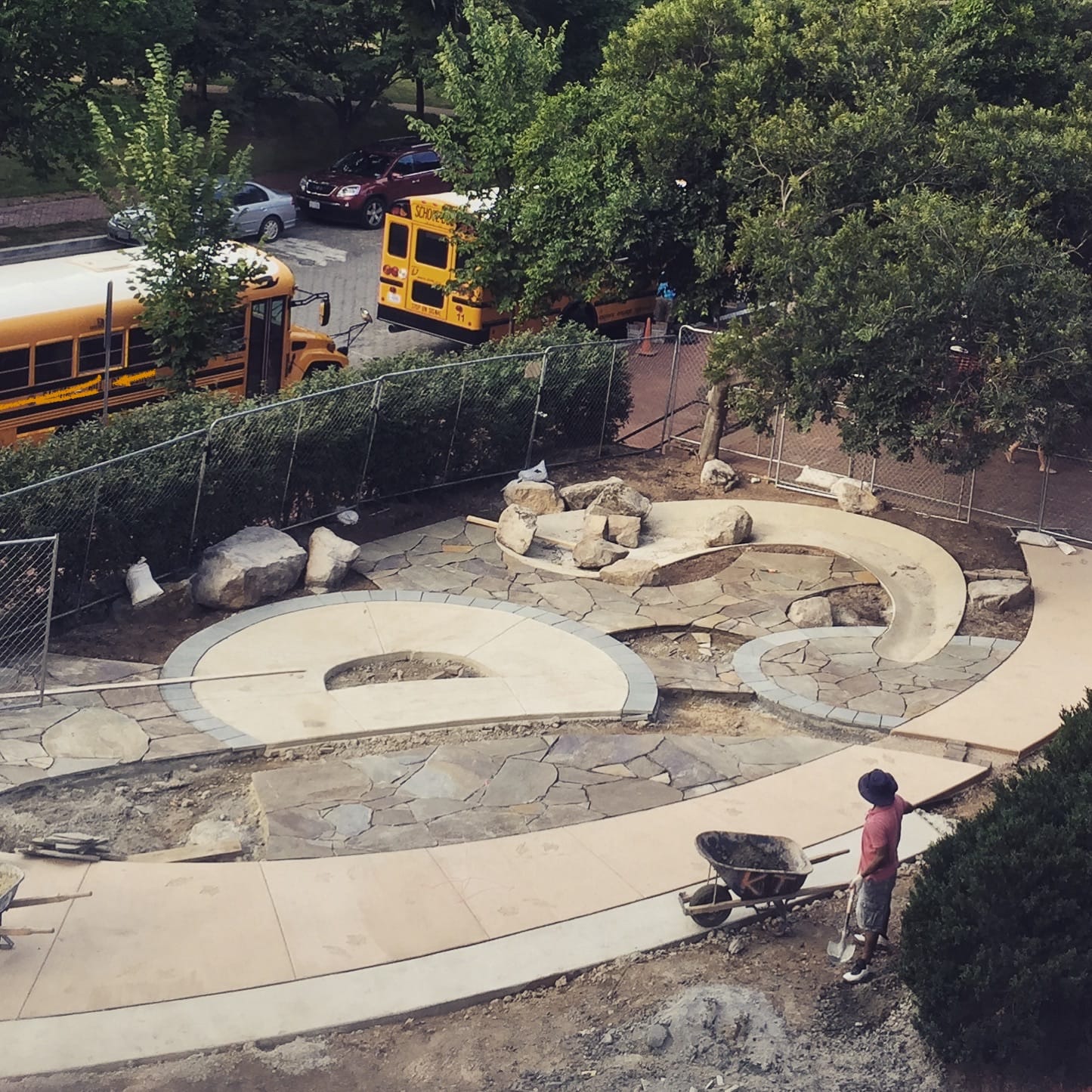
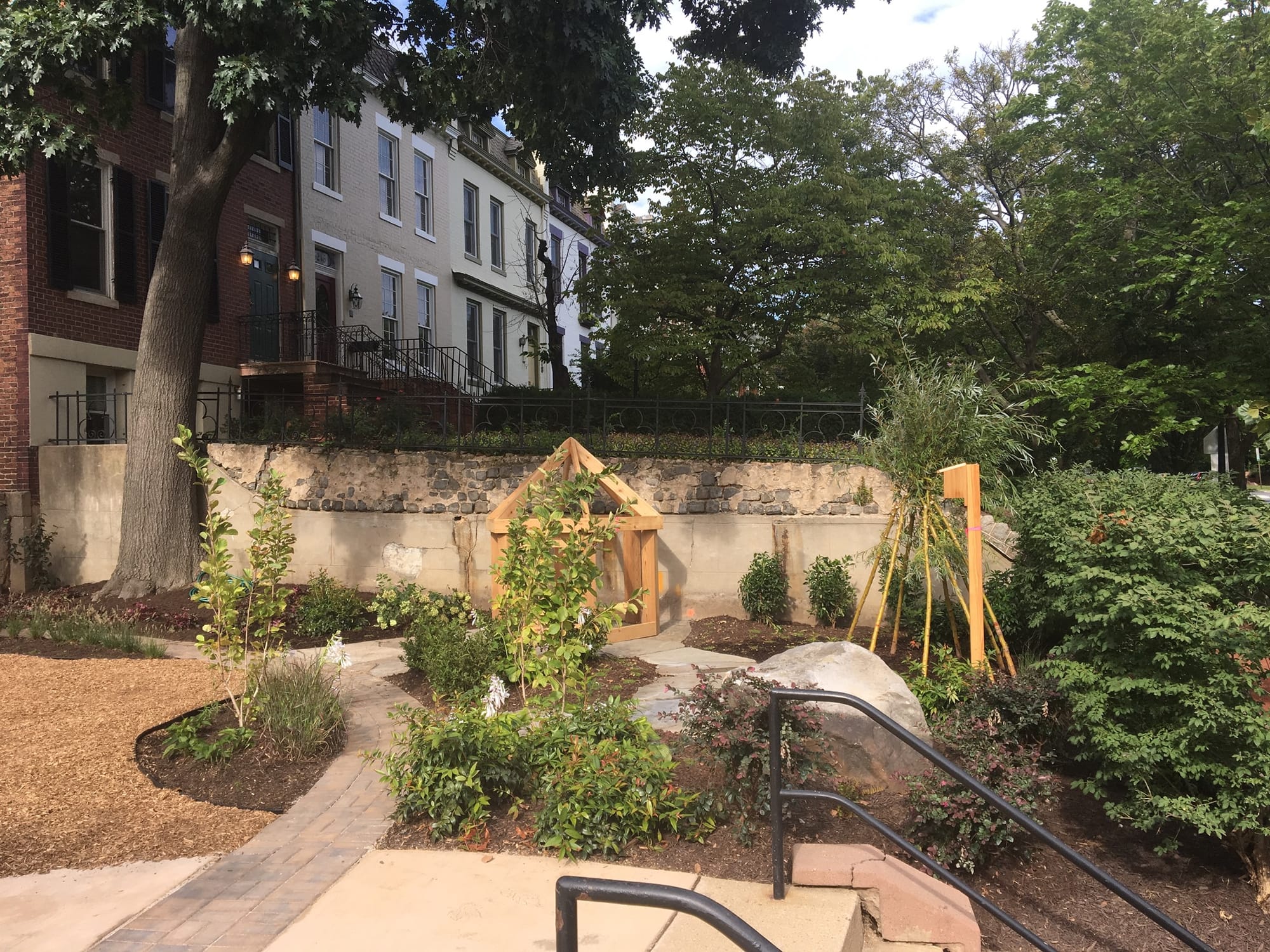
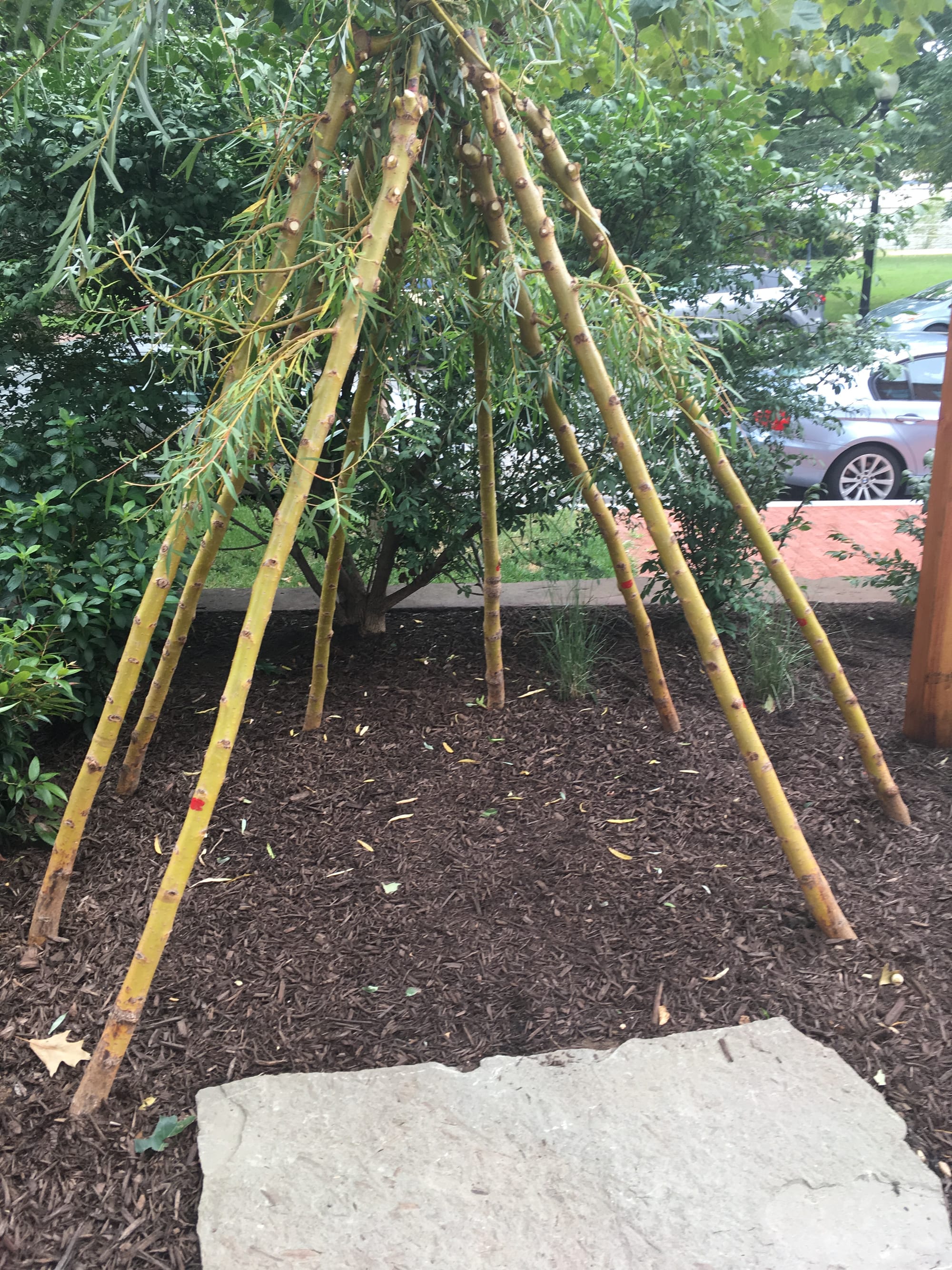
Construction phases of the nature playground at the author's school included installation of a working water pump and basin, and a beanpole teepee.
For at least two years the school had been dreaming up, fundraising for, planning, and finally installing a nature-based playground. We teachers had oohed and ahhed as a landscape architect showed us design plans: tree stumps the children could roll or sit on, an indented cement trough with a working water pump and array of rocks of assorted sizes. In one corner of the playground, a cone of bean plants that could fill in over time and become a bean “teepee.” As I thought it over while putting up chairs at the end of the school day, I wondered: What did we expect? We hadn’t asked ourselves: what would using natural materials respectfully and with interest be called?
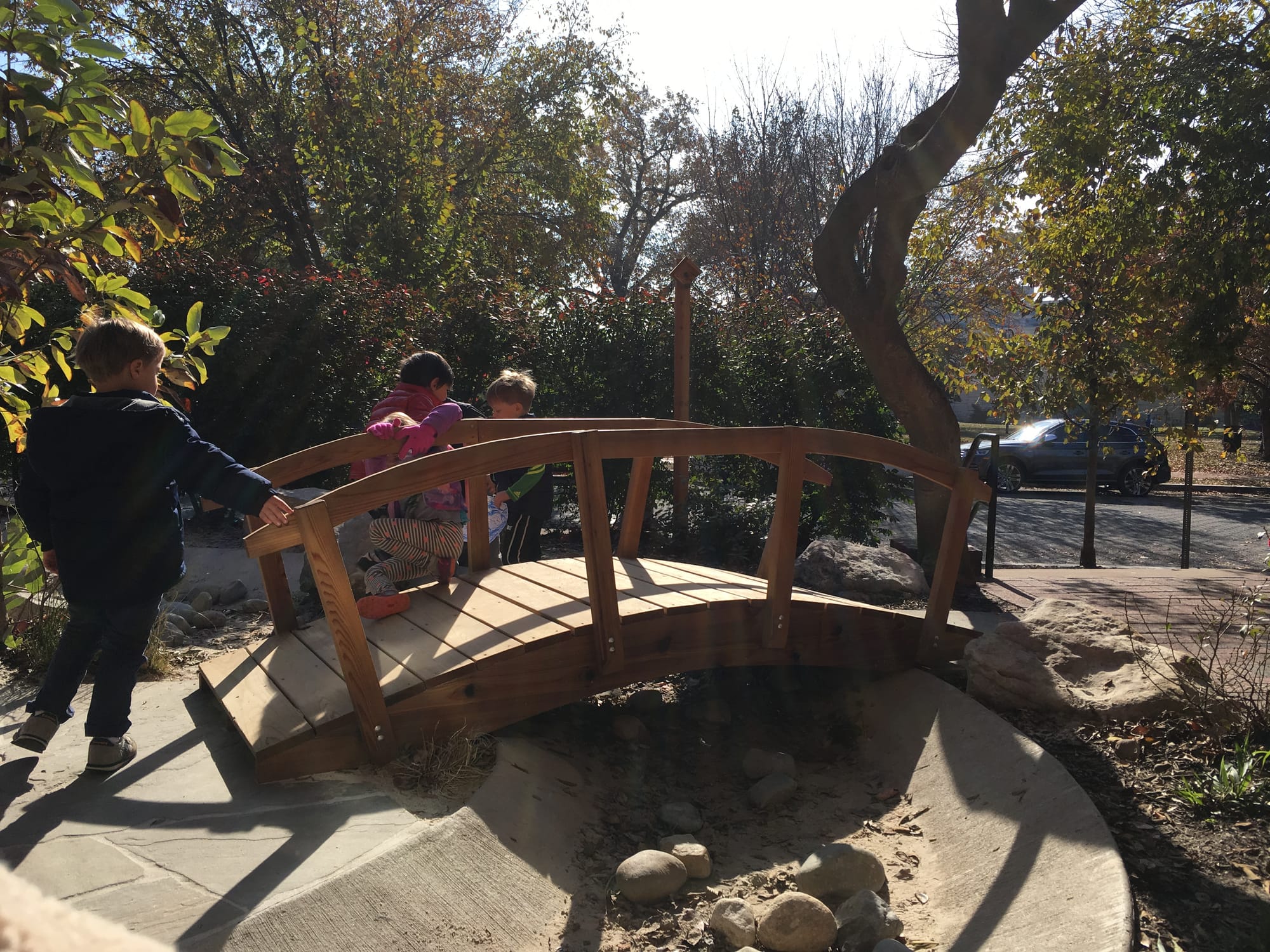
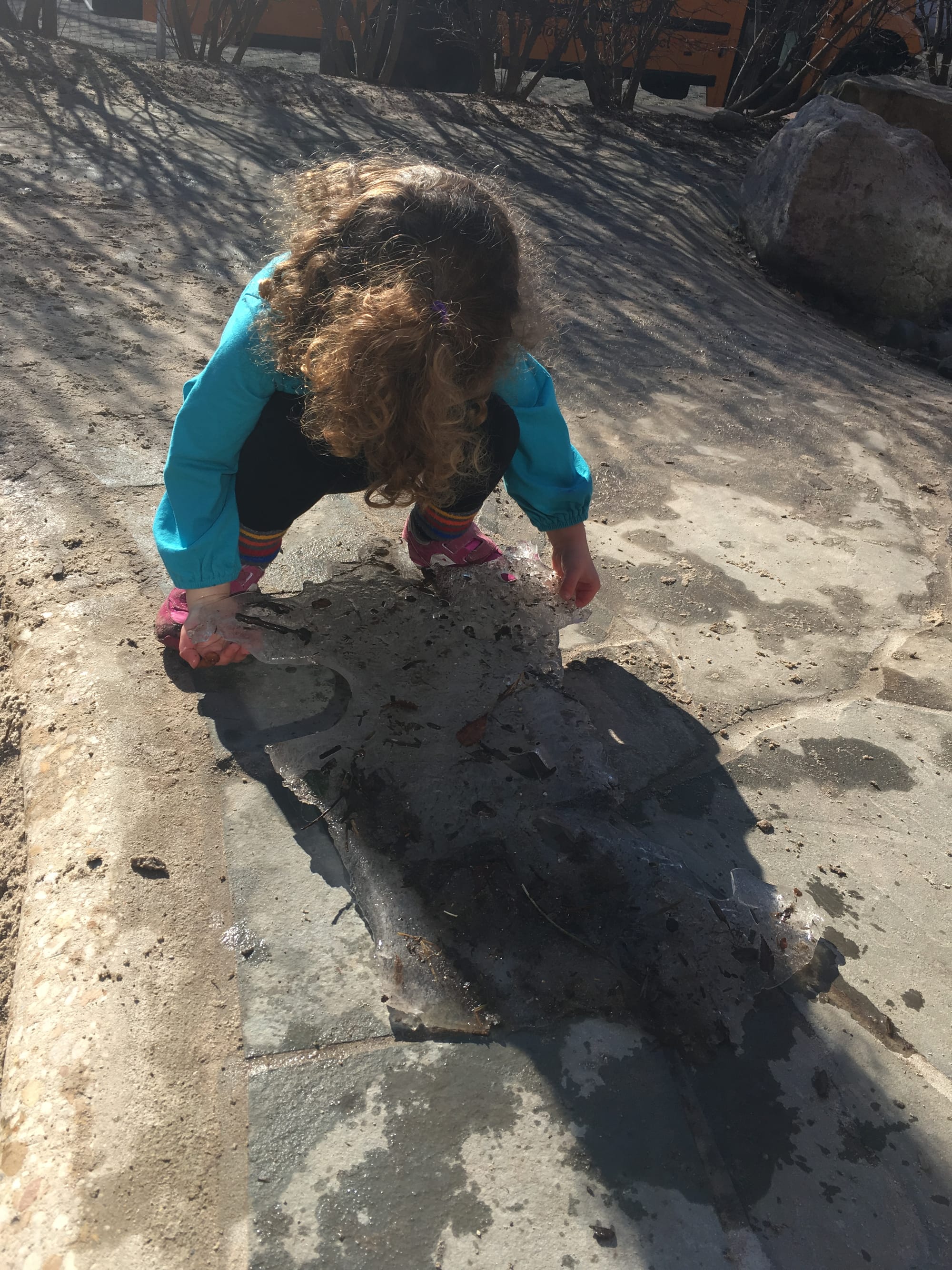
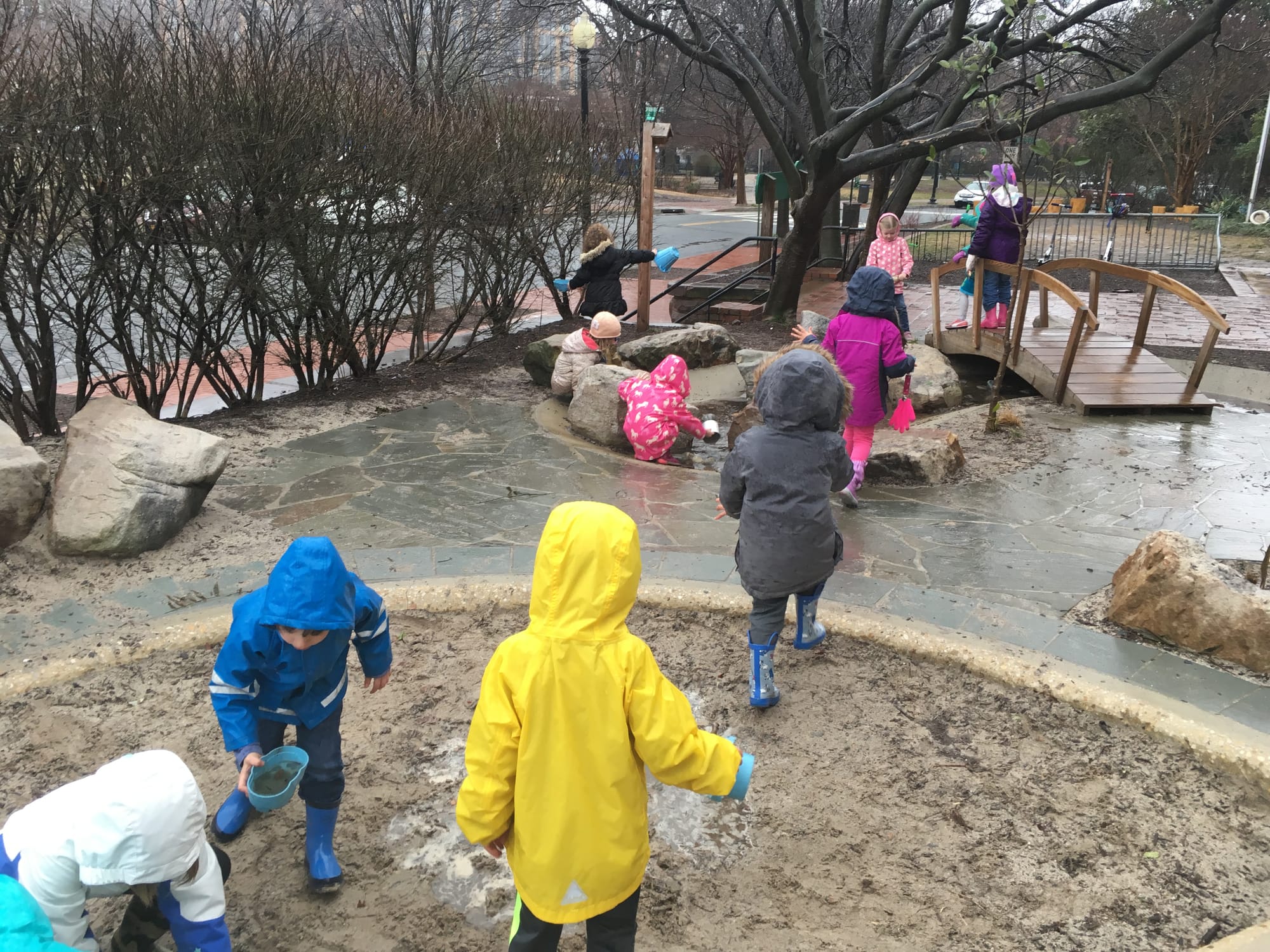
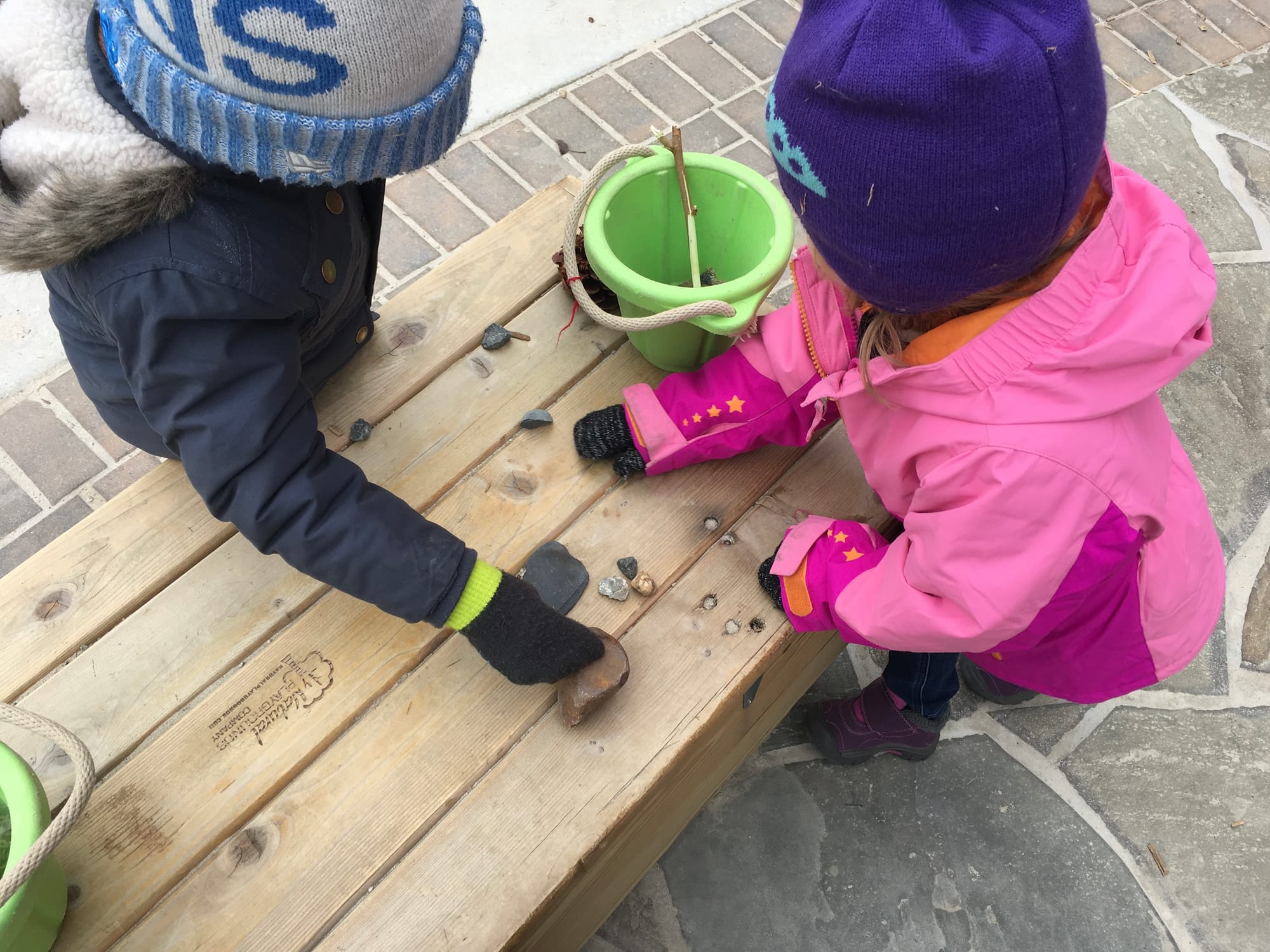
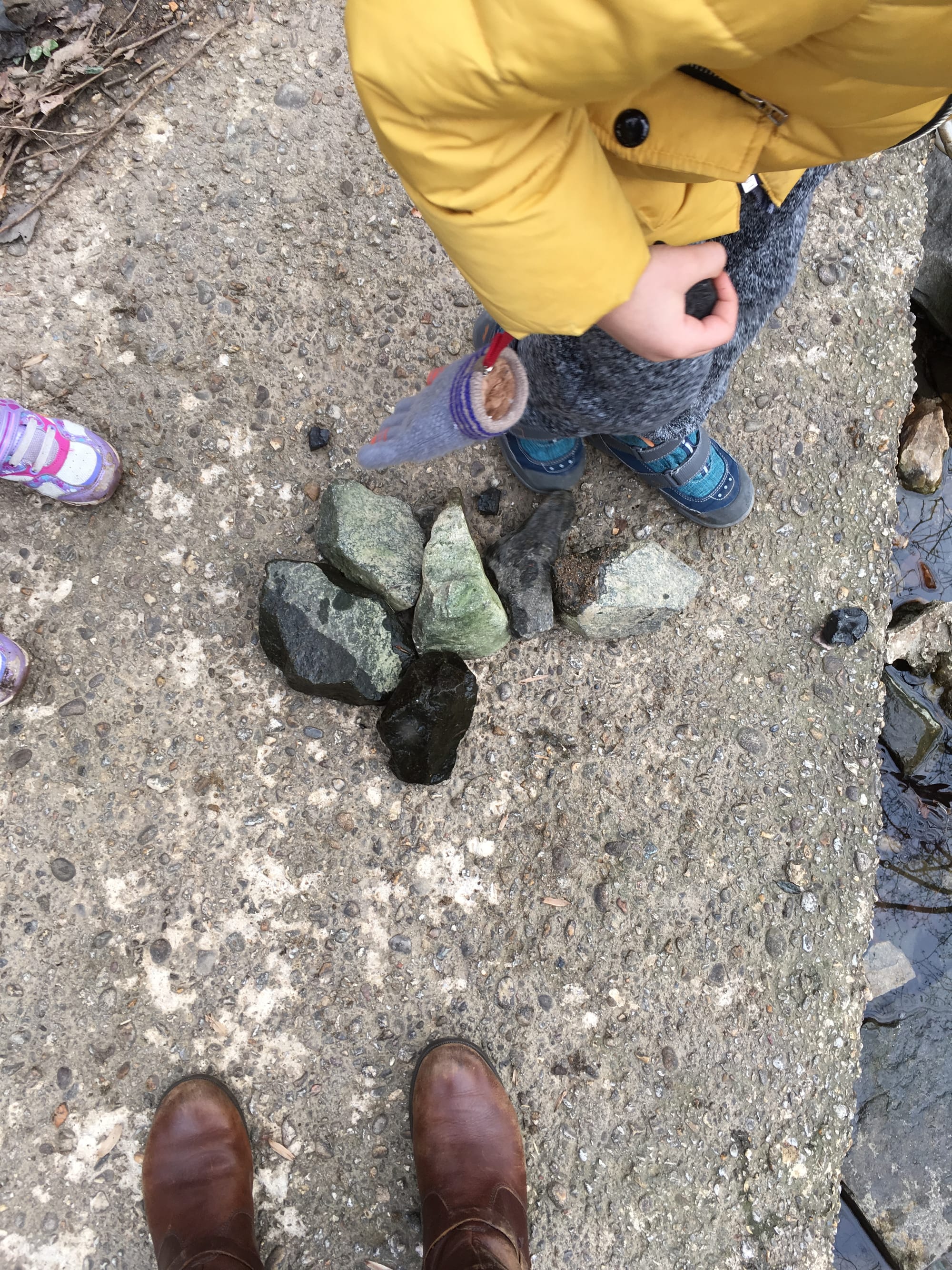
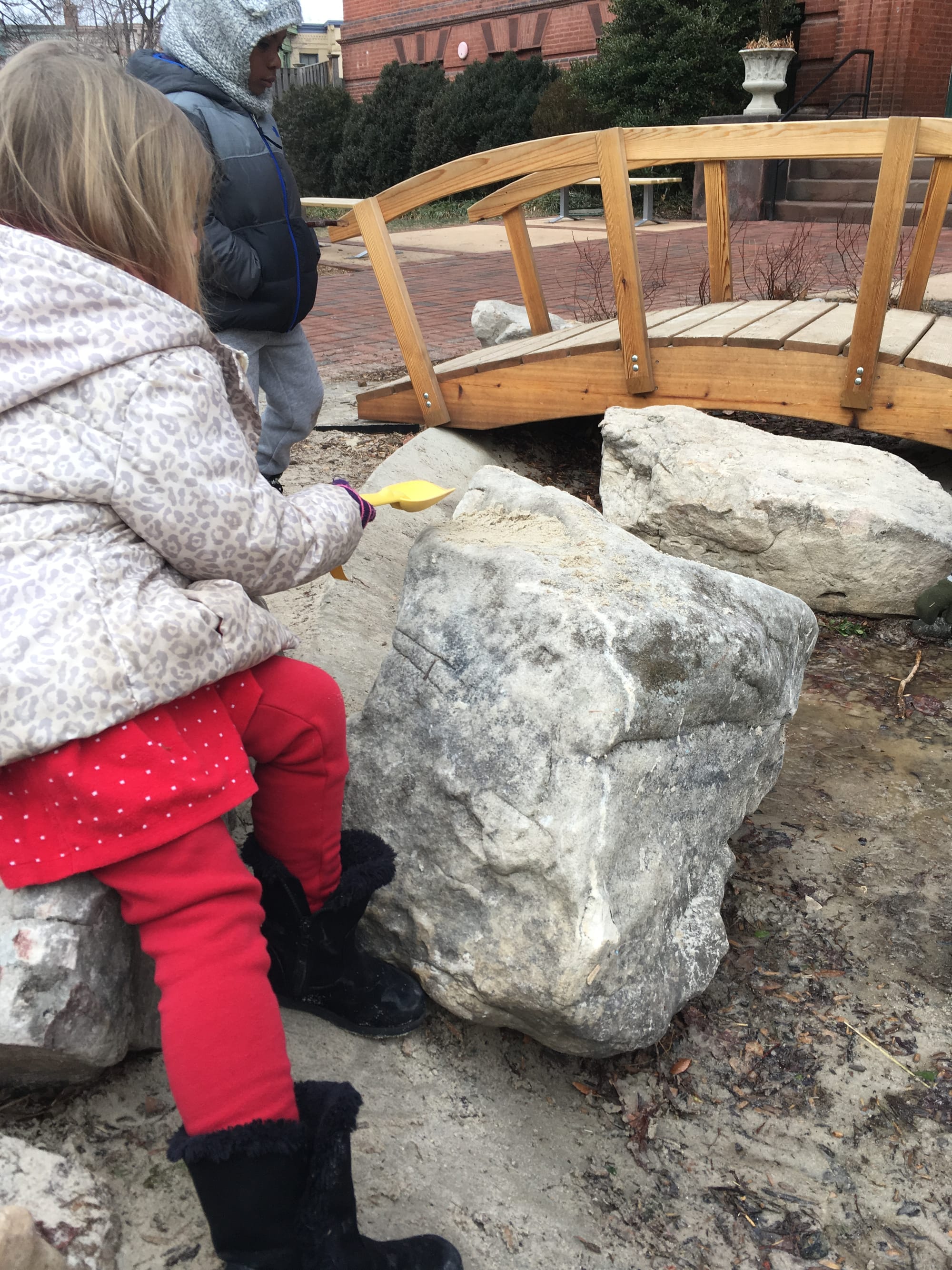
The author's students make use of the nature playscape.
As I observed my students, I knew that the girls were not enacting the most dehumanizing stereotypes or tropes. But I also recognized that their play relegated Native Americans to the past tense, contributing to erasure that has a devastating impact on Native Americans’ contemporary civil and human rights. Many contemporary campaigns led by Indigenous people center a simple statement: “We are still here.” Writing about Newtowne School’s partnership with Annawon Weeden, a Mashpee Wampanoag artist and educator, Ben Mardell articulates his hopes that the participating three-year-olds will always know this to be true. Did my students know it, too?
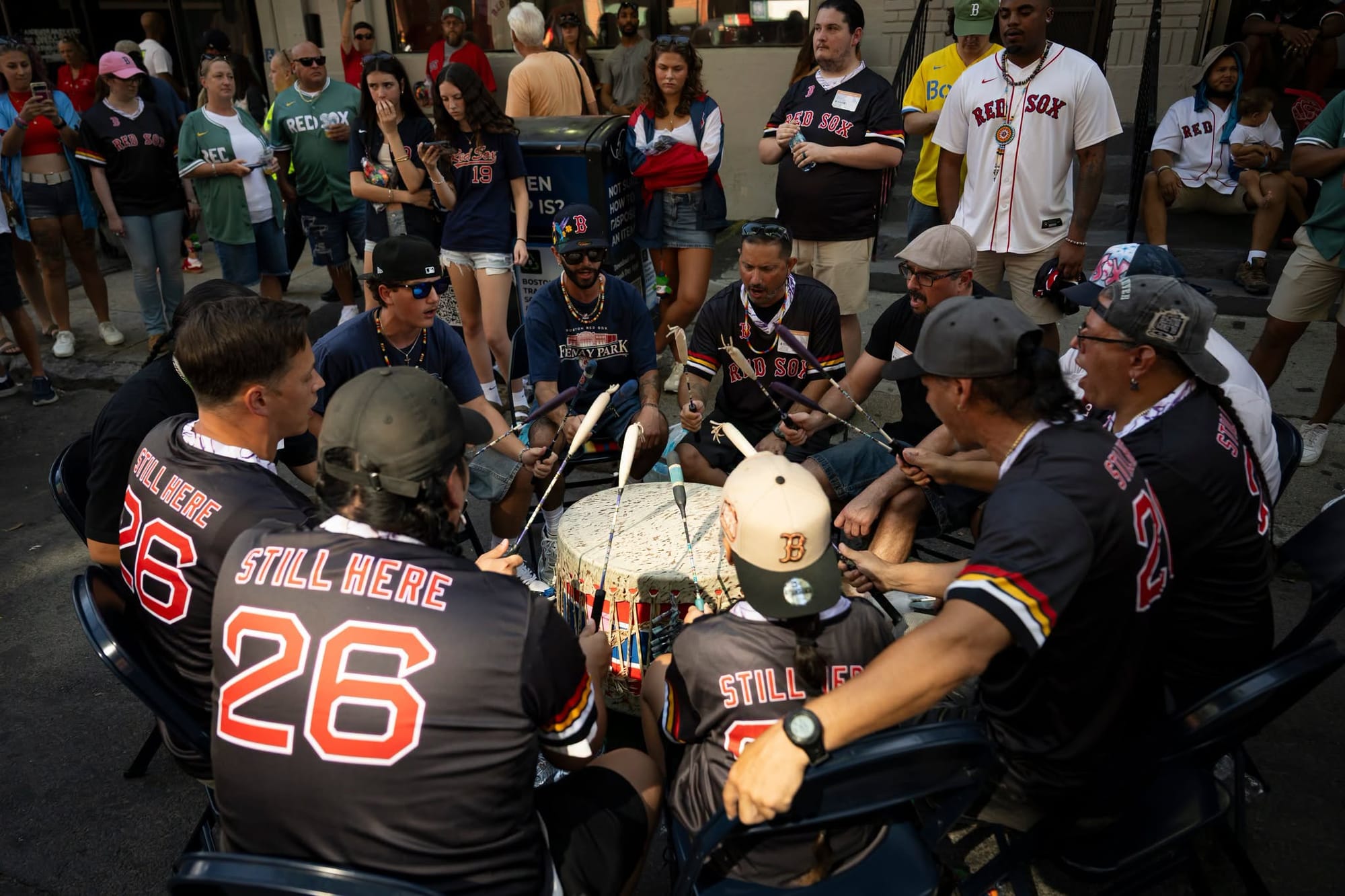
I also discovered a strong conviction that I didn’t want these children, even at four and five, to get in the habit of “playing” entire groups of people. I thought about how I would bristle if a group of my students was playing “Jews” — I might ask, “Oh, are you celebrating Hanukkah? Are you observing Shabbat?” if that was on their mind. I knew that playing an identity is not only likely to offend — maybe not when you are four, but when you are older — it is also rather meaningless given the wide range of habits and human experience within any one group. I did not want to shame these children, nor did I expect them to adhere to codes of conduct expected of much older children. But I did want them to know a basic fact – Native Americans are real people living right now– and I did want to teach my students to be curious about the nature of group membership.
Out on the playground, in between supervising children lifting stones as large as their heads to make a dam, in between making sure that every kid who went inside to use the bathroom eventually came back out again — Where’s Max?— in between guiding a student who was glued to me to venture towards his peers, and in between reviewing plans with my co-teacher — Are we really going to have time to start self-portraits today?— I observed these two four-year-olds, sometimes joined by one or two others, continuing to gather under a bush on the playground’s edge, or by the teepee, sticks in hand.
One day, I crouched beside my students where they sat hard at work. I remember asking them what they meant by playing Native Americans.
“We’re collecting berries,” one answered.
“We’re trying to prepare for winter,” another answered.
I don’t remember the exact words I used but I explained to them that there are so many Native Americans — in the past and now — doing all kinds of different things that it was a bit confusing to play a whole group of people. These preschoolers were unimpressed. I sensed they knew— as I did— that living in harmony with nature was not playing office or school or doctor’s office — it was something different than the world we transacted in each day. They wanted a name for it.
“I wonder if you are playing …nature?,” I asked. “Or is it more like survival? It looks kind of like camping.”
Still, my students were unmoved.
“Come on Cora,” one said again. “We need to collect some sticks.”
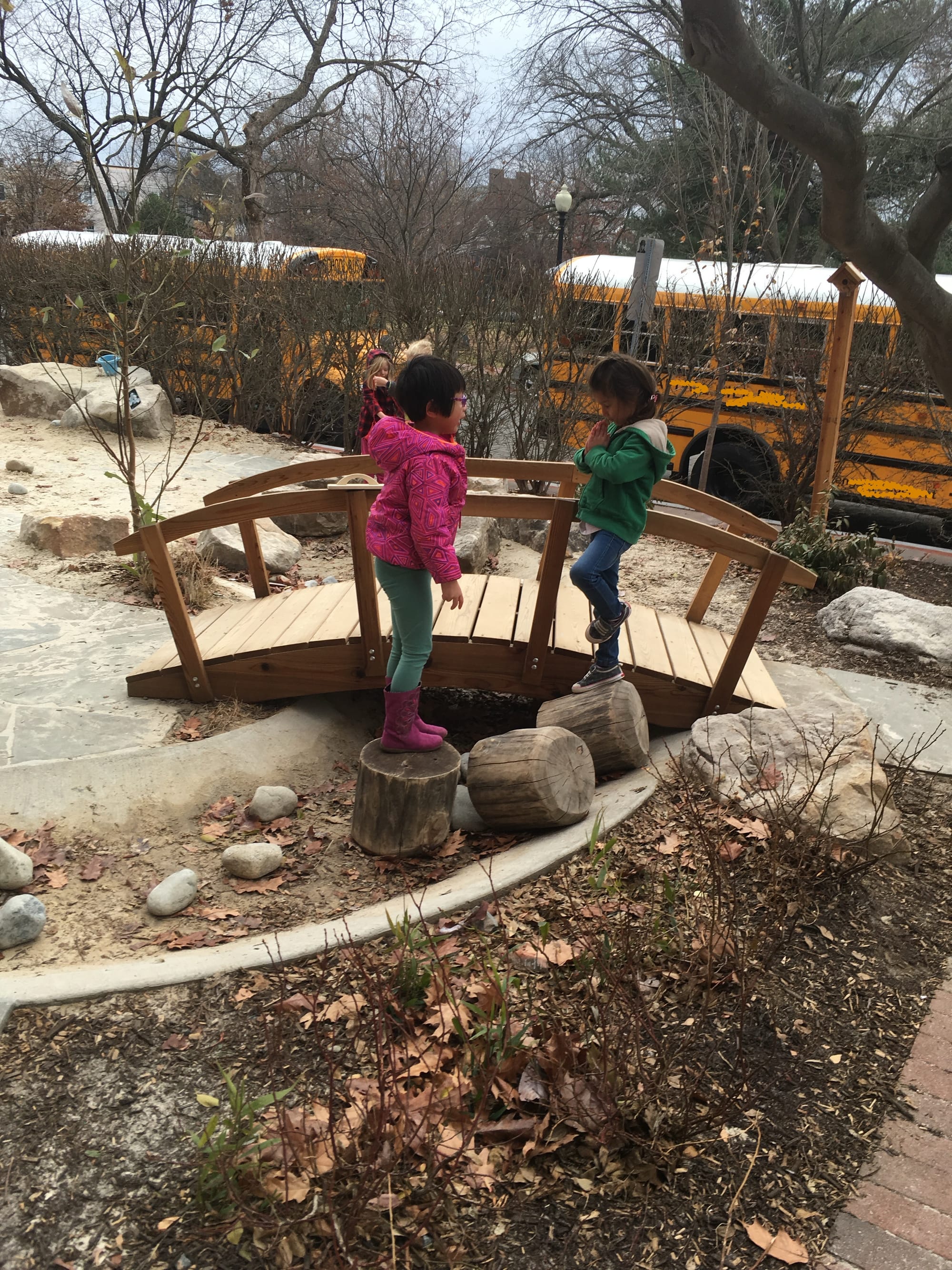
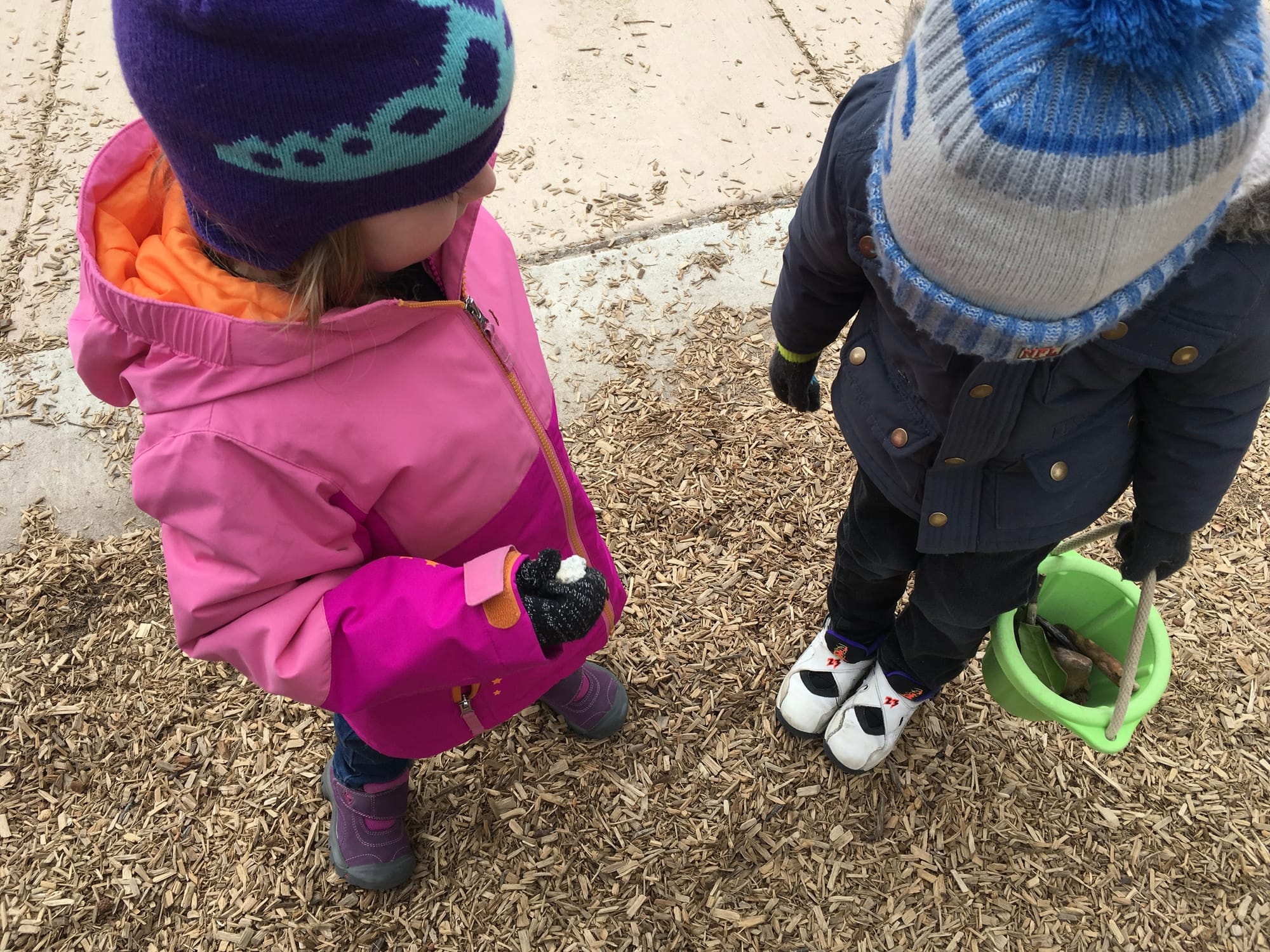
The author's students balance on stumps and collect natural materials.
In the superhero version of this story, my co-teacher and I find time to meet with the second-grade teachers about what we’ve observed. We invite second-graders to our class to share about their learning. We pursue local connections that will help our students develop a more full picture of the diversity among Native American groups. In the superhero version of this story, I fill a whole bookstand with books by indigenous authors. But in the superhero version, I have no other students, no other curriculum, no staff meetings, no parenting meetings, no Literacy Night or progress reports or student portfolios or assessments to administer. In the superhero version, I have no commitments outside of work, no need to exercise or rest. Also, there’s a simple fact: my students were not in second grade.
So, what did I do? Looking back, I feel pretty good about it, though I still wish I might have done more. This teaching dilemma became one of hundreds addressed not through grand curricular overhaul but instead through what educator Rosetta Eun Ryong Lee calls “100, one-minute conversations.”
At professional development with Project Zero over the summer, I had watched Chimamanda Ngozi Adichie’s influential Ted Talk The Danger of a Single Story. In it Adiche recounts arriving from her home country Nigeria to an American university, where she is startled to learn that her roommate assumed Adichie did not know how to use a stove and had never heard pop music. Adichie comes to realize the ways she herself has also learned “single stories” about some groups. She concludes that any “single story” about a person or group robs them of dignity. I can see now that I was likely metabolizing this idea as I approached my teaching dilemma.
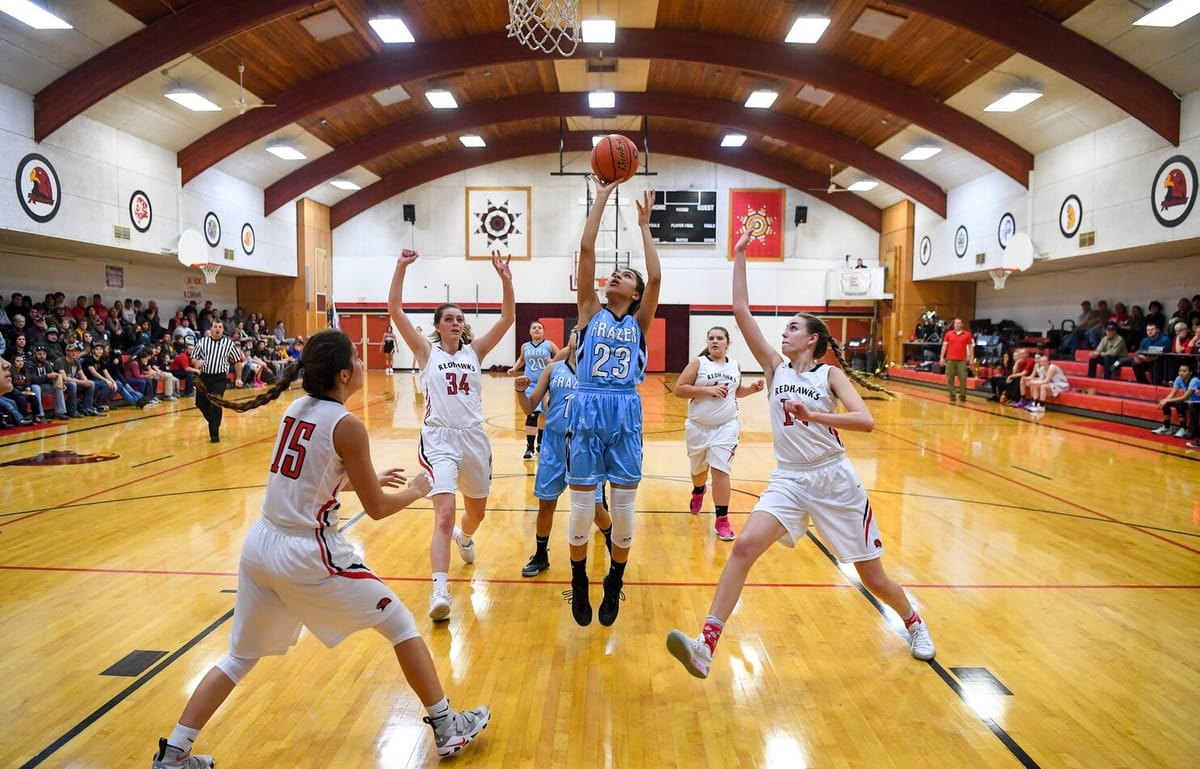
I had seen in The Washington Post a feature story about a high-school basketball star from Fort Peck Indian Reservation in Montana who dreams of a Division I college scholarship. My eyes were immediately drawn to an image captured by Jonathan Newton of the protagonist Mya Fourstar, midair, poised to make a basket in a high school gym. My students would instantly recognize it as a present-day sports photo. We see Fourstar in a moment of agency, power, and potential, her eyes trained on the ball she holds in her upstretched arms. We see Fourstar’s teammates, paused behind her, ready to cheer. I printed it out or cut it out (I think the school had an actual print subscription) and brought these children inside one day and read parts of the article to the small group of students who had been playing “Native American.”
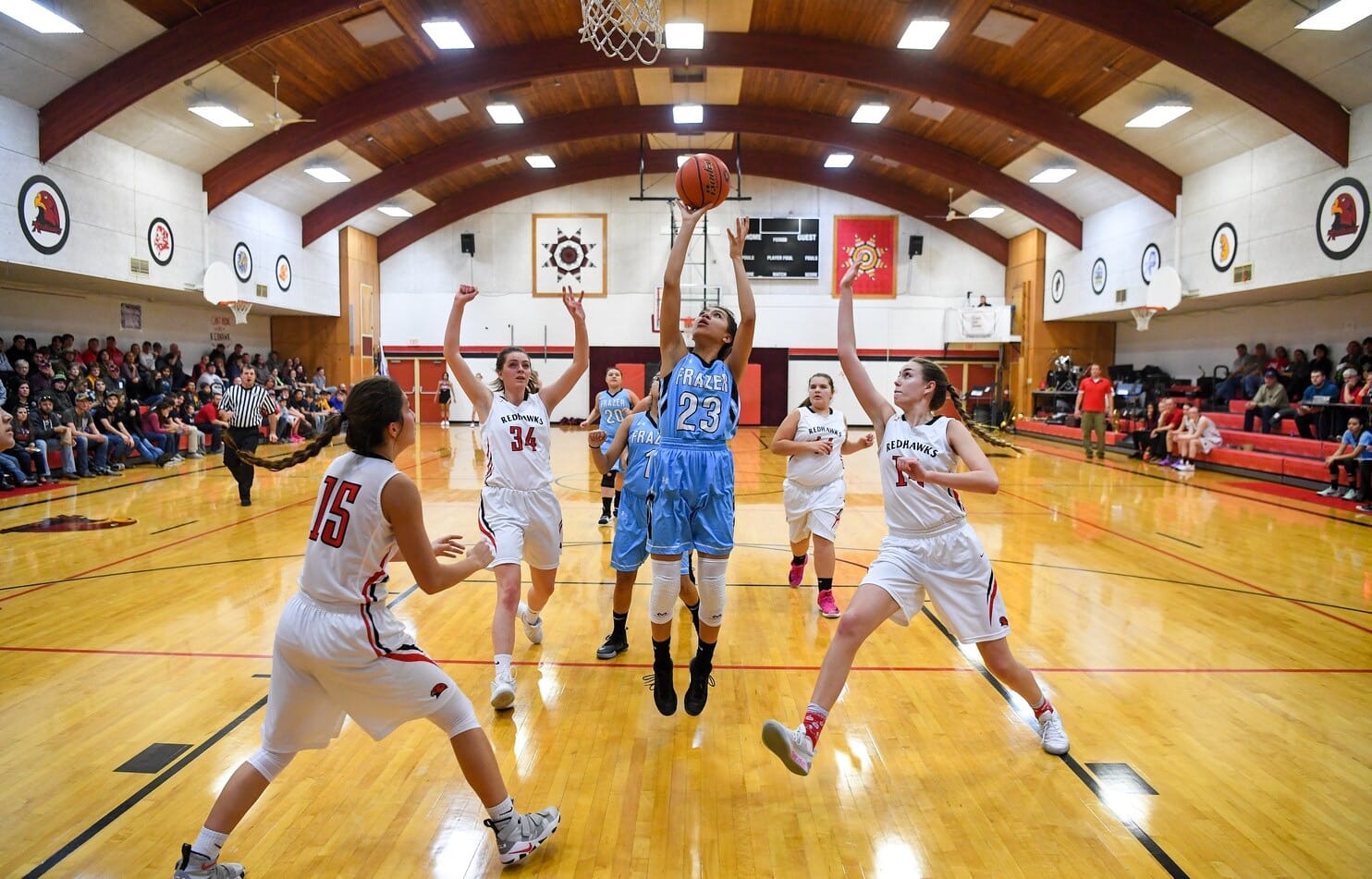
With the image of Fourstar front and center, I talked to them about the many kinds of things Native Americans do – play basketball, go to the dentist, work as dentists, travel by bus and train and car and plane, in other words, do as many kinds of things as my students and their families do in a day or a year. I recall them listening attentively, and also, being unsure if my lesson would stick.
I reached out to one friend who I knew led anti-bias work at the preschool where she taught. I don’t have notes from that call but even today I can scroll way up, ten years up, in the text thread to where I state “Do you have a few minutes to to discuss a teaching dilemma” and her stating “I’ll call you in five” — like an actual superhero. She told me about how she approached the Washington football team’s gear in her school, before they changed their name to the Commanders, and how she presented allegories of colonization through puppet shows. We agreed neither experience offered a direct blueprint, and that I was on a promising track showing my students that article about the basketball player.
Leaves turned. Reports were due. My co-teacher announced her pregnancy and we began making plans for her leave. We tried incorporating more “problem-posing” in our math curriculum. We studied the city through visiting each child’s neighborhood library — children lived throughout Greater Washington. My co-teacher and I taught short vowel sounds, self-regulation, and tried Vivian Paley’s storyacting approach. Amidst all of this activity, on one winter’s day, I saw a few students dart towards the teepee, their puffy, pastel jackets whistling as they ran.
“Want to play Native American?” one child asked another.
I sauntered over and said, “Oh, tell me about your game.”
The children looked at me.
“We’re dropping the sister off at college.”
I breathed a sigh of relief. We were beyond a single story.
I’m curious how other teachers have approached similar dilemmas, and I still wonder if I ought to have been more prescriptive. But then I return here: as early childhood teachers, we simply cannot expect our young students to understand all of the world’s complexities. We can, however, teach them that those complexities exist. We can plant that seed. That year, in the chill of winter, I was lucky enough to watch that seed sprout.
Amy Rothschild is a writer and former teacher living in Cambridge, Massachusetts. Her writing on issues pertinent to early childhood education has appeared in The Atlantic, The Washington Post, Dissent, and previously in The Remake. She is working on an essay collection about images of teachers in popular culture, and how they informed her own teaching experience.
Acknowledgements:
The author thanks Jason Gray, Anne-Claire Kasten, Makai Kellog, Annabelle Knight, Mara Krechevsky, Deborah Menkart, and Marcella Ovalle, along with Amos Blanton and Ben Mardell of The Remake. These readers’ contributions and reactions strengthened this essay in its development.