“I like thinking more than (using) Gemini”: Exploring if and how to introduce young children to AI Chatbots
This second in a series of Remake essays on AI charts how early childhood educators can explore the question of if and how the technology should be used to promote young children’s learning.
Five-year-old Finlay and I are in the staff room at Newtowne School. We are in the midst of a session where she is creating imaginary friends for herself and her family. Throughout, I give her the option to consult with Gemini, Google’s chatbot equivalent to Chat GBT and Claude, for ideas. While she occasionally decides to ask Gemini for help, when it comes time to name her mother’s friend she declines assistance. Her reason, “I like thinking more than [using] Gemini."
I begin this essay with Finlay’s answer because it captures the mindset I want children to have regarding AI chatbots, that they know it has usefulness, but are not interested in abdicating important human functions like thinking to the technology.
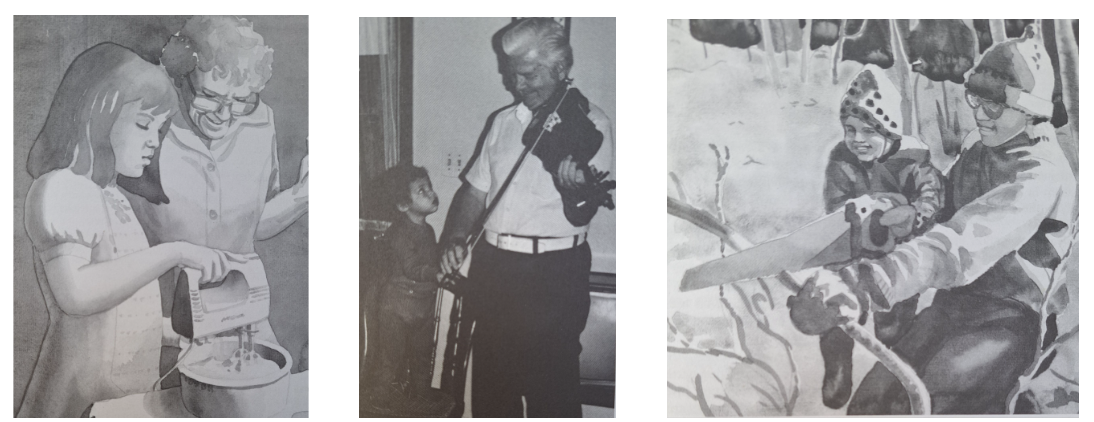
Barbara Rogoff begins Apprenticeship in Thinking, her seminal book on human development by explaining that, “Children’s cognitive development is an apprenticeship–it occurs through guided participation in social activity with companions who support and stretch children’s understanding of and skill in using the tools of culture.” Children’s apprenticeship can involve physical tools such as saws, power mixers, and musical instruments as well as mental tools such as language and logical thinking. These apprenticeships begin at birth and extend through the long period of human childhood.
Artificial Intelligence is, and will continue to be, an important tool in cultures around the world (I will say more about whether “cultural tool” is the right metaphor to help educators think about AI at the end of this essay). Complicating the matter is that we are apprenticing children in the use of a tool we were never apprenticed in. It seems not even the developers of these chatbots know exactly how they work or what they can do.
Early childhood educators face the question of when children’s apprenticeship into AI chatbots should begin. On the one hand, early childhood may be just the right time to start. Children's innate desire to learn, master, and do things by themselves provides what Amy Rothschild calls “protective armor” against giving up important cognitive tasks to chatbots that many older children and adults are doing. On the other hand, young children’s inclination to anthropomorphize objects (think of their favorite stuffed animal) makes them particularly vulnerable to being seduced by the human-like qualities built into many chatbots.
How should we go about figuring out what to do?
This essay discusses how to explore young children’s possible apprenticeship with AI chatbots. I explain how I came to be offering Finlay an AI consultant in her efforts to create imaginary friends, share the field notes from our session, and use this data to provide guidelines for future experimentation.
Mitch’s suggestion
I think a lot about A.I. I read about it, write about it, listen to podcasts about it, and have conversations with friends, family and colleagues. One conversation was with Mitch Resnick, the head of LifeLong Kindergarten at MIT’s Media Lab.
Mitch’s framing of the issue for educators is very helpful. He likens where we are with AI with where we were 25 years ago with the internet. Back then we knew then that the internet, an emerging technology, would be transformative. We knew that some would put it to bad use. The task for educators was to figure out ways to use the technology to enhance children's learning; to promote their creativity and ability to collaborate. The same is true for our task today. My friend Junlie Li would add that we must also look for ways that AI can help children become more empathetic and caring. I am sure Mitch would agree. While technology is changing, my values and hopes for children remain the same.
Twenty-five years ago LifeLong Kindergarten's response to the opportunity provided by the internet was to develop Scratch, a computer programming language that is now used by 150 million young people around the world. The internet makes it possible for Scratch to also be a virtual community where young people learn with and from one another. It is important to note that it took almost a decade to create Scratch. Finding answers to how AI can be used to support children's learning will take time.
The session with Finlay
What did I do to follow Mitch’s suggestion? Being summer time, I did not have regular contact with young children, so I arranged with her family to meet with Finaly one afternoon after she had spent the day at Newtowne’s summer program. I had known Fin for the three years she was a student at Newtowne, and knew that while her family did not have Siri or Alexa at home she had encountered chatbots visiting friends.
In the hour-long session, where Finlay displayed an impressive amount of stamina for a young child after a full day of camp, I included the use of Gemini in helping Finlay create imaginary friends for herself, her older sister, her mother and her father.
During the school year I had helped Finlay and her Green Dragonfly classmates create such imaginary friends, what we called Special Critter Friends, which are unique animals that help compliment a person, making them stronger. Finlay had picked an eastern painted turtle she named Caitlin.
I proposed to Finlay that she create a special critter friend for her older sister Farryn. Fin countered that she wanted to make a new critter friend for herself as well as critter friends for Farryn, her mom, and her dad.
A similar pattern unfolded in creating all four critters. I would help Finlay identify what kind of animal the special critter friend would be by asking her what help she or her family members needed and then what kind of animal could provide this. Species selected, I asked Fin to give the friend a name. She would then draw the friend, though sometimes this second and third step would be reversed. To end the process we would find a story about the friend.
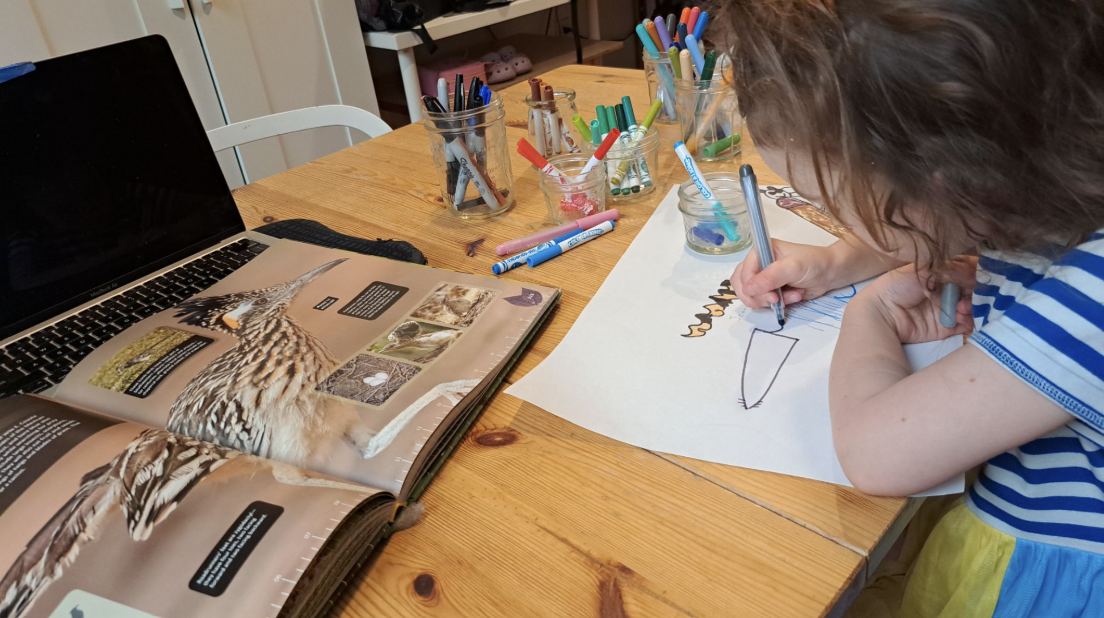
During each stage of the process I offered Fin the chance to brainstorm with me, use books to get ideas, and/or get advice from Gemini. Using Gemini meant me typing in Fin’s questions on a laptop and reading the answers the bot provided. Here are my field notes from the session.
Jenny the Anaconda
Work on Fin’s Special Critter Friend began with this conversation:
Ben: What kind of animal do you want your special critter friend to be?
Finlay: An anaconda.
Ben: Cool! How will an anaconda help you?
Finlay: I don’t know.
Ben: We could ask the machine Gemini what anacondas do.
Finlay: OK.
I read Gemini's response to the question “what do anacandas do”: Anacondas are snakes that hide in the water and squeeze their prey.
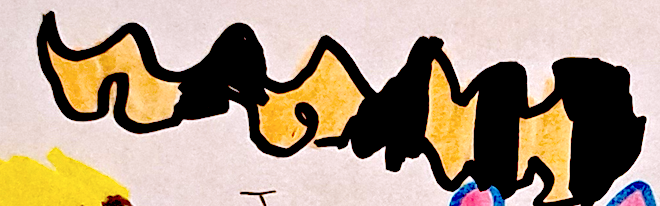
Hearing that these snakes swim, Fin decides that her anaconda would, “Help me cross the ocean if the water was too far.” She agrees with my suggestion to find a photo of an anaconda to help her with her drawing, and picks one from the half dozen that come up on a google search on the laptop. Fin draws quietly for a couple minutes, outlining the snake with a black sharpie and then alternating black and yellow sections inside the outline.
Ben: What would you like to name your special critter friend?
Finlay: I’m not sure.
Ben: We can brainstorm together or ask Gemini for suggestions.
Finlay: Let’s use Gemini.
Before I can type in the question, Fin calls out, “Jenny.”
I modify the questions for Gemini, typing, “Is Jenny a good name for an anaconda?” I read Fin the response:
Jenny is a great name for an anaconda and that it's funny to give the world's largest predator a person’s name. Other good names are: Anna Conda, Squeeze, and Hugs a Lot.
In retrospect, I regret not pointing out that anacondas are not the world’s largest predator. Orcas and polar bears are far bigger.
Fin indicates she wants to stay with Jenny. I then ask Fin if she would like to tell a story about Jenny, or if she would like to ask Gemini to tell a story. She picks asking Gemini and adds that she would like the story to be funny. Gemini comes back with a long tale:
Once upon a time, in a lush stretch of the Amazon rainforest, lived an anaconda named Jenny. While her fellow anacondas spent their days trying to look menacing, lurking in muddy swamps, and maintaining their reputations as apex predators, Jenny had different aspirations. Jenny wanted to be a scarf.
Over the next few paragraphs the story explains how Jenny meets a botanist named Arthur who, after some initial apprehension, uses Jenny as a scarf for a few days. The story concludes:
Eventually, Jenny grew a bit too heavy for Arthur's cervical spine, so they parted ways. But to this day, Jenny remains the only anaconda in the Amazon who refuses to hunt anything that doesn't match her fall color palette.
After reading Gemini’s tale to Fin I tell her that she can change anything she can change anything she would like in the story. She has no changes, perhaps because she did not completely understand a story involving reputations, apex predictors, and fall color palettes.
Teal Blue the Cat
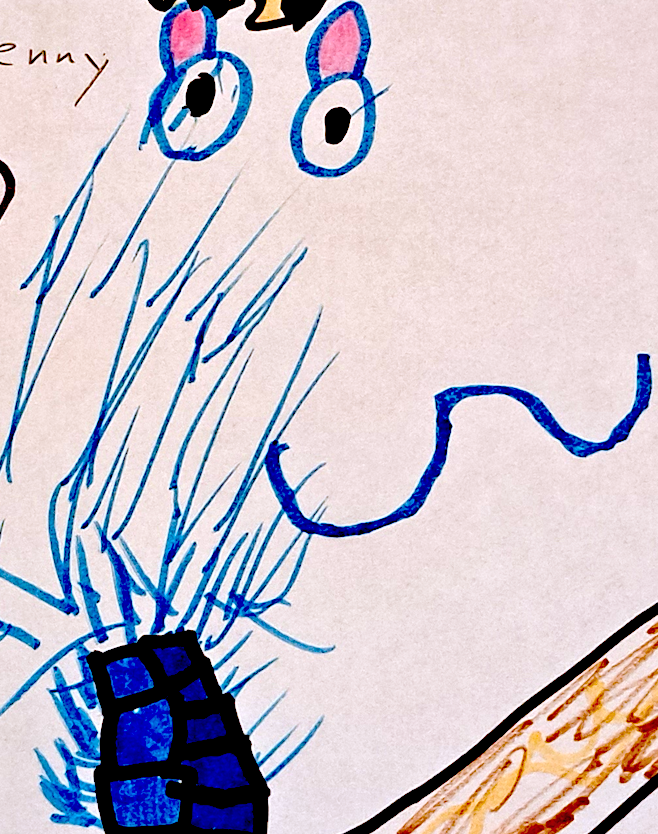
We moved on to a critter friend for Fin’s sister Farryn which she says should be a cat. She wants it to be teal and blue and uses an AI generated image I find using an internet search as a model to base her drawing. After five minutes of careful, focused work she announces:
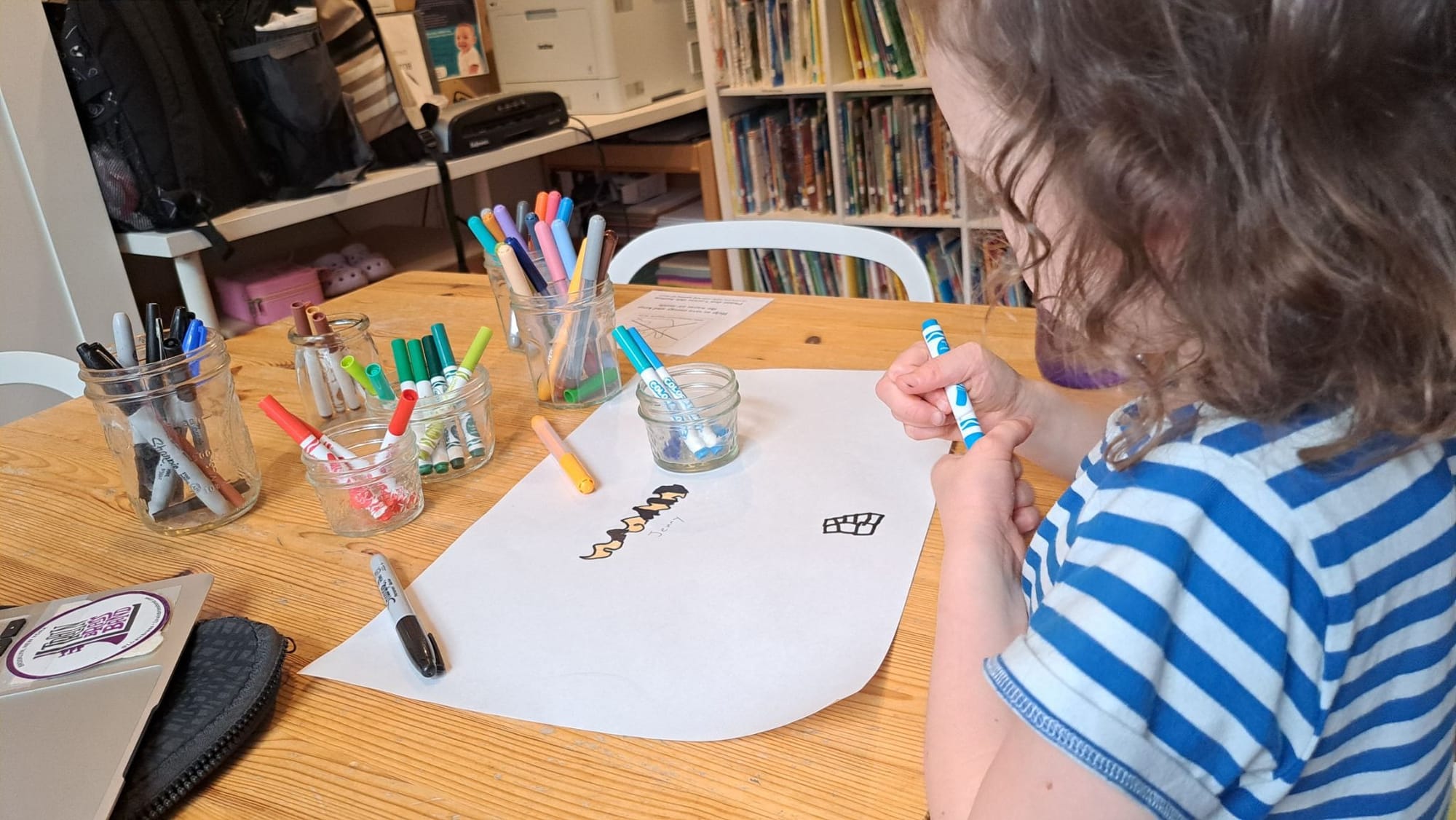
Finlay: I’m done.
Ben: What would you like to name Farryn’s cat? We can brainstorm or ask Gemini for advice.
Finlay: Teal Blue. She gives Farryn rides.
Ben: For your story about Teal Blue you can tell a story, we can brainstorm to help you get ideas, or Gemini can create one.
Finlay: Gemini and I want Teal Blue to fly.
In Gemini’s tale, similar in length and style to the one about Jenny the snake, Teal Blue has adventures flying around. After hearing the story, Fin says she likes it and declines the offer to change anything about it. I ask Finlay:
Ben: What do you think of this machine Gemini? Was it helpful? Would you want to use it again?
Finlay: Yes.
Ben: How did it help you?
Finlay: To get ideas.
Bebn: Do you want to ask it any other questions?
Finlay: No.
Raffi the giraffe
Ben: What kind of help does your mom need?
Finlay: Reaching things.
Ben: What would be a good animal to help?
Finlay: A giraffe.
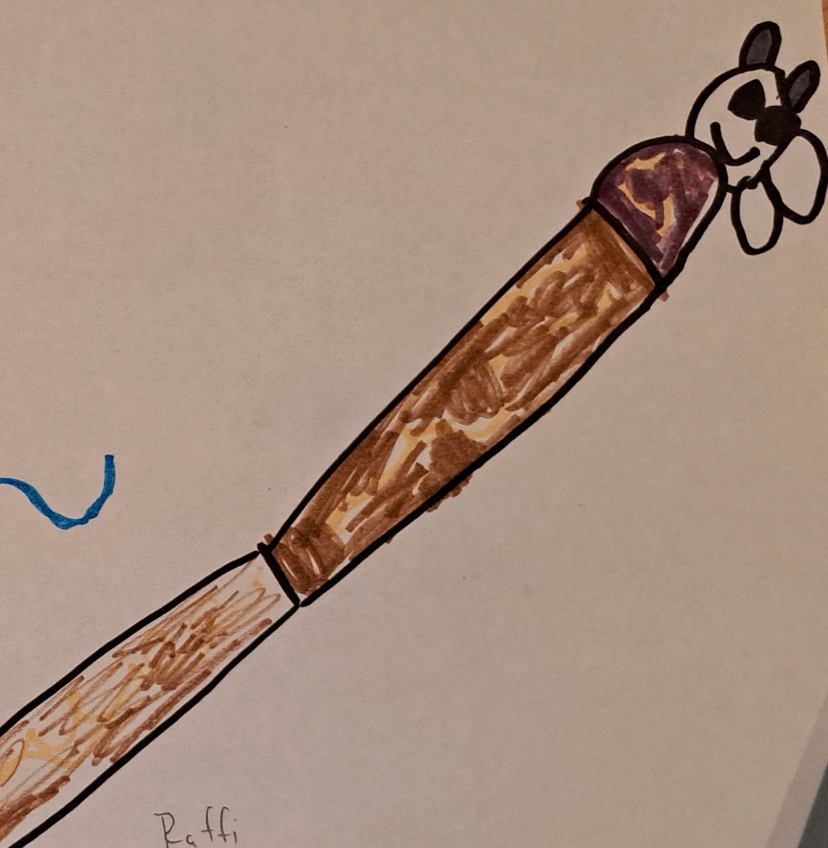
I find a photo of a giraffe which Fin agrees would help her with her drawing. She outlines the neck and then carefully adds the colors to replicate the pattern of the giraffe’s coat. After five minutes Fin signals that she is done.
Ben: What is the giraffe’s name? You can ask Gemini for advice.
Finlay: Raffi.
Ben: Why are you coming up with names for the critter friends and not asking Gemini for advice?
Finlay: I like thinking more than [using] Gemini.
Ben: What about for the story?
Finlay: I want to tell it.
I transcribe Fin’s tale about a giraffe who escaped from some scary guys. I read back the story and ask Fin if she likes it. She does. I observe, "You have your own style of telling stories which is different from Gemini’s I like. How do you feel about it?"
Fin gives me a thumbs up.
Witty the woodpecker
Fin wants to get to work on a special critter friend for her dad.
Ben: What kind of help does your dad need?
Finlay: Getting stuff.
Ben: What kind of animal could help?
Finlay: A bird.
Ben: You could ask Gemini for help picking what kind of bird or you could look through this book.
Finlay: The book.
As Finlay thumbs through Lifesize Birds: The Big Book of North American Birds I read out the names of the bird on each page: hummingbird, chickadee, warbler, grackle, and more. She also finds pages with nests and eggs which we discuss. I’m pleased that she has stumbled onto this information in her research for her dad’s special critter friend.
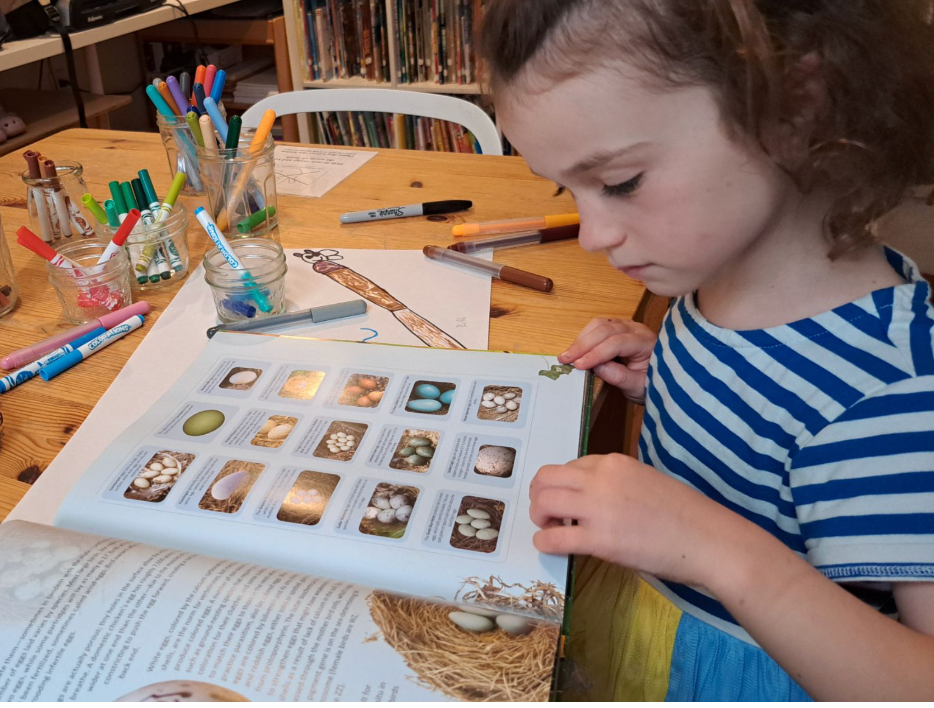
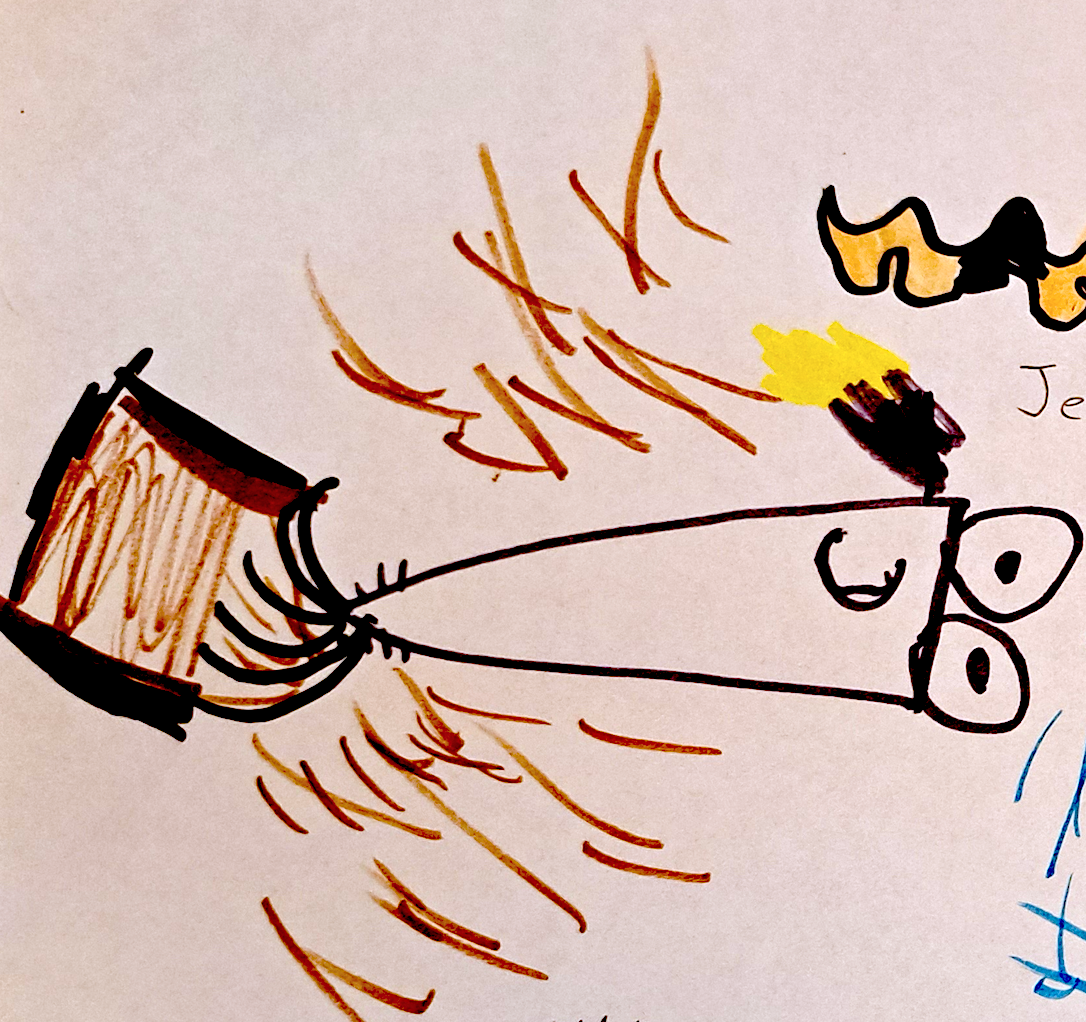
In the end, Fin picks a roadrunner (which she later confuses with a woodpecker).
Using the photo in the book as a model, Fin quietly draws for several minutes. When she says she is done I tell her we can brainstorm a name, ask Gemini for suggestions, or she can pick. She considers for 10 seconds and says, “Witty.” For the story I again give her options and she picks telling the story, which I will share at the end of the essay. After I read the story back to her Fin she gives it two thumbs up.
Ben: Do you think Gemini the machine could make a story like yours or would it make a different story?
Finlay: Different.
Ben: Why?
Finlay: Because he's a different person.
Guidelines for future experiments
It was fun working with Finlay to create critter friends. I was impressed by her stamina and determination. But was it necessary to include Gemini in the effort?
While I am not sure she could articulate it, I think Finlay left her encounter with Gemini thinking that it is an interesting tool, but not life changing. Perhaps I am projecting here. Of late, I have been trying out Gemini, for example to help find the best flight options. My reaction is that it was helpful but not essential. While I know the technology is of great use in some scientific endeavors, I am not sure it brings much value to an early childhood classroom.
And this was just one session. It is possible that I, or other early childhood educators, will find valuable uses for AI. It is equally possible that we, as a field, decide that children’s apprenticeship in the technology is best postponed until they are older.
Reflection on my session with Finlay leads to three guidelines for future experiments:
- Make it purposeful
Mitch's advice to use AI in something that I was already doing with children is sound. It gave the integration of Gemini a purpose. I can imagine a number of situations where chatbots might support learning: helping in initial brainstorming sessions about a project or inquiry, giving individuals and groups feedback about their ideas, and providing expert information. Using chatbots in these situations is where I will conduct future research.
- Make it playful
In future experiments I will be more transparent with the children about why I am making AI available to them. I will explain that I and other teachers are wondering if AI can help kids learn, and to find out I want to play around with AI with them. The vibe should be experimental where children are our research partners in trying things out. We should ask, as I did with Fin, children’s opinions about the chatbots.
- Make it a tool
In Artificial Intimacy: Who We Become When We Talk to Machines, Sherry Turkle argues that while the internet came for our attention AI is coming for our affection. This does not have to be the case. How I had Finlay use Gemini–typing in her questions and reading the answers back to her–insulated her from the seductive features tech companies include in their products. Having Gemini be a tool shielded Fin from features that make bots appear to be friends and companions.
A very human story
Which brings me back to the story Finlay created about her dad's special critter friend, the woodpecker named Witty:
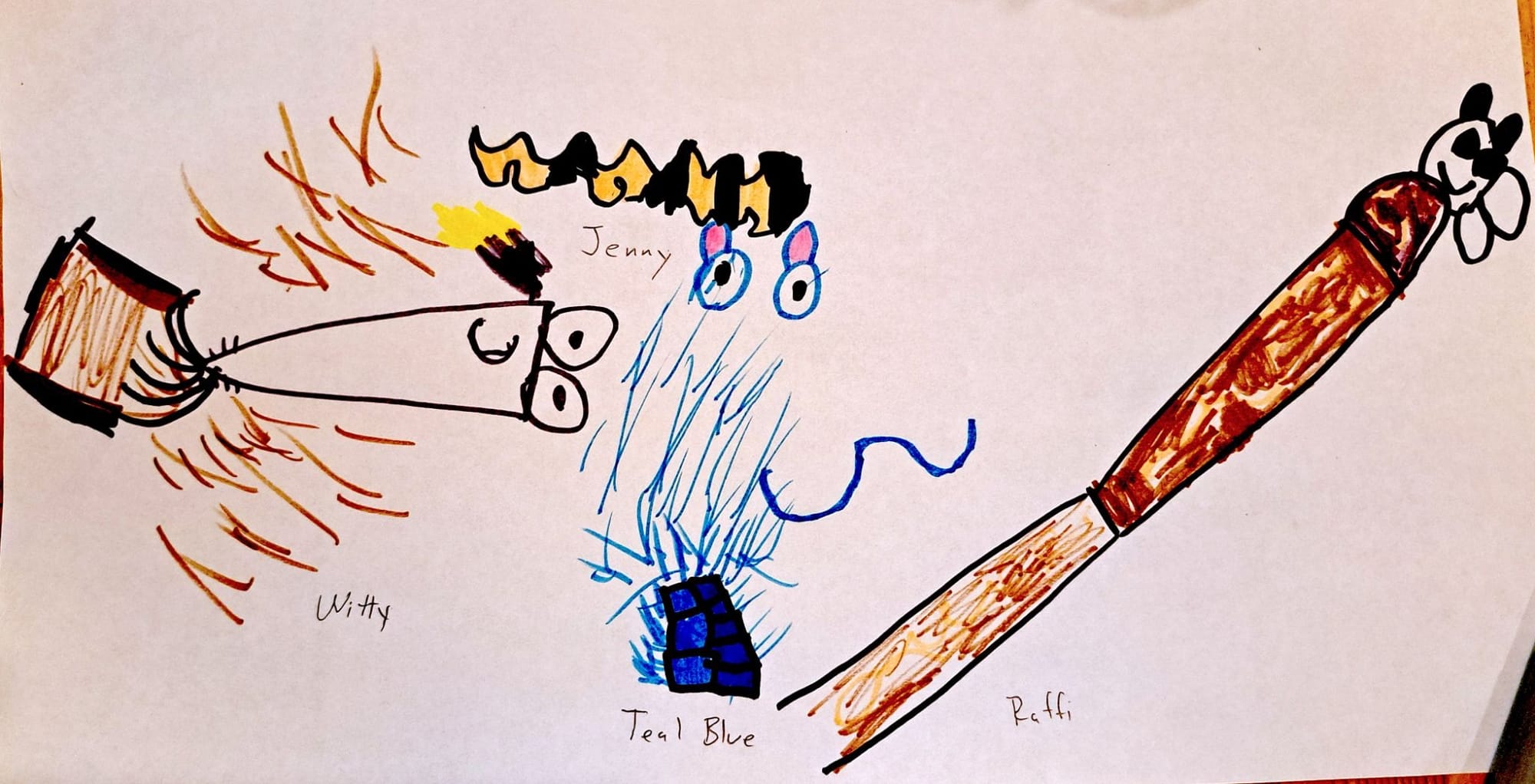
Once there was a woodpecker. And he was a friendly woodpecker. On my paper these were all his friends. And he had a kitty. And an anaconda. And he had a giraffe. And he loves to play with his friends. And everyday in the morning he played with his friends and everyday he would go to the animal store. And every day he would go to the animal store and there were a lot of animals there. And he loved that all his friends were at the store. And he always went to the store with his friends. And then he wanted to play with his friends at the store. And he always loved to play with his friends. And he went back home. And then he goes to sleep. And then the next morning he played with his friends again. And then the end.
True, Fin’s story is shorter than the one Gemini created about Jenny the anaconda. True, there are narrative flaws–ideas repeat–and the flow is choppy compared to Gemini’s tale. Still, I love Fin’s story. I love it because it is about the relationships among her family members; how they love to be together and love to play together (I am taking the Secret Critter Friends as stand ins for each family member). I love this story because only Fin could have told it.
Sure, we could have asked Gemini to write a story about how the four Special Critter Friends enjoyed playing together. But that would have been like a Hallmark greeting card, something mass produced. Fin’s story is like a handwritten letter. I do not want to be preparing kids to write Hallmark cards. I want to help them write their handwritten letters.
I hope the essay is part of an empirically based conversation among practitioners about if and how we introduce young children to AI. It would be far better for us than tech companies, who have proven to have little regard for children's well being, to make these determinations.
Acknowledgements: My thanks to friends and colleagues who indulged my fixation on AI: among them the folks at LifeLong Kindergarten, Junlie Li, and Mitch Resnick. Thanks to Mara Krechevsky, Amy Rothschild, Caitlin Malloy, and Liz Merrill for their usual and diligent editorial assistance.
A post-script for education geeks: Is “cultural tools” the right metaphor to help us think about AI chatbots? Some argue that AI is different from other cultural tools such as saws or mixer because it is intelligent; it has the ability to learn and seems to have its own volition. These thinkers maintain that we should think of AI as a new species rather than a technology. But even if this is the case, there are cultural tools that do think, learn, and have their own volition; that are in fact different species.
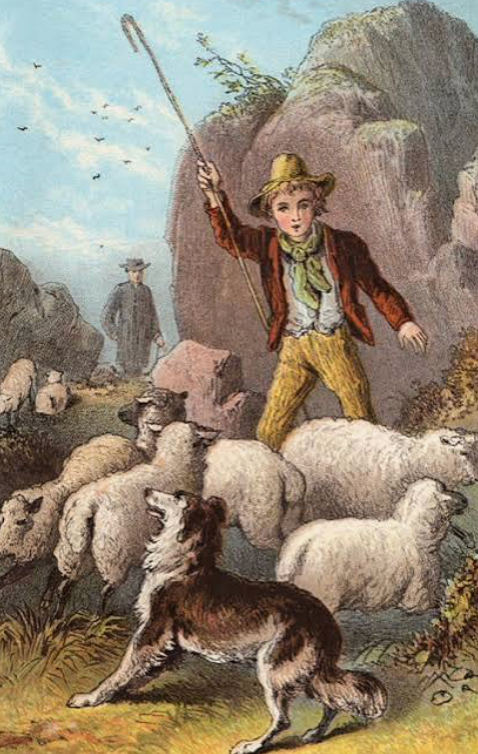
While canine lovers may bristle with my classification, dogs in herding societies are "cultural tools” that children are apprenticed into working with to round up sheep, locate stray goats, and use to sense the presence of threats to the flock. While I am not sure I have the right metaphor I do think it worth playing around with to see if it is helpful in thinking about when and how to introduce children to AI chatbots.