
Breaking the news: Facilitating young children’s exploration of climate change
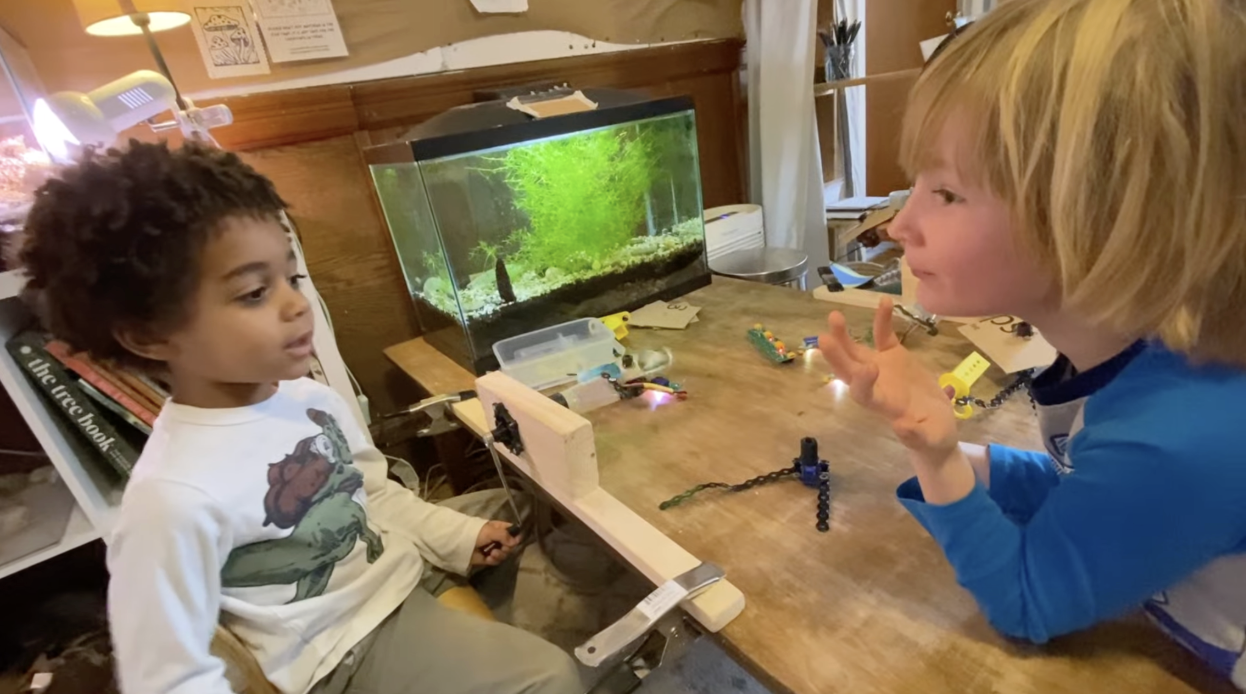
I think a lot about climate change and what it means for my students at Newtowne School. Knowing that the future of the planet depends on humanity moving from an extractive to a sustainable relationship with the rest of nature, I aim to foster my students' solidarity with the rest of the natural world. To this end, over the past three years I have begun a number of projects to increase my children’s awareness and connections to nature, some discussed in essays here on The Remake: the Critter Count, Critter of the Month, Special Critter Friends, Playing with the Sun, and the Leaf People. Yet until this spring I had not talked to the kids directly about climate change.
The reason is not because climate change is something to hide from them. Climate change is their present and their future; they have a right to know. Nor do I think the concept is too advanced for young children. There are developmentally appropriate ways to explain how humanity's burning of fossil fuels is causing the climate to change.
In part, my hesitancy to talk about climate change stemmed from the enormity of the problem. The fact that the earth is warming in dangerous ways is something I wish I could ignore, and I worried that knowing about the problem would cause anxiety among the children. My hesitancy also stemmed from my commitment to playful learning and that I had not figured out how to facilitate their exploration in playful ways.
In this essay I explain what I mean by playful learning. I then share how I “broke the news” about climate change to the Green Dragonflies, the four and five-year-olds at Newtowne. I reflect on the experience, sharing what I learned from my first go at facilitating an exploration of climate change.
What I talk about when I talk about playful learning
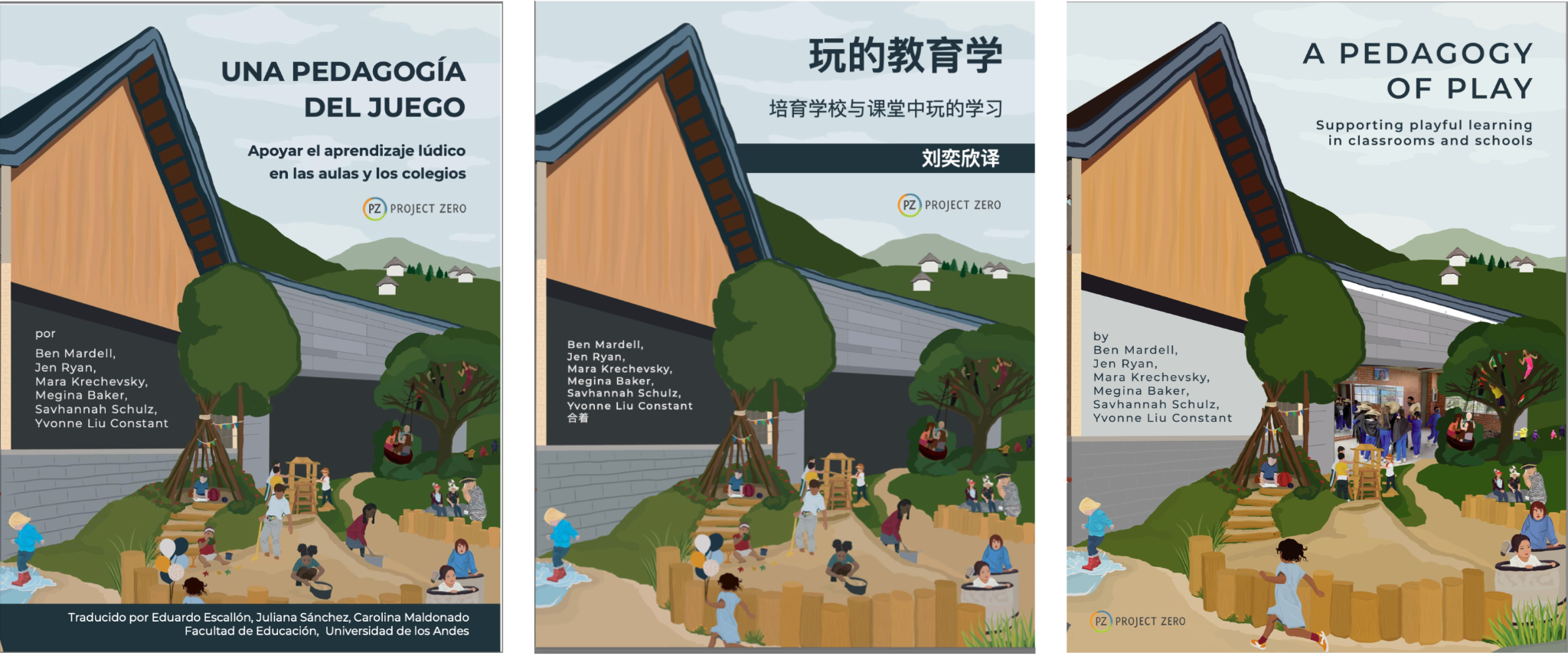
What do I mean by playful learning? My definition is found in the book A Pedagogy of Play. Based on research I led with a remarkable set of educators in Denmark, South Africa, the U.S., Colombia, and Taiwan, the book contains a framework for bringing more playful learning into classrooms and schools. The book is available as a free PDF in English, Spanish, and simple and traditional Chinese characters.
The book shares two complementary definitions of playful learning, which while has similarities, also differs from unstructured, free play. The first is that playful learning is occurring when children are doing what they want, which is the same as what their teachers want them to be doing.
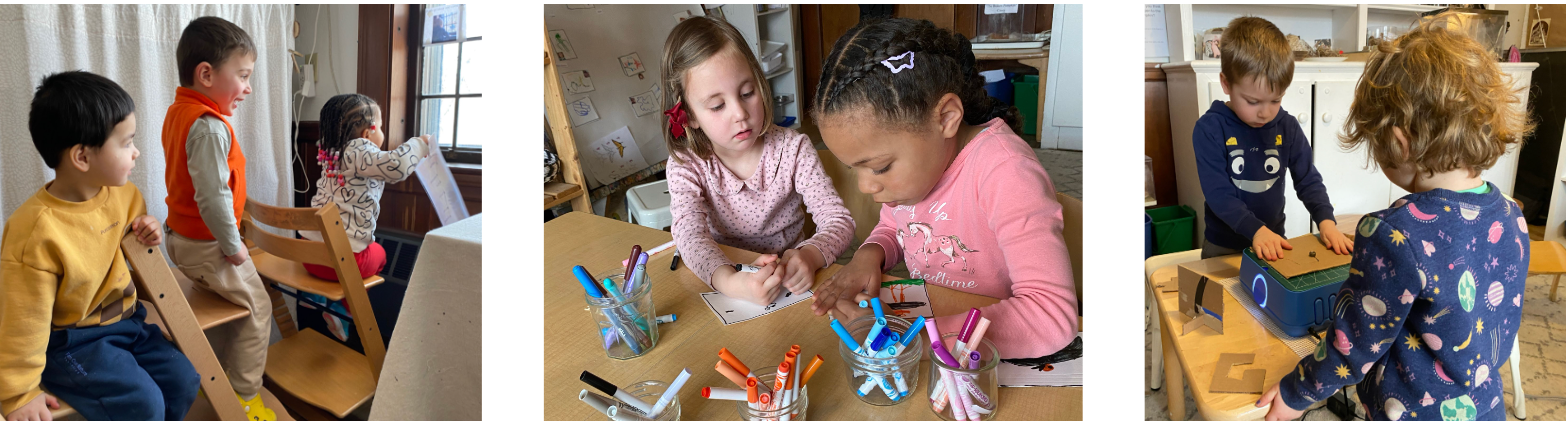
In other words, the children’s intrinsic motivation aligns with the adult learning goals. Likely you have experienced this in your teaching, when you were not making kids attend using rewards or punishments. Rather, they were participating out of genuine interest. In these cases we and our students are on the same page. This happens in classrooms with trusting relationships and where teachers know the kids well and tailor activities to their students' interests. Over time, teachers and children build shared ways of learning together.
A second definition is that playful learning is occurring when children feel choice, wonder, and delight as part of their school experience. This definition is what in our research we call indicators of playful learning. While playful learning is universal, everyone learns through play, the details are culturally determined. In the book you will find indicators created by educators in South Africa, the U.S., and Colombia. The ideas that playful learning involves choice, wonder, and delight come from research with educators at the International School of Billund (ISB) in Denmark and is grounded in the goals and values of their school.
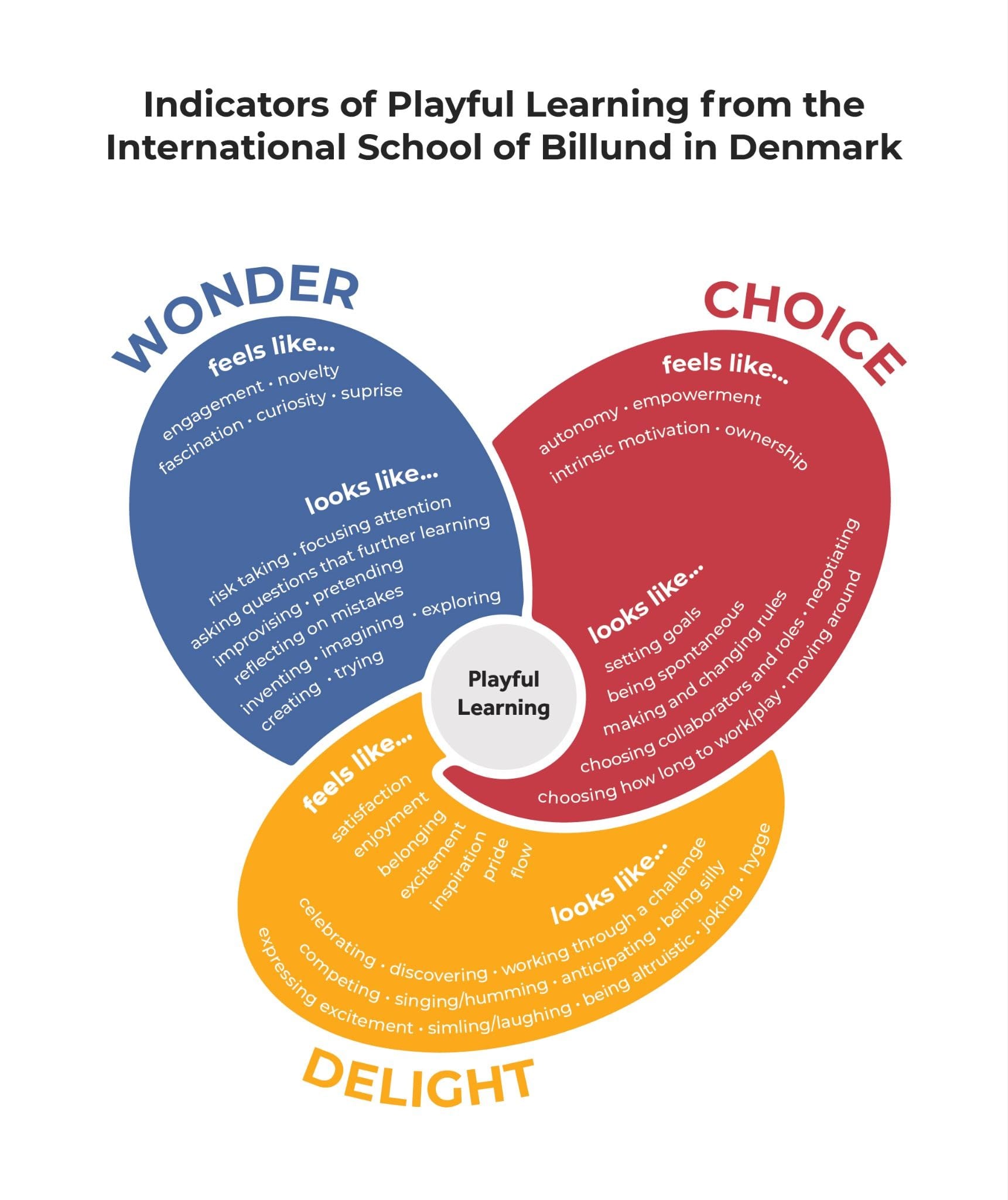
I bring these indicators forward because choice, wonder and delight are how I wanted the Dragonflies to experience in their investigation of climate change. I wanted them to feel choice; to feel empowered and ownership over the inquiry. I want them to feel wonder; to feel curiosity about the topic.
And delight. Here is where I, and I imagine others, find a sticking point when it comes to children learning about climate change. How can such an inquiry into a topic as serious and scary as global warming be delightful?
A look at what the ISB educators mean by delight is helpful. For them, delight involves children feeling satisfaction, belonging, inspiration, and pride. Delight can be preceded by frustration, is often the result of hard work and determination, and is felt when learners feel they have gained a better understanding of a topic. So this was not about figuring out how to make our conversation about climate change fun. It was about providing children the opportunity to experience choice, wonder, and delight. It was about providing opportunities for the children to try, experiment, be frustrated, and experience the pride of having good ideas together.
Starting small
With these definitions in mind, I was ready to engage the children in conversations about climate. Following advice from Vivian Paley who explained that in undertaking a complex curriculum it was best to start small, rather than launching into the inquiry with all eighteen Dragonflies, I began with a small group.
In February I invited Carter, Emilia, and Tomo to the studio. There they found a letter waiting for them. It was from the Playing with the Sun developers Amos Blanton and Robbie Berg.
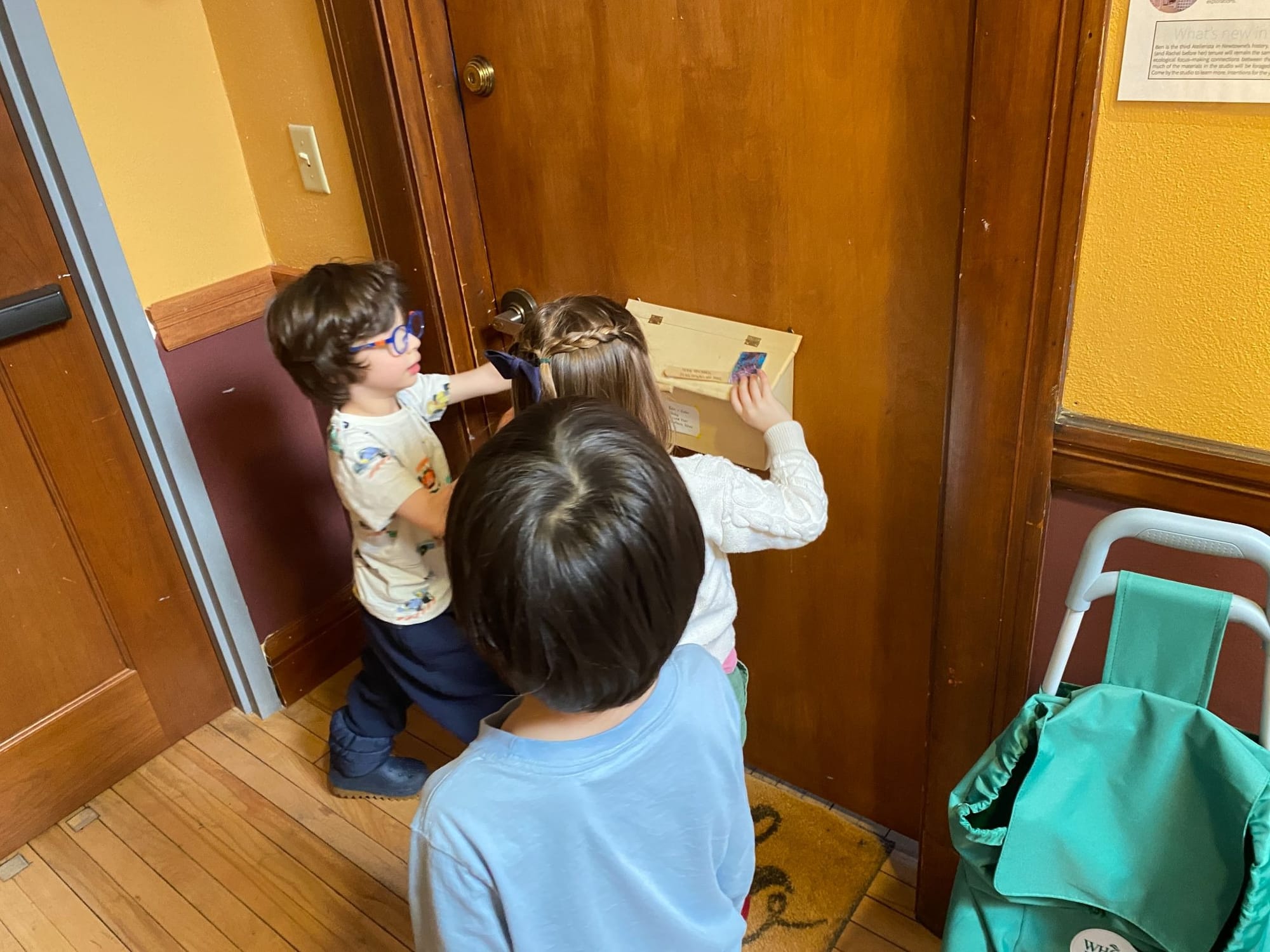
Playing with the Sun is a set of tinkerable materials designed to deepen children’s sensitivity to where energy comes from and the role of sustainable sources in providing power. The materials include solar panels, motors, hand cranks, and chargeable batteries. The trio had participated in a number of sessions where I framed their play as being “energy scientists”, making discoveries with the materials. They and the other Dragonflies had delighted in explorations and learned, for example, that for a motor to spin, the solar panel needs to be in direct sunlight.
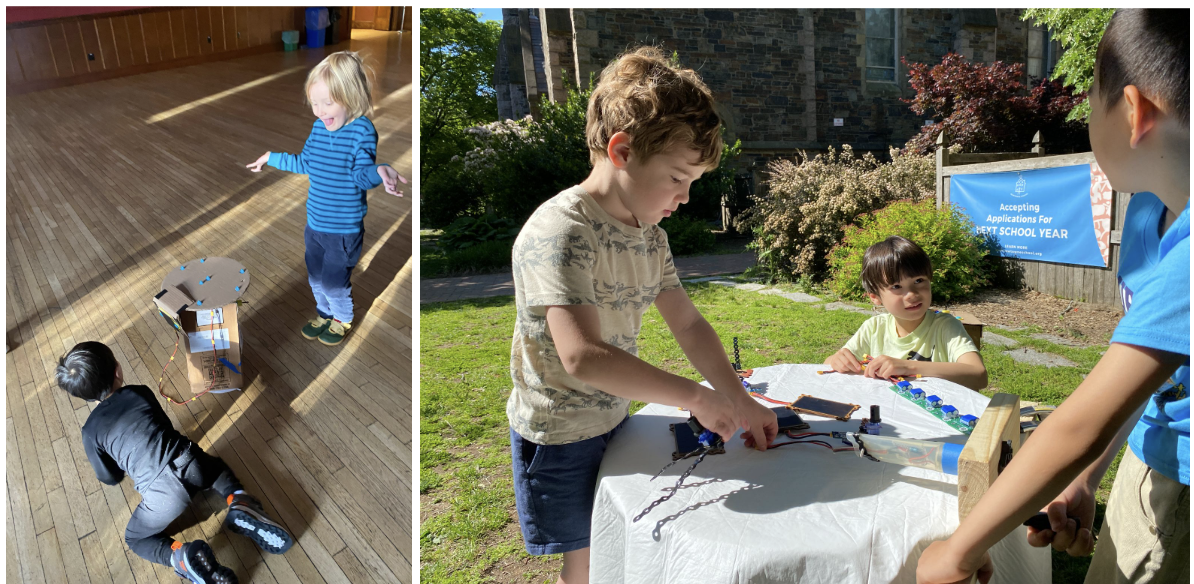
Following a studio routine where each child gets to open the letter and say what they notice (a good early literacy practice), I read the letter:
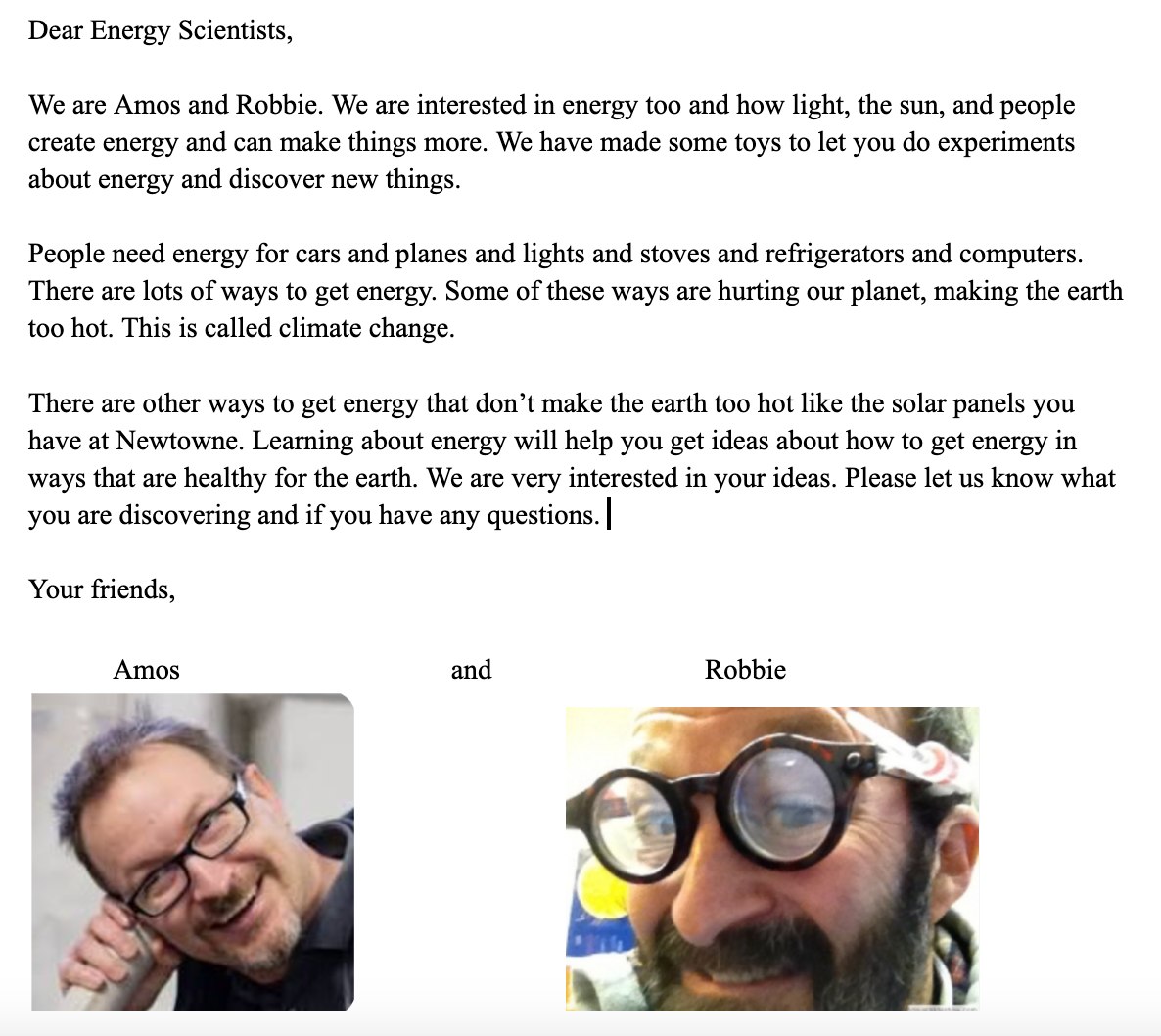
After talking about the letter (the conversation included wondering what Amos was listening to),
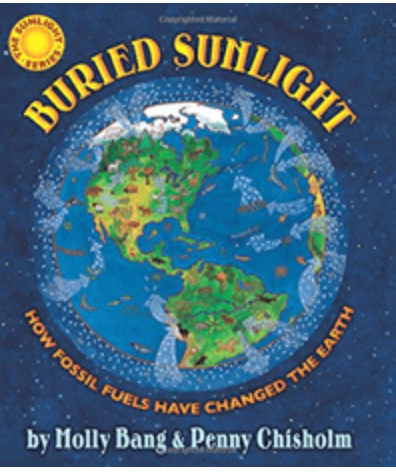
I began reading the trio Buried Sunlight. After a few pages, Carter sighed and said, “Can we just play.” While it would not have been unreasonable to ask him to defer playing for a few minutes, I decided to lean into my commitment to playful learning. I stopped reading, and to Carter’s delight, I let him play. In this session and in a half dozen sessions over the next few weeks the children explored the Playing with the Sun kit. Sometimes they were joined by Leo and Gavin.
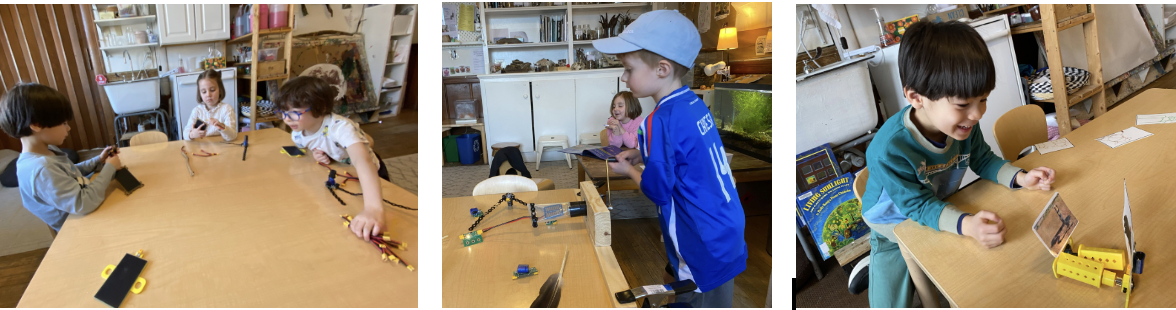
During the play there were moments of frustration when things did not work as smoothly or quickly as the children wanted. Relatedly, there were also times of delight as the children solved problems and made discoveries.
They wanted to share these successes with Amos and Robbie. For example, Carter asked me to record a video where he explained to his fellow Energy Scientists that:
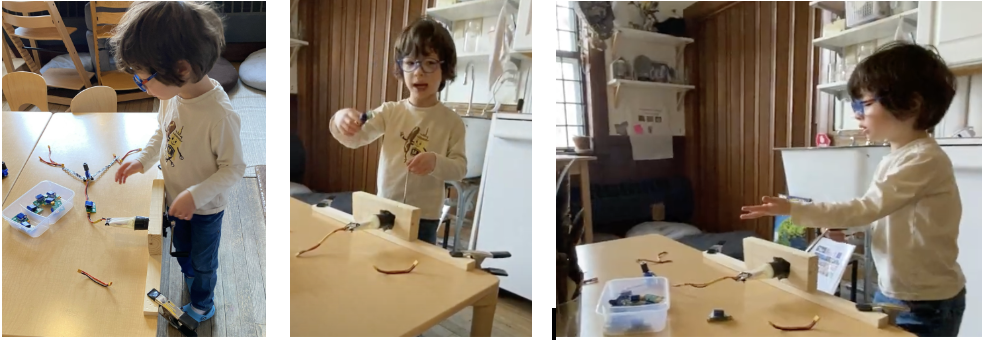
I have discovered two ways to make the motors spin. First, you can use the crank and so you don’t have to use any gas. And the crank can charge up the battery for a second way and then the battery does all the work.
There were also misunderstandings, which I used as opportunities to share information about how electricity is made and its impact on climate.
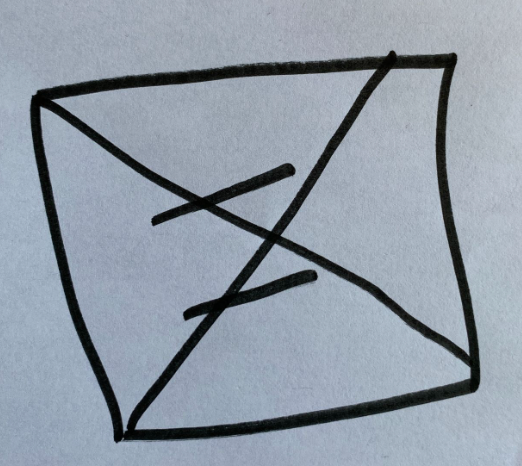
For example, Leo made this drawing of an electrical plug and told me, “Electricity hurts the earth.” He was relieved when I explained that electricity was not the problem, but rather how it was produced. I showed him a page from Buried Sunlight about powerplants, and noted how the solar panels on the roof of our school did not make the gas that is heating the earth.
What about matches?
In the midst of these explorations, Tomo had a question for Amos and Robbie:
Matches make smoke. I have a question: If we could use matches, just matches to turn on fires. Is that OK?
What an important question that in some form all of us confront: how should we live our lives knowing about climate change. It was also the kind of question I had worried about. Tomo is a thoughtful person and feels things deeply. Was he freaked out by the idea that he was contributing to the problem?
I talked with Amos and Robbie and Newtowne’s director Caitlin Malloy about how to respond. In the end, Tomo received a letter from Amos and Robbie explaining:
It is OK to use matches. When it comes to making the gases that are making the earth too warm a match is like an ant and a powerplant is like an elephant. Don’t worry about the ants.
There are three ways that you can the other Dragonflies can help the earth:
- Use energy that doesn't burn things. So when we can, use bikes or walk rather than a car that burns gasoline.
- Tell the people who make our energy and electricity to use the sun and wind instead of burning oil and coal.
- Imagine ways to make energy that doesn't hurt the earth. This means being creative, thinking together with family and friends (and when you get older, the people you work with) about how to make energy safely.
Tomo seemed satisfied with this response. Conversations with his family confirmed he was not unduly alarmed by the inquiry. Fortuitously, I would use the answer to Tomo’s question when talking to the rest of the Dragonflies about climate change.
At the end of March I asked Emilia if we should expand the exploration of climate change to all the Green Dragonflies. Her response:
If we don’t know about climate change we will do bad things to the earth and then we will melt.
Good point. With the success of the small group it was time to engage all the Dragonflies in an exploration of climate change.
All the Dragonflies
I decided to bring the rest of the class into the exploration by leveraging the Special Critter Friends project. Since January I had helped each Green Dragonfly select a unique animal who would complete or compliment them–makes them stronger. My hypothesis was that a connection with a specific animal would strengthen their solidarity with the rest of nature.
After helping the class generate a list of possible species, I met with each child to pick an animal, give their critter friend a name, and talk about how it completes them. Leo selected a puppy he named Peanut and told how Peanut helps him make friends. Phillip picked an owl he named Flitty and explained how Flitty, among other things, can get his sister’s hat back if the wind blows it up in the air. Emilia and Wole selected chameleons named Lyci and Bucksaw respectively, who both used their long tongues to fetch things for them. I helped the children make two drafts of a book about their Critter Friends.
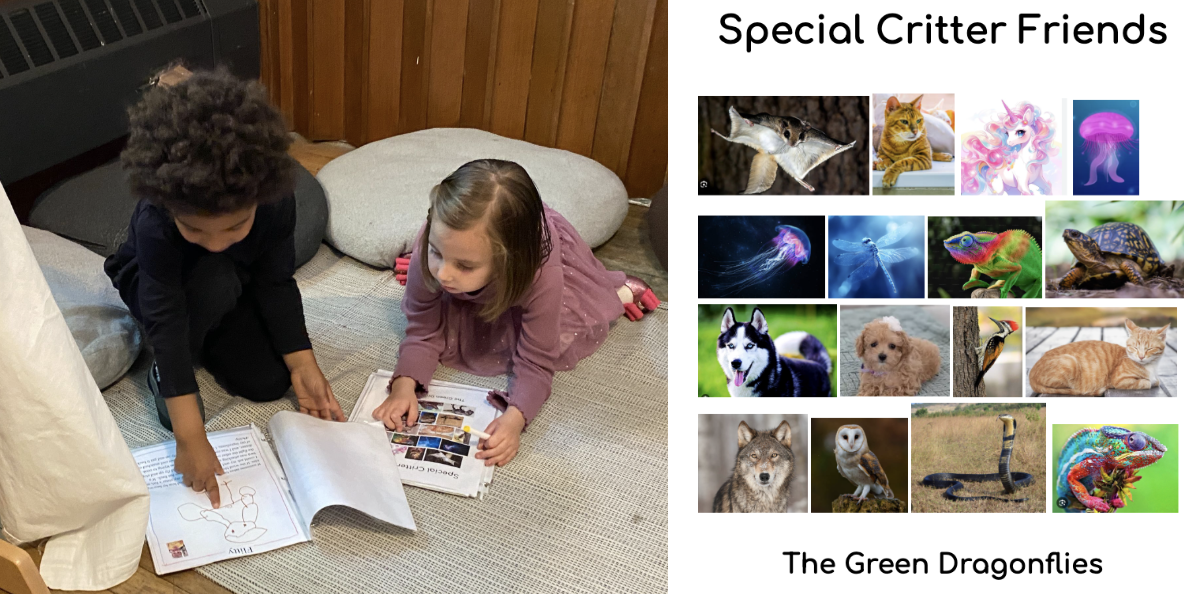
The children whole heartedly embraced their special critter friend. When a new student, Muzhi, came to Newtowne, Wole told me emphatically, “Muzhi needs a special critter friend.’ Emilia told me longingly, “I wish my special critter friend was real.”
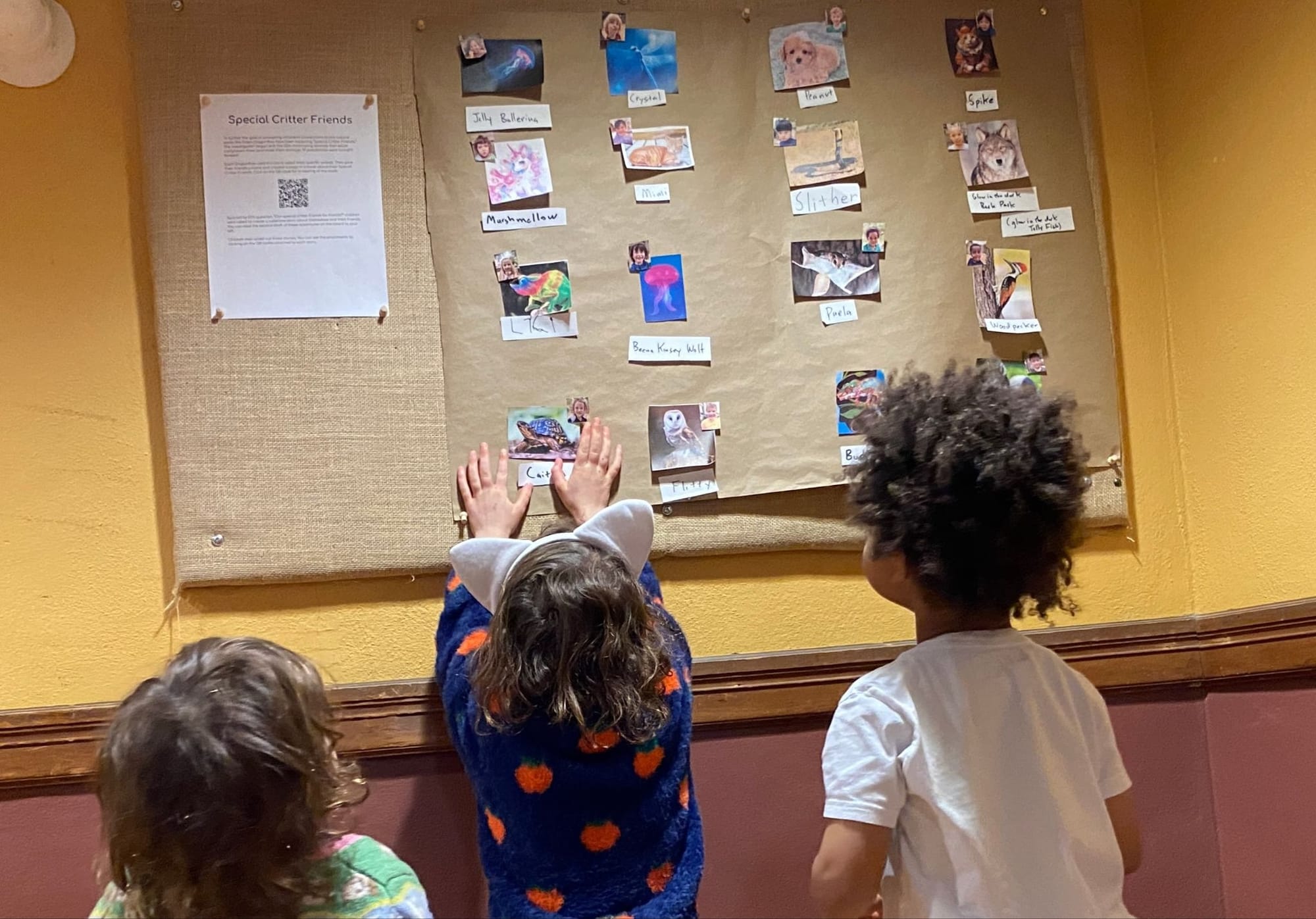
At the beginning of April, when the Dragonflies came to the studio in small groups there was a letter for them from their Special Critters Friends. Not surprisingly, this was exciting. The letter explained about climate change and how it was impacting the critter friends; less food to eat and fewer places to live. The critter friends asked the Dragonflies to think of ways to help, framed around the three options I had shared with Tomo (personal choices, advocacy, and creative problem solving).
To help children come up with ideas to help, they could read books about climate change, sketch out ideas, construct with cardboard, and use the Playing with the Sun materials.
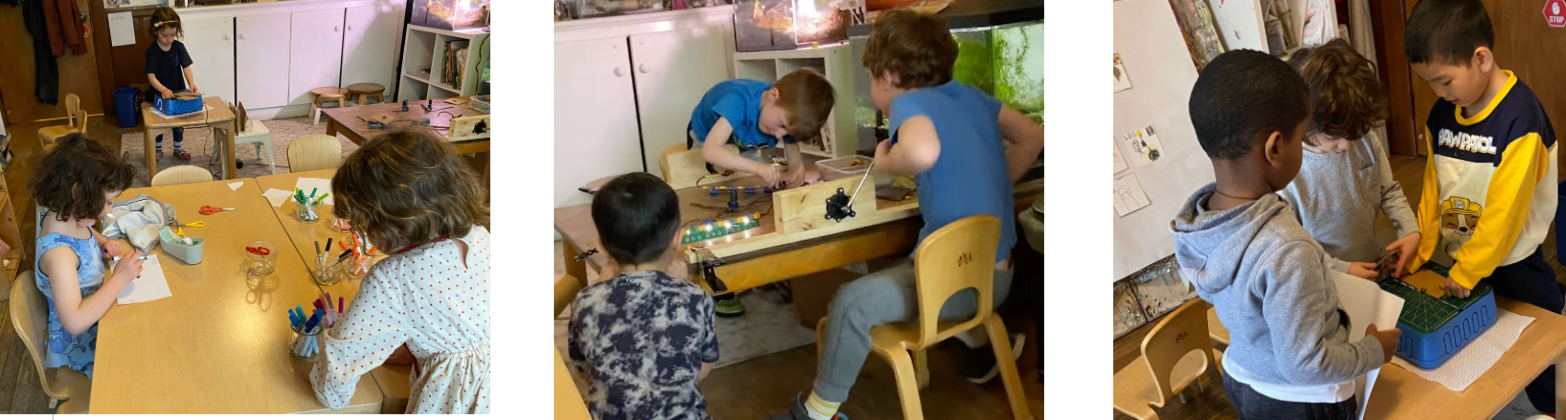
Here are some of the ideas that emerged.
Regarding choosing to use clean or less energy, Carter proposed electric trains and cars that did not burn diesel or gas. Lucia thought that she and her family could run to school instead of driving.
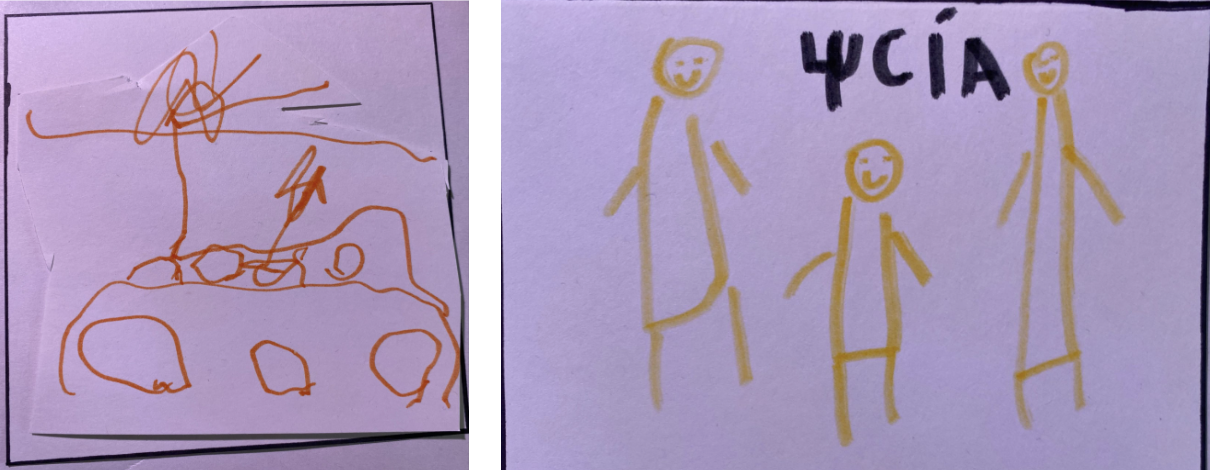
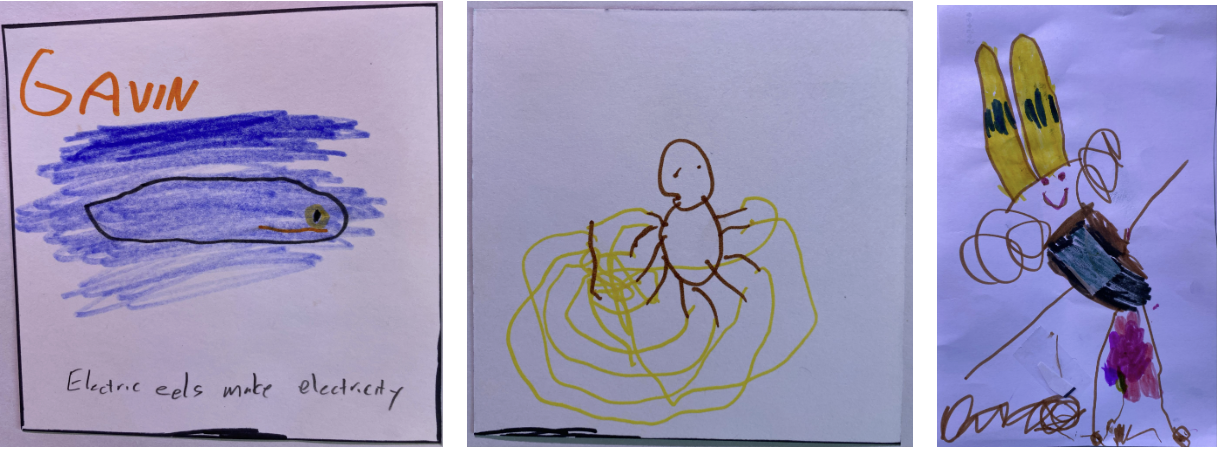
To convince the people who make our electricity to use solar and wind, Gavin thought we could write a song to explain the situation. Nya proposed reminding them how beautiful the Earth is with a rainbow and pictures of their family and friends.
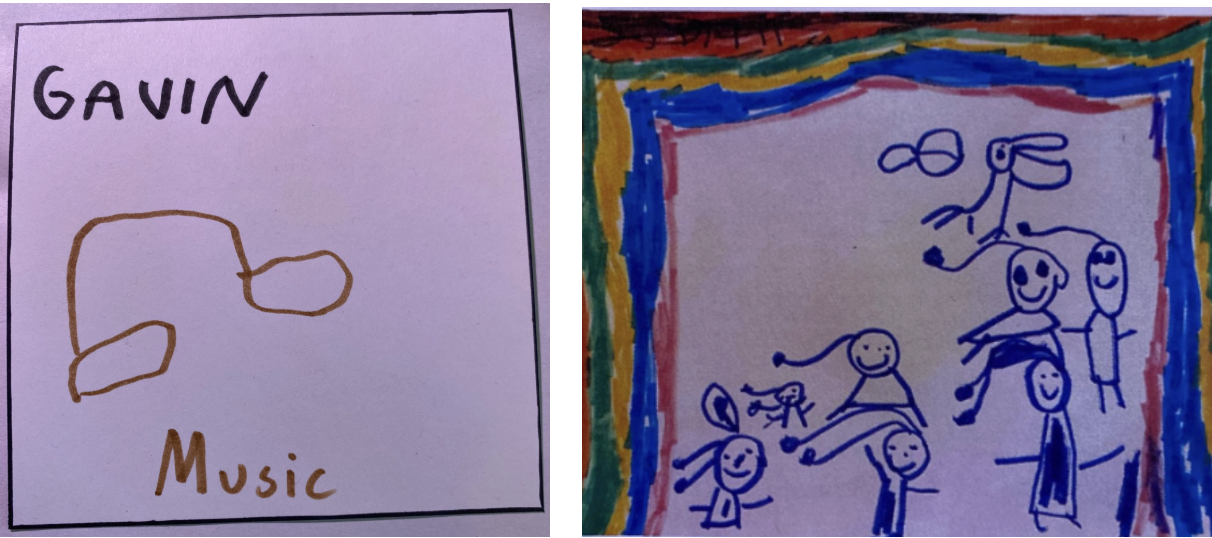
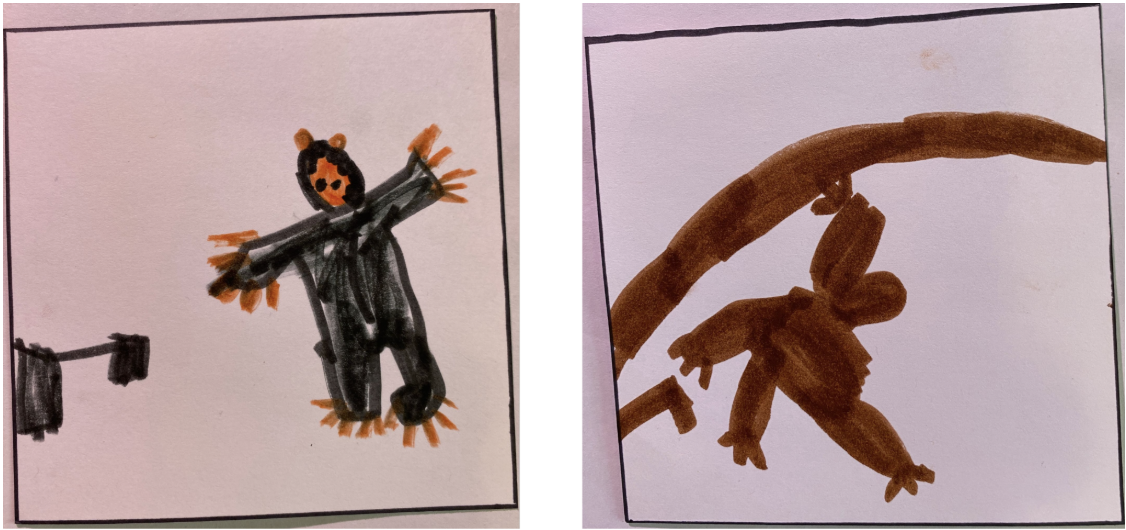
Regarding the invitation to be imaginative, there was a number of suggestions of how other animals could help. Tomo thought the hand cranks that make electricity could be turned by gorillas and chimpanzees.
Gavin thought of harvesting electricity from electric eels. Phillip thought perhaps octopuses could produce electricity and Noa suggested that rabbits could make energy.
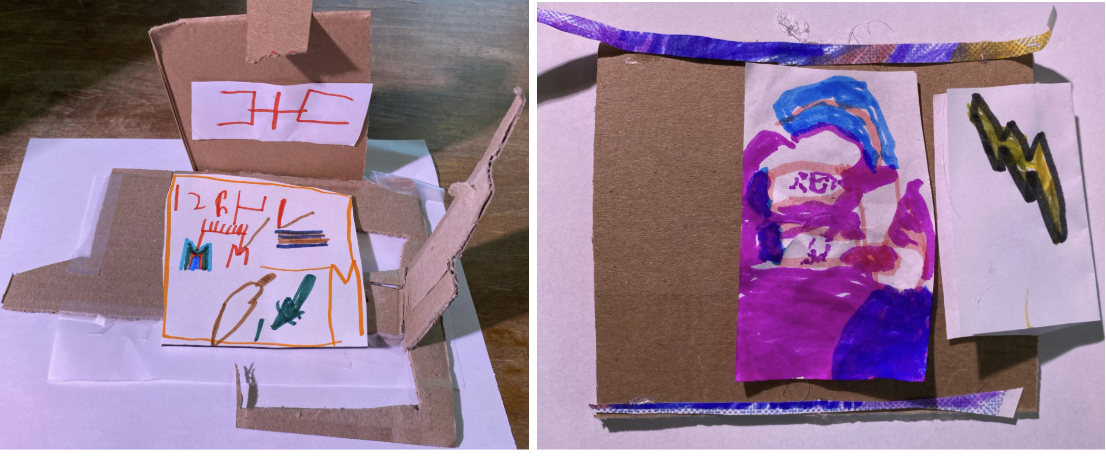
Finlay and Julia constructed safe places out of cardboard (a house and a room) for their critter friends, though they misunderstood the danger. Like Leo, they thought electricity posed the risk to their friends.
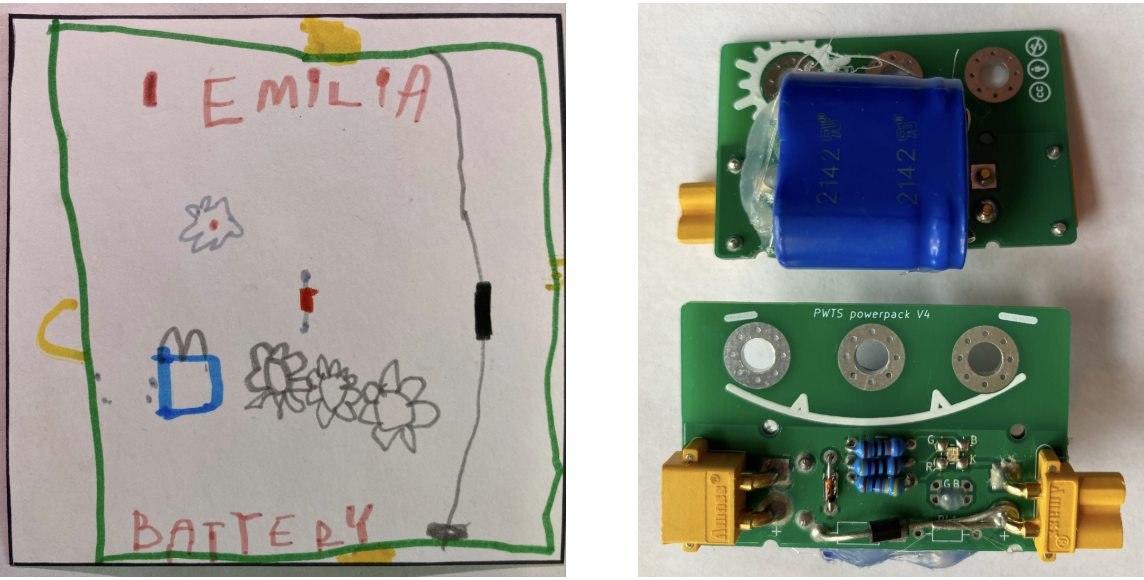
Emilia thought batteries could provide a solution and carefully drew the circuitry of a Playing with the Sun battery. The idea of batteries would gain currency in the children’s second round problem solving.
Björk, Muzhi and Nathan enjoyed drawing and making with cardboard, but did not link their representation with a specific idea. For Björk and Muzhi, this may have been due to my limitations in explaining the situation to them in their native tongues (Danish and Maiderin).
Eli had a totally different idea. He thought that we needed to get up very high, either by using a giraffe or a rocket to see the Earth in order to better understand the problem. I explained to him that this is called research.
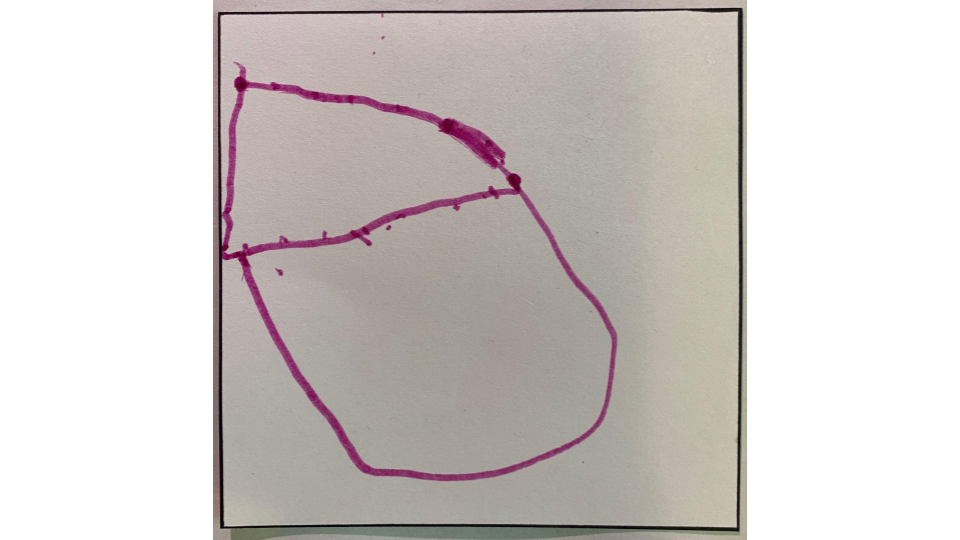
Of course, I was not expecting the children to come up with a solution to the climate crisis. I was pleased that most of the children had ideas to help their critter friends and felt I could use this entry point to continue the Dragonflies inquiry into climate change.
Good ideas from good ideas
Other priorities intervened and it was almost a month before we were able to return to the investigation of climate. The relaunch came in the form of another letter from their Special Critter Friends. Seated in front of a poster with representations of their previous ideas to help the critters, I read the Dragonflies the letter which was customized for each small group (signed by their specific critter friends).
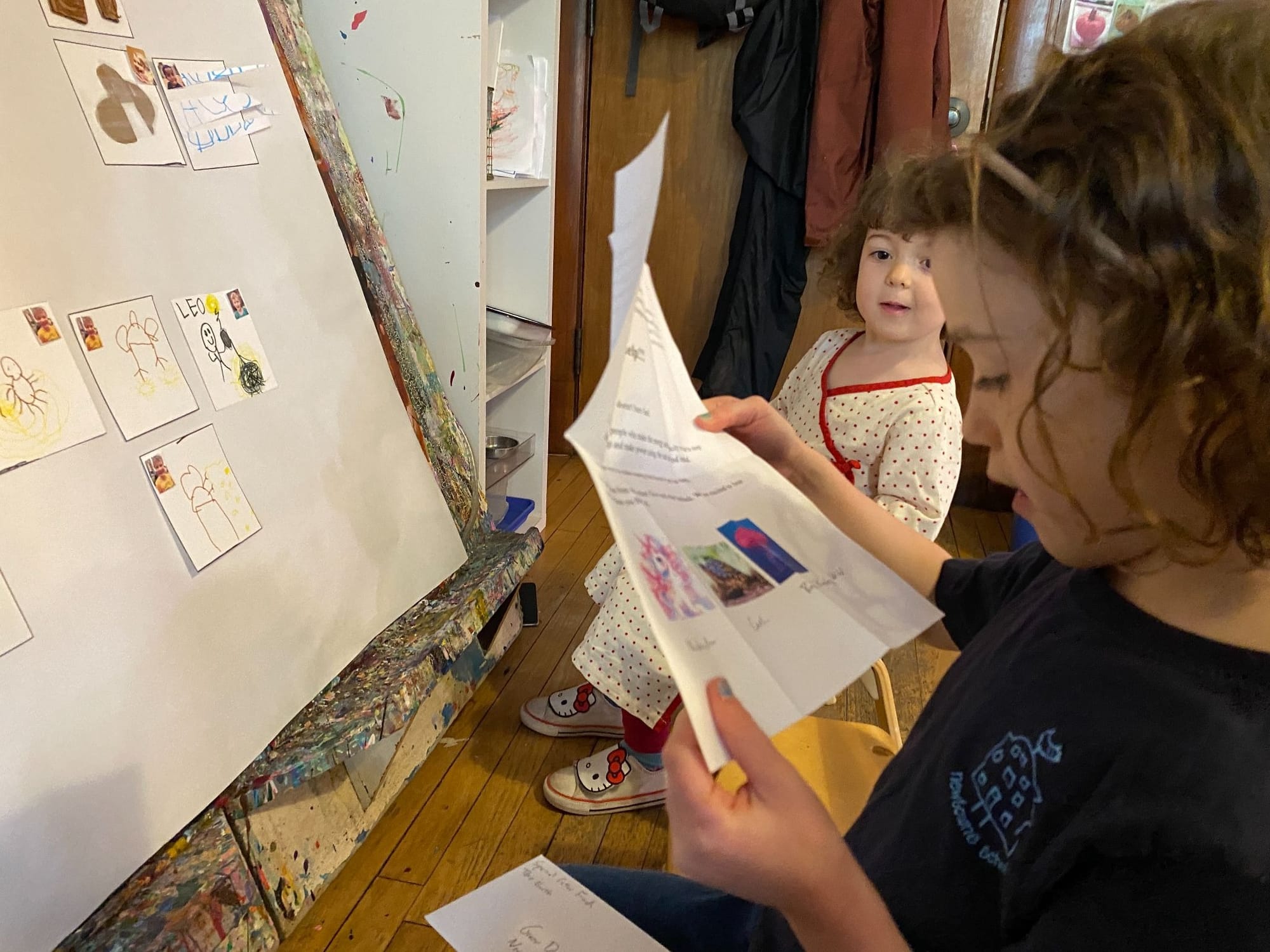
For Tomo, Emilia, Carter, and Wole the letter read:
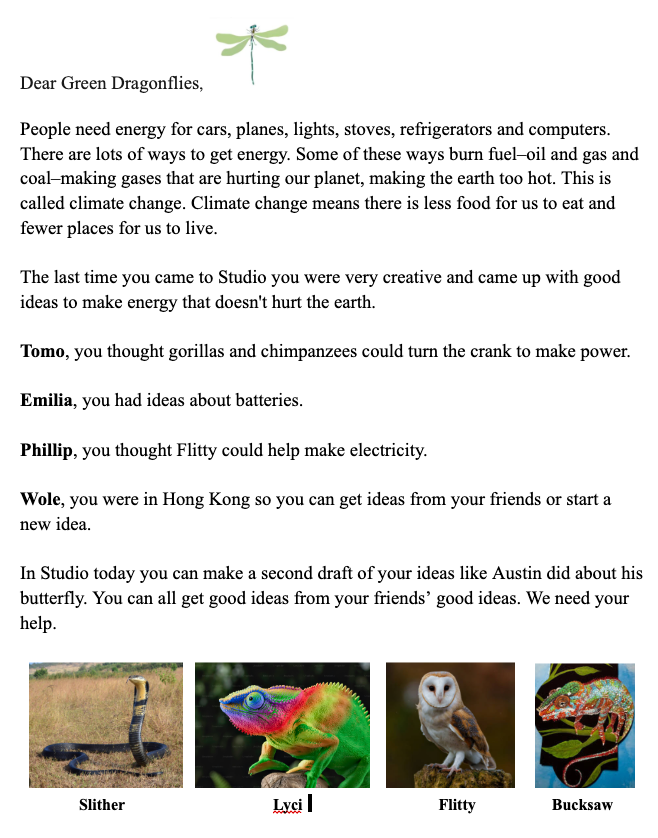
"Good ideas from your friends’ good ideas" refers to a practice the Dragonflies were familiar with where children were told about peers’ ideas and encouraged to use them as spring boards for their own thinking. Austin’s Butterfly refers to a story created by EL Learning's Ron Berger recounting how a first grader received feedback from peers to inform a drafting process where he produced successively more accurate drawings of a swallowtail butterfly. I had previously shared the story with the Dragonflies to highlight the value feedback and iteration to support their learning
After reading the letter I asked the Dragonflies to give feedback to each other about their initial ideas. I also gave feedback, for example, clarifying to Julia and Finlay that electricity was not the problem but rather how it was produced. Like the first sessions, the children could then play–draw, construct, read books, and use the Playing with the Sun materials–to help get ideas.
Some children built on their previous ideas. Julia, now aware the problem was warming rather than electricity, continued creating a safe house for her critter friend (Marshmallow the unicorn) where there was, “A kitchen where plants could grow if fire makes the food stop growing.” Others built on friends' ideas. After hearing my feedback to Eli–consider what kind of research the rocketship would conduct–Finlay too made a rocketship, “To tell if the earth is too hot.”
A handful of Dragonflies enjoyed drawing and constructing, but without a connection to climate change. In the month between the first and this second session they had lost interest in the question of climate change, and it would have been counter to the ethos of playful learning to force them to return.
And there was a group that, during their session, built on Emilia’s focus on batteries. During their play they explored how the handcrank charged the batteries. For example Tomo connected a line of seven batteries to the handcrank. He delighted in seeing the batteries charge in turn, going down the line until all the led lights shone brightly (the sign of being charged). At the end of the session the children explained their plans to help their Special Critter Friends (or in some cases for their friends to help them):
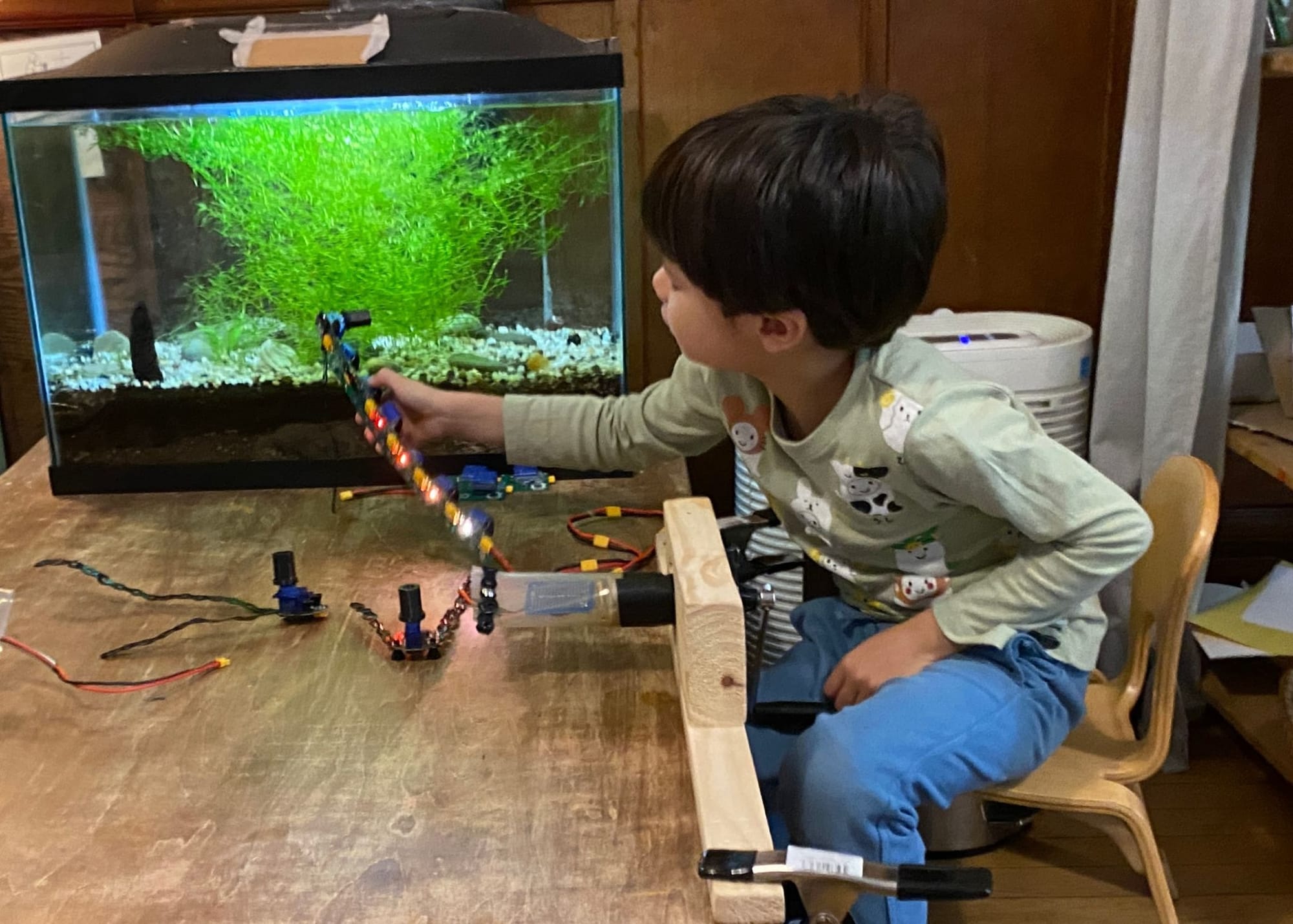
Phillip: I would go back in time and make a bunch of batteries so in the future we don’t have to use gas.
Tomo: I would make batteries for all the countries in the world.
Emilia: Lyci [her Special Critter Friend] can stick her tongue and get batteries for humans so the planet can get more electricity.
Wole: Bucksaw [his Special Critter Friend] can catch bugs with his tongue so humans can have more food.
Then it was June and this group of Green Dragonflies' time at Newtowne came to an end. I am writing this essay in the summer where in Cambridge we are in the middle of a brutal heat wave, one that has the fingerprints of climate change all over its record breaking temperatures. I worry about the future these Newtowne graduates face because of our inaction on climate. I take some solace that they left our school with an understanding that solving big problems like climate change requires getting feedback, iterating, and getting good ideas from others.
Lessons for supporting the new Green Dragonflies
In September there will be a new crop of Green Dragonflies. As I think of breaking the news to these children, lessons about time, team, and talk stand out from this past year's endeavors.
More time is needed for children to fully engage in an exploration of the complex question of climate change. While many of the Dragonflies remained engaged, even with the month-long gap in sessions, it is noteworthy that among the most engaged were the children who had participated in the small group. Tomo, Carter, Emilia, and Gavin had more time to ask questions, process information, and have misconceptions cleared up. A letter referencing climate change made sense to them where, for other children, the sessions were primarily opportunities to draw and build.
Breaking the news about climate change was a team effort. Any emergent inquiry benefits from input from colleagues. This is particularly true when teaching about serious topics such as climate change where there are strong feelings about when and how to raise the issue with young children. I leaned on the technical expertise of Amos and Robbie. Caitlin’s encouragement to break the news gave me the courage to go forward and her knowledge of child development helped me think through how to respond to Tomo’s question. The culture of Newtowne which includes ample time to plan and reflect was essential. Finally, the trust of families who sent supportive emails after I shared my plan to break the news made the inquiry possible.
In the end, how I talked about climate change, first to Tomo, and then to all the Green Dragonflies feels right for the culture of Newtowne and how I want children to ultimately understand how they can contribute to mitigating climate change. The framing–actions that children and their families can take, advocacy, and creative ideas–provide opportunities for agency children need to activate a playful approach to the problem. In the Dragonflies explorations being able to draw, make, and crank allowed them to experience choice, wonder, and delight in their learning. Them doing so while creating, collaborating, learning about their learning, and thinking about how to help others meant that they were doing exactly what I wanted them to be doing.
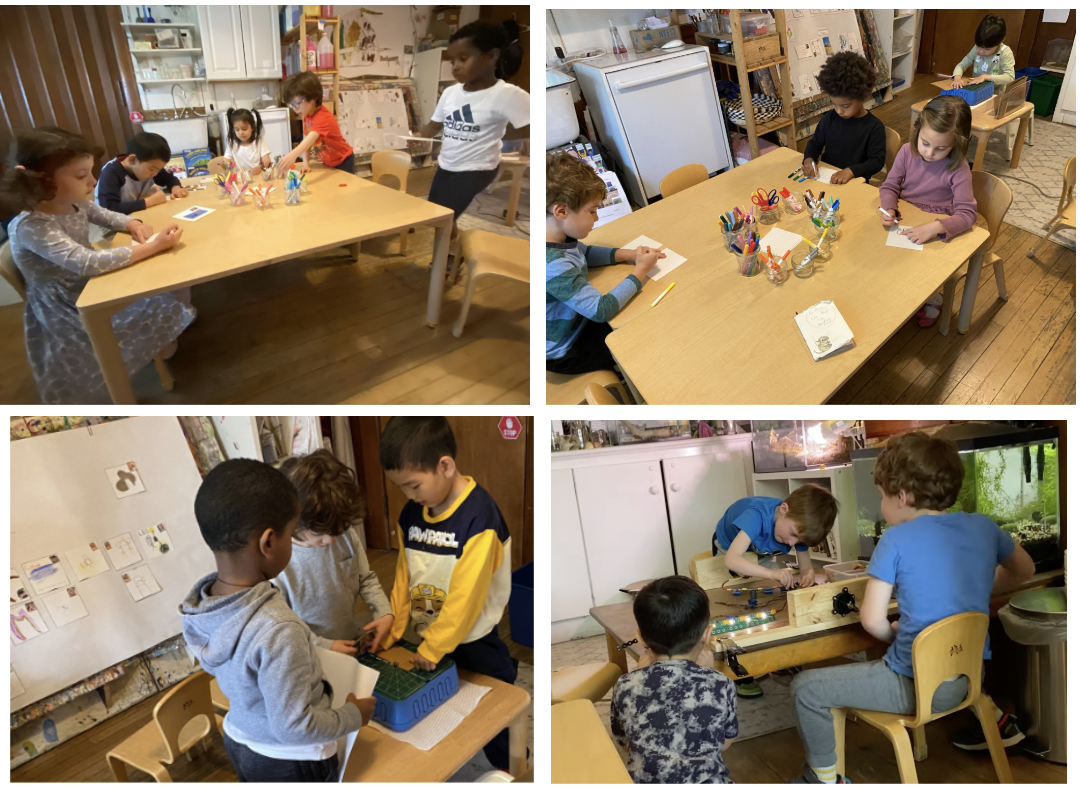
As I look forward to the new school year, I plan on applying these lessons when I break the news about climate to the new crop of Dragonflies. While the entry point may be different–perhaps an interest in shelter or transportation–providing a playful learning experience for the children is the goal.
Thanks the team who supported me, intellectually and emotionally, as I navigated breaking the news about climate change to the Green Dragonflies: Caitlin Malloy, my colleagues at Newtowne School, Amos Blanton and Robbie Berg, and my family, whom I can turn to and ask about pretty much anything and get thoughtful, critical, and supportive answers.
As often happens for The Remake, Mara Krechevsky, Amy Rothschild, Liz Merrill and Caitlin Malloy provided insightful feedback on drafts of this essay.
I also want to acknowledge my co-authors on the Pedagogy of Play book–Jen Ryan, Mara Krechvesky, Megina Baker, Sav Schulz, and Yvonne Liu-Constant–and the teacher researchers who generously gave their time to participate in the project. A special shout out to Carolina Maldonado and Eduardo Escallon for stepping in to support the project in a moment of crisis.