Play is sub-optimal, and just what we need in the Climate Crisis
Evolution doesn’t design — it repurposes. The adjacent possible is the set of next viable moves that are just one step away from what already exists. Stuart Kauffman’s term describes how a feather, evolved for warmth, one day becomes a flight surface. Or how a failed adhesive leads to the Post-it note. Steven Johnson calls it “a shadow future, hovering at the edges of the present”: innovations that are possible right now, but only if someone recombines the pieces already lying around. Each new innovation paves the way for further breakthroughs. Once the post-it note was just an adjacent possible to taping a note on the wall. After it was invented, new adjacent possibles came into view that were inconceivable before: from wall-sized artworks where post-its serve as pixels, to the way herds of them roam around the whiteboards in design meetings. When an adjacent possible becomes an "actual," it reveals a new vantage point from which further adjacent possibles become visible.
How does Play relate to the adjacent possible? Play is how children explore adjacent possibles (creativity) and build their understanding of how one thing relates to another (learning). When a child starts building with a pile of loose Lego bricks, they're exploring what might grow out of placing one brick here, and another over there. And when a dragon emerges and decides to storm the castle, they're literally thinking through how events are likely to happen. As play therapists know, this kind of imagination-driven play is nearly always a reflection of what children see and wonder about in their day to day world. So the power of these kinds of playful learning experiences lies in how the child develops their ability to 1) explore creative possibilities, and 2) think through how a situation might develop given a set of circumstances. Through play, children develop their understanding of the many bewildering relationships they encounter in our world in order to build their sense of how a given situation will likely “play out.”
But we see less and less of this kind of open-ended play these days.
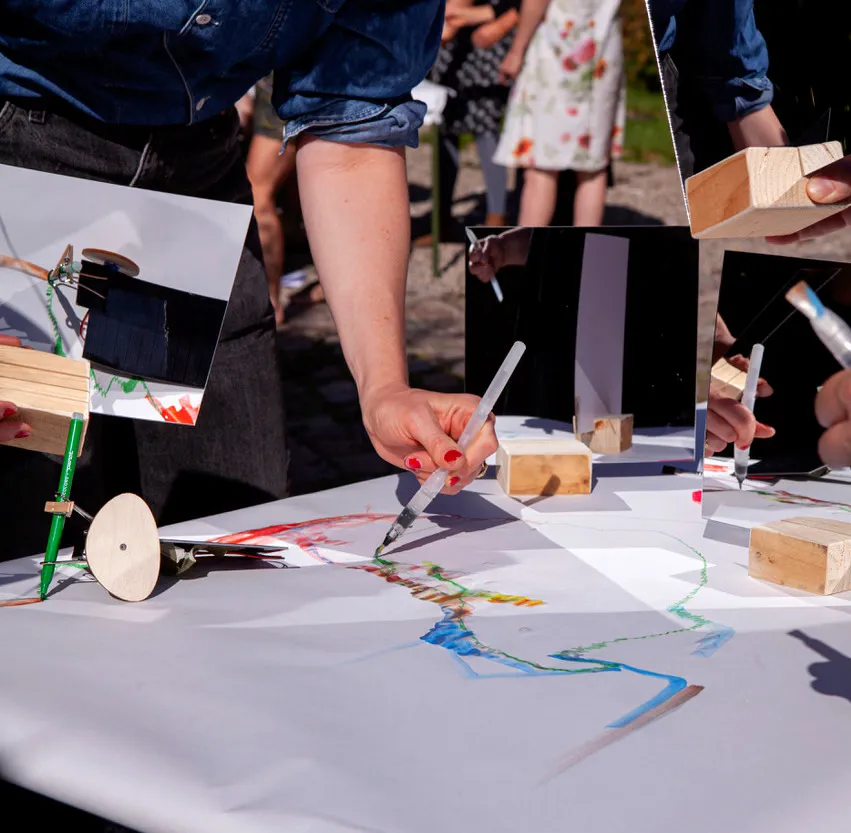
Lege and Spille: Two different forms of Play in Danish
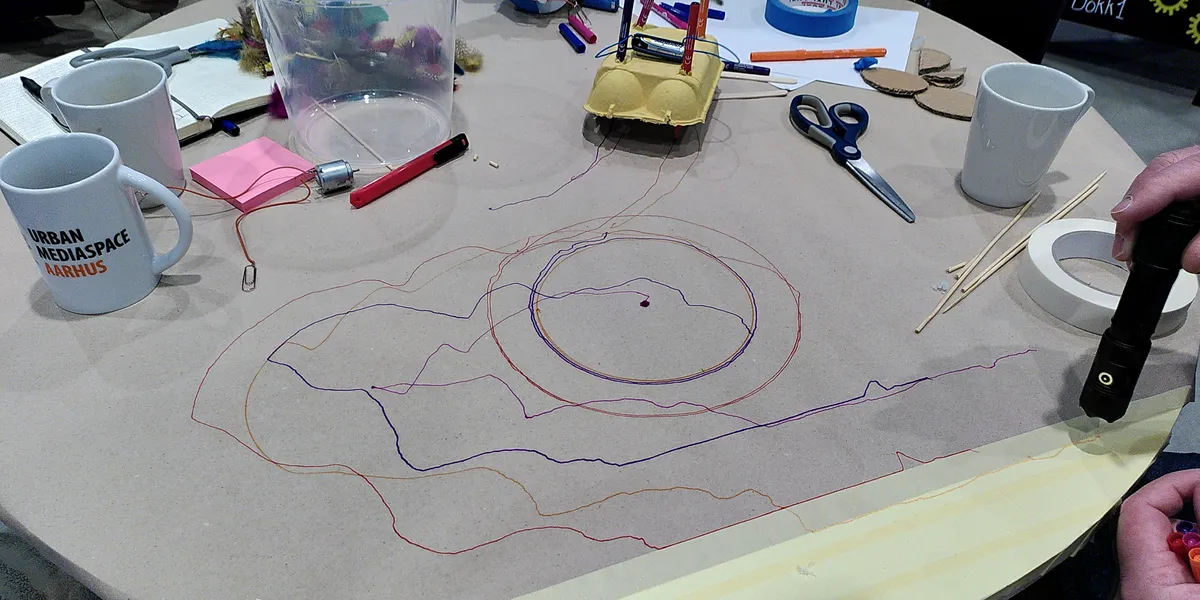
Danish has an important distinction that English lacks. In Danish the words Lege (lie-yuh) and Spille (spill-uh) are both translated into the english Play, but there are subtle and important differences. Spille refers to play that is about optimization: getting more points, or doing something better. You Spille football, or cards, or checkers. Games like this tend to have a set of rules and a fixed structure, and the play happens within those rules. Lege refers to play that is open-ended, where the rules themselves can be made up and even changed on the fly by the people playing. Playing at house or pirates are both forms of Lege, and so is building something new out of a pile of Lego bricks, the Scratch programming language, Playing with the Sun, or sticks and mud.
In terms of creativity, Lege and Spille are on two ends of a spectrum. Lege is an exploration of new structures and ideas - adjacent possibles. The play may be constrained in some ways and have rules, but the rules can be re-written by the players. Spille represents optimization - playing better, getting more points, and winning. To be sure, to Spille football often does involve creativity. But it's a creativity of optimization, usually within a fixed set of rules. You cannot show up at a football game and say: “Hey guys - instead of counting goals, how about we say the winners are the three players wearing the most shirts at the end of the game?” Well, actually, you could. Assuming your fellow players go along with it, you’d be changing the play from Spille to Lege. In other words, you’ve used the context of football to invent a new adjacent possible, just one step away: the shirt stealing game. You’ve got everything you need for it on the football field already.
Now if you and your weird friends keep it up for a few games, it will start to become about optimization again. New “shirt-locking” arm positioning techniques will be born, along with strategies for cooperating to steal another player’s shirt. Sooner or later a "Pele" or legendary champion of shirt-stealing will appear, someone who can sneak up behind you and dive upwards through the back of your shirt. They’ll be up in the air wearing all your shirts while you, standing there shirtless, wonder what happened. And here we are back to Spille again because now the shirt-stealing game has become all about optimization within an established set of rules and practices.
Of course, a game where people steal each other’s shirts is just ridiculous, and not in any way similar to recognized, well-established sports. In these, people in costumes get paid millions of dollars to run around feverishly trying to put a ball into a net, over a line, or into a hole, which is perfectly reasonable and just the way things ought to be. But it’s important to remember that all modern sports were once odd adjacent possibles of some precursor we’d probably think of as quaint today, like the peach baskets nailed to a railing in 1891 to invent "basket ball" (known today as “basketball”). From peach baskets to Michael Jordan is just a matter of moving through the adjacent possibles. Unless of course the boss is so focused on optimizing his peach harvest that he can't spare any baskets, and everyone’s so busy they don’t have time to mess around with them even if he did. In that case both basketball and Michael Jordan get left behind in the realm of potential adjacent possibles from long ago, never to be realized.
Playing (Lege) in a (Spille) Optimized World
The world we live in today is obsessed with optimization: from your kindergartner's career path, to maximizing the yield on your retirement plan. All are things to be optimized, clamoring for your limited attention. There is far too much Spille, and this tends to crowd out the space and time that would otherwise be fertile ground for Lege and the exploration of new adjacent possibles. Even the success of artworks and films are measured in dollars, rather than how well they can offer their audiences new ways to see. This bizarre obsession with quantification-to-find-the-best is more or less accepted by everyone, just as they accept that learning can be measured by grades and test scores.
Could this be part of the reason why everyone seems so depressed and exhausted? Optimizing for a game you can’t win and don’t find meaningful just sucks, especially if the threat of losing that game could be catastrophic for your health and the health of your loved ones. There are more incentives than ever to keep you locked into optimizing, usually for someone else's capital: From ever expanding mortgages that don’t keep pace with salaries, to your career prospects and your neglected LinkedIn profile. As the middle class is eroded away in the name of the already obscenely rich getting a little more obscenely richer, the risks of failing to optimize continue to grow. In America there are always plenty of examples of the terrible outcomes that await you and your loved ones should you fail to optimize enough: homelessness, poverty, and addiction are everywhere.
Should we Play in the face of this burning anxiety, as the ever expanding maw of economic destruction grows nearer? Yes, absolutely. Well, what else is there to do if you can't win - and maybe your great grandchildren can't even survive - the game that we're all playing (Spille) today? Playing (Lege) is always a silly proposition: It will probably come to nothing (except for when it comes to something). But even so, it’s fun! It’s the human equivalent of what evolution is doing when it explores adjacent possibles just to see what happens. Besides, if the game as it's played today is 1-3 generations from ending you, your community, and the rest of the planet, isn't it better to invent a new game, maybe one where there’s better odds against the plutocratic house?
How do we Play towards a Future we Want?
The adjacent possible where we collectively transform our society and resolve the climate crisis isn't visible from here, and that's not surprising in the least. If the best solutions were obvious, there'd be no need for playful exploration, collective design processes, or research of any kind. While we might not know the solution or even what it will look like, we do know how to get there.
The first step is: stop spending all your time optimizing for the old game. If there is one thing for certain, it’s that well funded retirement plans do not matter on a planet with a dying biosphere, and neither does your LinkedIn profile. If these are the things that are crowding your mental desk, consider sweeping them onto the floor. Refusing to optimize for the current regime opens up a lot of time to explore and to experiment, and to play (Lege) with different ideas.
The next step is to look for an adjacent possible that seems interesting and relevant under the circumstances, and start making it into an "actual" to see what happens. In other words, start making time to play (Lege) towards something new and sustainable, and see what adjacent possibles emerge. Like to think about people? Invite friends over to spitball about futures they want to see, and then figure out what steps you can take in a new direction together. Got a knack for making stuff? See if you can invent a way to dry clothes with less energy. Maybe you can beat a clothesline, and maybe you can't. But perhaps there's an adjacent possible out there that, when prototyped, provides a vantage point on another adjacent possible that really works.
Because this is a form of Lege, you can play with whatever you like. In fact, you have to play with whatever you like and are genuinely curious about, or you won't be able to find the energy and motivation to do anything meaningful. This kind of collective exploration of adjacent possibles only works in the aggregate, because we all care about different things, and yet we're all here together on the same planet. Of course unless you are independently wealthy, it's nice if what you want to play with helps you make a living in late capitalism. There will have to be compromises, and perhaps times when you have to sell your time to make ends meet.
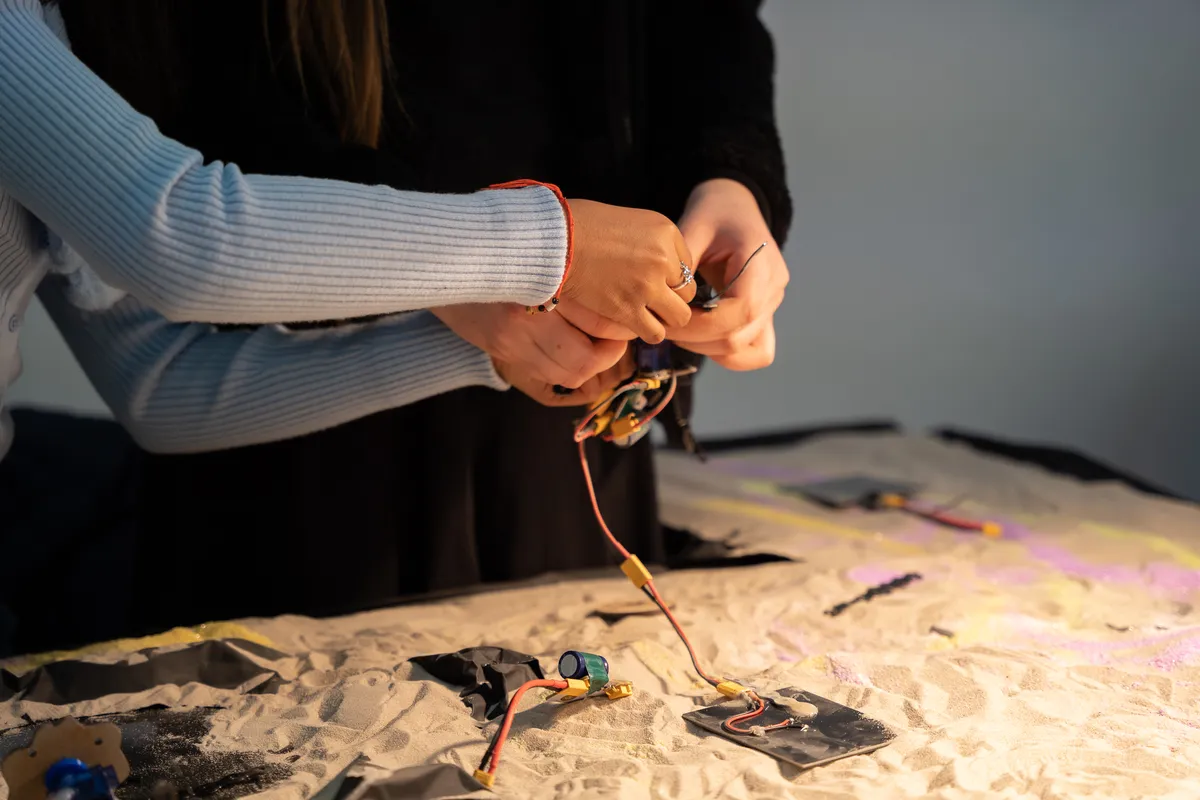
Here’s what I’m playing (Lege) with right now: Let’s make educational technologies about sustainability in the form of open source activities and play materials, so everyone is free to use and modify them. I think that’s a different and more powerful way of inviting communities of educators and children to relate to technology than that which is offered by big tech or the startup world. To Play (Lege) with this requires time. That means avoiding spending too much time optimizing for academic or business careers which, as any successful person will tell you, eats up most of their time. But what good is a great career on a dying planet, unless that career is meaningfully helping somehow?
You might have to be willing to live pretty cheap to play your own game. And it might come to something or it might not - but the point is, nothing new can get invented unless people like you and me stop optimizing for the collapsing ecology of the early 21st century, and make time and space to play (Lege) with something new, and find others to play (Lege) with.
So if you find yourself stuck on the lemming highway, do not stay in your lane. Find a way to explore adjacent possibles and play towards the future you want to see. If that’s not possible in your current job, consider taking the next exit to mess around with something new and maybe make some new friends before we reach the cliff. Remember, the belief that more salary will make you happy, or a big 401k will make your future secure, or whatever it is, is all couched in the idea of a world that will stay more or less the same as it has been. But the only thing we can be absolutely certain about in our climate change driven future is that things will not stay the same. Even if we're lucky and someone figures out how to stop the plutocracy from pursuing suicidal fossil-fuel policy for themselves and the rest of the living world, we're going to need new games to play together (Lege and Spille). And that means most of the old optimization strategies are going to be useless. Think of all the time and energy you’ll save! What will you use it to play with?