Learning from the Platypus
Ben Mardell and Amos Blanton
In our most recent essay we explained the urgency of our work, reviewing the science of climate change. In this essay we address the implications for educators of the climate crisis, providing an unlikely role model to guide our work.
And so… what do our children need?
In The Betrayal of Isaac we shared the science which leads to the inevitable conclusion that the children we teach face a very uncertain future. We noted that powerful political and business interests have aligned to block efforts to create a more just and sustainable future. We ended the essay with a question: what should we (as educators) be doing to help prepare our learners for their uncertain future?
Answering this question requires considering what our children need–the skills, dispositions, and understandings–to help them become the healers, artists, builders, scientists, teachers, citizens, and family members of this uncertain future. They are going to need a lot.
Gazing into our children’s uncertain future, we want to highlight an attribute not often found in government standards: that our children will need to know how to improvise. Increased heat in the atmosphere doesn’t just make things warmer, it makes things less predictable. So while we cannot predict exactly which challenges our children will face and when, we can know the challenges will be formidable. To navigate them they will need to take initiative and be creative. They will need to think scientifically to evaluate evidence and solve problems. They will need to work in collaboration with others. They will need to work in harmony with the rest of the natural world, with an understanding that they are part of a vast and complex interdependent system. They will need to be curious, exploring unexpected ideas as they come up. And they will need to adapt to situations that no group of humans have encountered before. In short, they will need to know how to improvise.
With the needs of our children in mind, let’s turn to the platypus.
Consider the platypus
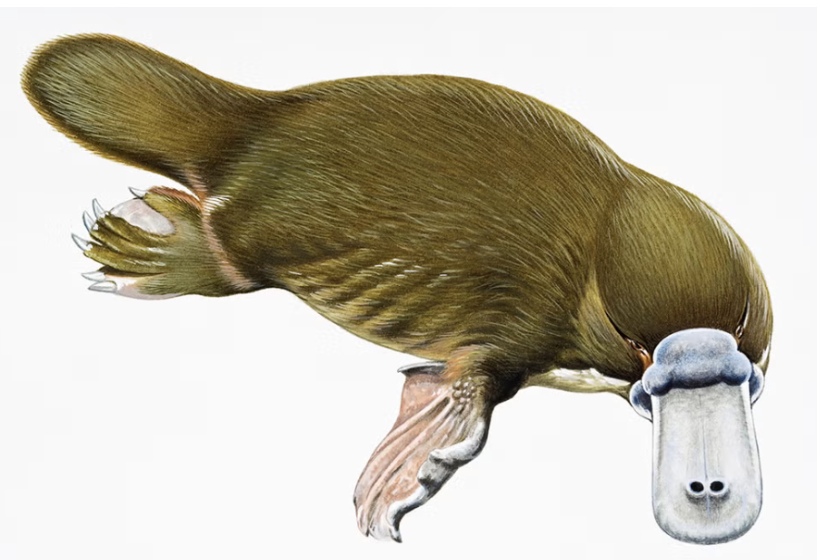
The platypus, an Australian native, is a duck-billed mammal with a beaver’s tail and an otter’s feet. But instead of giving birth to its young like a proper mammal, it lays eggs like a reptile. Once the eggs hatch, it nurses its babies like a mammal. It also has poisonous spurs and glows under UV light, which is not so much mammalian or reptilian as it is just plain weird.
At this point you could be forgiven for thinking that the Platypus is some kind of hoax, which is exactly what many Europeans zoologists thought when they first heard about it. How could such an improbable creature come to exist, seeming to scorn all established categories?
But come into existence it did. The evolutionary record, bizarre and meandering as it is, argues that the creativity that led to the platypus, and every other living thing we know, does not operate from any centralized authority or playbook. The evidence suggests it to be far more creative, and above all exploratory, than any centralized authority or bureaucracy could ever manage to be.
In the time of confusion and uncertainty we are living through, the question of what we should be doing differently to prepare our children for their uncertain futures can be overwhelming. What is the plan? Where is the curriculum that we need to follow?
While the platypus is an unlikely role model, we see it as a guide to how to proceed. Like the ancestors of the platypus, begin and see what works. Evolve yourself and your communities to fit a specific niche that nudges our shared human ecology towards something more sustainable. Take different strengths and different ideas and fashion something that solves a practical need for your students. What you are doing will not fit the standard view of what optimizing for learning goals looks like. The results may seem strange and improbable, and maybe even a little weird. Not unlike a platypus.
And so…
At Newtowne School, Ben began two and half years ago as the studio teacher with the goals of fostering children’s skills and dispositions to be improvisational and to promote their connections to the rest of nature without a pre-planned curriculum to implement. Rather, he tried things out. The Critter Count and Critter of the Month connected with children and families, and so continue. A towering tree outside his studio window failed to capture the interest of the students, and so an imagined in-depth investigation was abandoned. Building on lessons from a trip to Australia, he and colleagues are currently partnering with Annawan Weeden to infuse the curriculum with a Native American perspective.
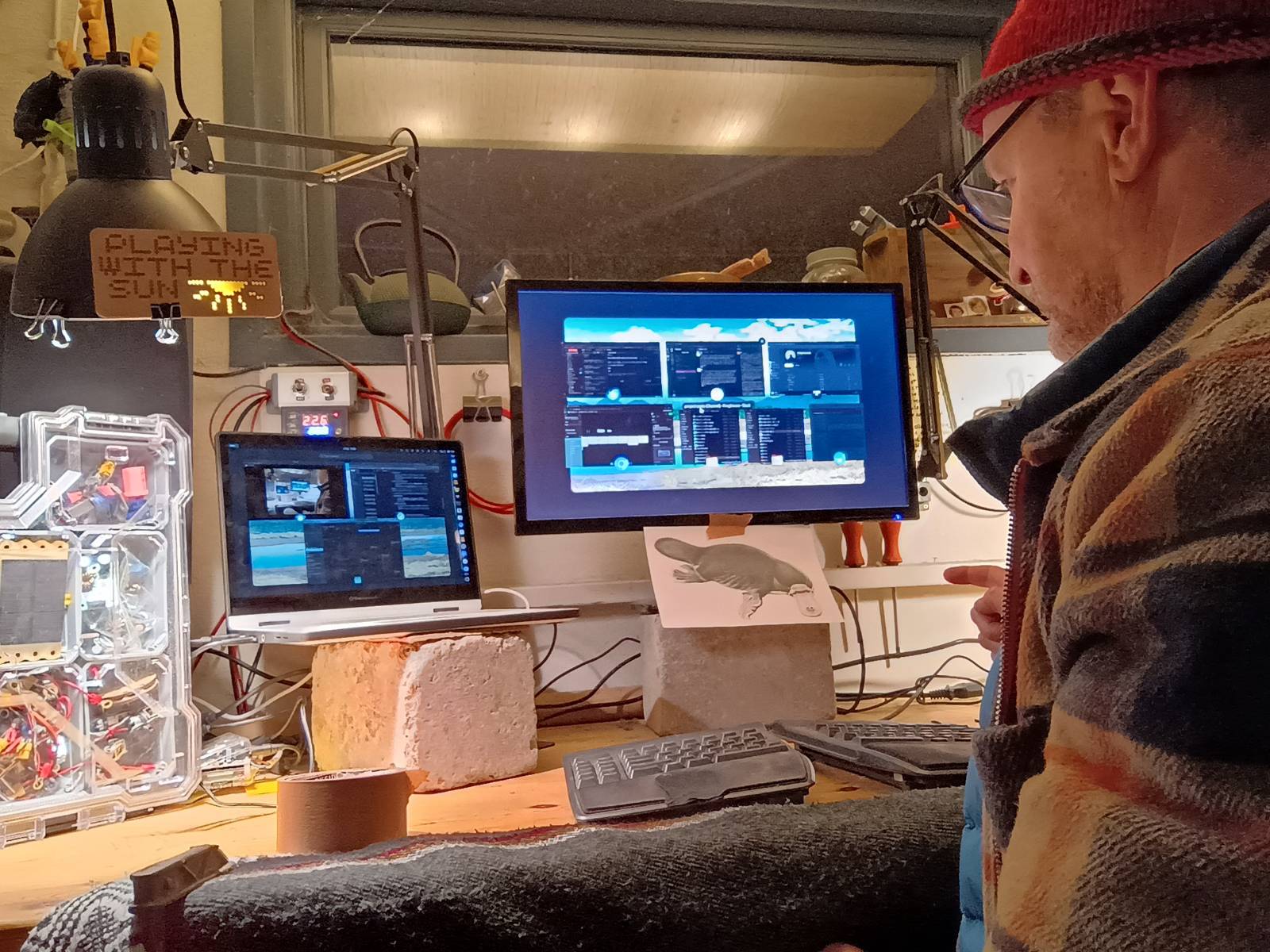
Amos is working with Ben and other friends on activities and materials that invite people to imagine sustainable futures through play. Through Playing with the Sun, children and their parents are invited to be creative with solar panels, generators, motors and other “toy” versions of green technologies. The idea is that by playing with these technologies, they’ll be better able to understand, build, and improvise with them.
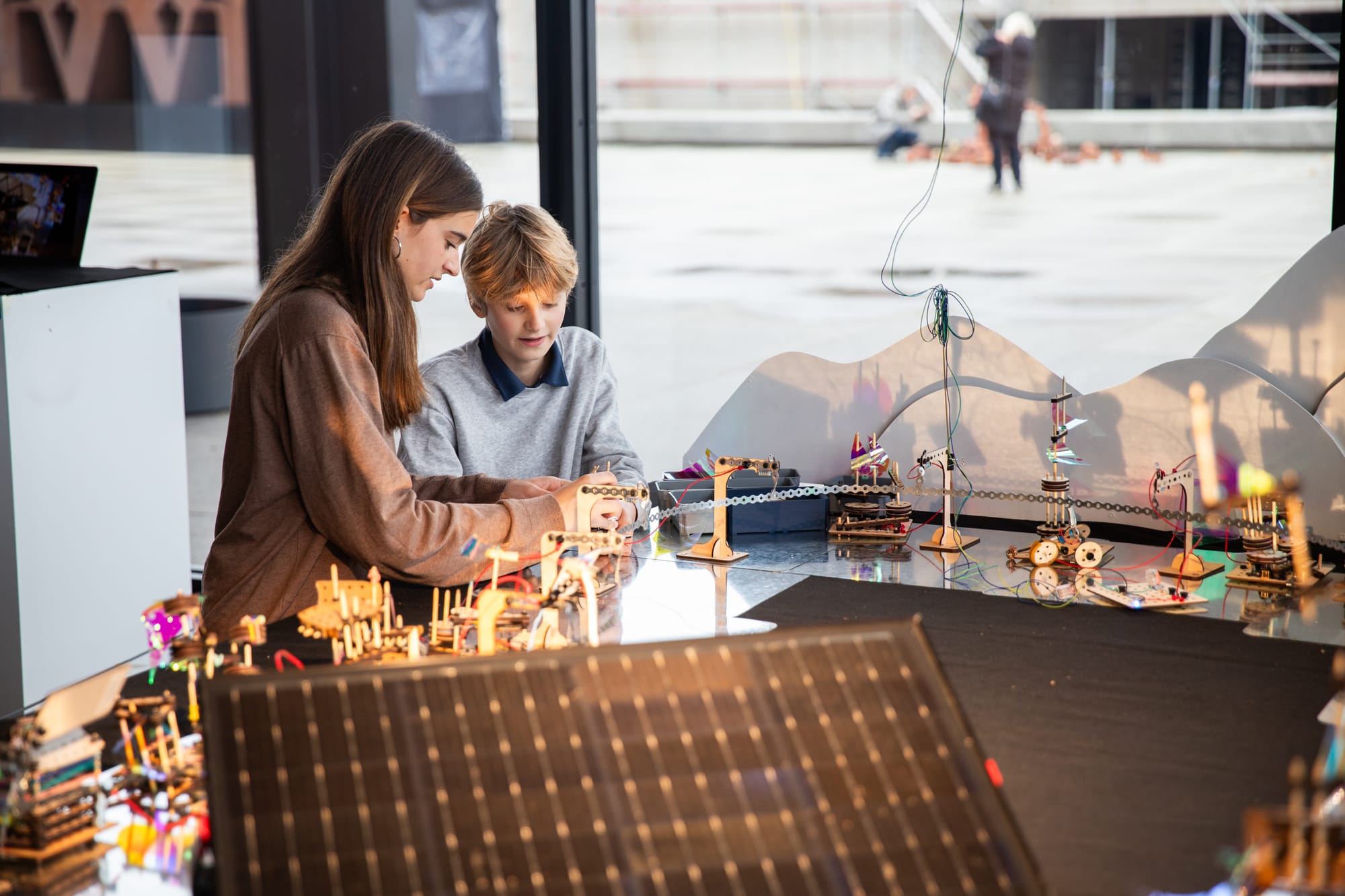
Sometimes that’s as simple as inviting people to create a solar powered mobile together. Other times we invite them to imagine and build something they wish to see in a sustainable future. When they’re finished, we make a video of their creation and ask them to describe what they made and how it represents their wish for the future. The aim is to make this a collectively creative social experience where people can share ideas and dream of a better future together.
“A playground for everyone, not just children but grownups, and especially elderly people.”
Lessons from the platypus
Beyond making us smile, here is what we take from platypuses:
- You don’t need to know exactly where you are going before you begin. You don’t need a set curriculum to cover. You can just begin, document what works and what doesn’t, and continue accordingly. We see not having a set curriculum to cover as a virtue, allowing room to improvise and show kids how to be responsive to what’s happening in their room, their communities, and in their world.
- Adapt to specific contexts. The platypus works in a particular ecology. Your teaching should be adapted for the children and community you work with. This means what you try should not be random, but rather attuned to the constraints of your context; the resources, strengths, and values of your community.
- Borrow from other species. Here, if we were using the platypus in strict biological terms, our metaphor would break down. So although we are being fanciful, it does seem that the platypus has taken ideas from ducks, beavers and otters. Like the platypus, you don’t have to invent everything yourself from scratch. Look around and get inspiration from artists, scientists and other educators. We both certainly do, learning from the likes of educators in Reggio Emilia and the LifeLong Kindergarten Group, and being inspired by the likes of Brian Eno and Olafur Eliasson.
More than one way to relate to the platypus
15 years ago Ben had the pleasure of participating in a research project with Kim Ripley, Kate Nicolaou, Casie Smith, and Michelle Sullivan at the Hampshire College Early Learning Center. Based on documentation from their infant and toddler classrooms, we fashioned a concept called “The Slow Curriculum Movement” that argued that the organization of classrooms, especially around time, should be dictated by the needs of the children. That curriculum should not be seen as linear but rather as cyclical, with learning involving revisiting and twists and turns.
We gave a presentation at the National Association for the Education of Young Children’s Annual conference. The response was positive, though educators’ takeaways varied. Some were all in, committing themselves to adopting more flexible schedules. Others, facing constraints, identified times where they could slow down to the learning pace of their students. One first grade teacher made a sign that read, “Slow Curriculum Movement” to tape by her desk. It would serve as a reminder that, despite her administrators calls to implement curriculum with fidelity and rigor, she was working with 6 and 7 year old children who were often losing their first teeth and learning to tie their shoes. Sometimes the adults in their lives just needed to slow down.
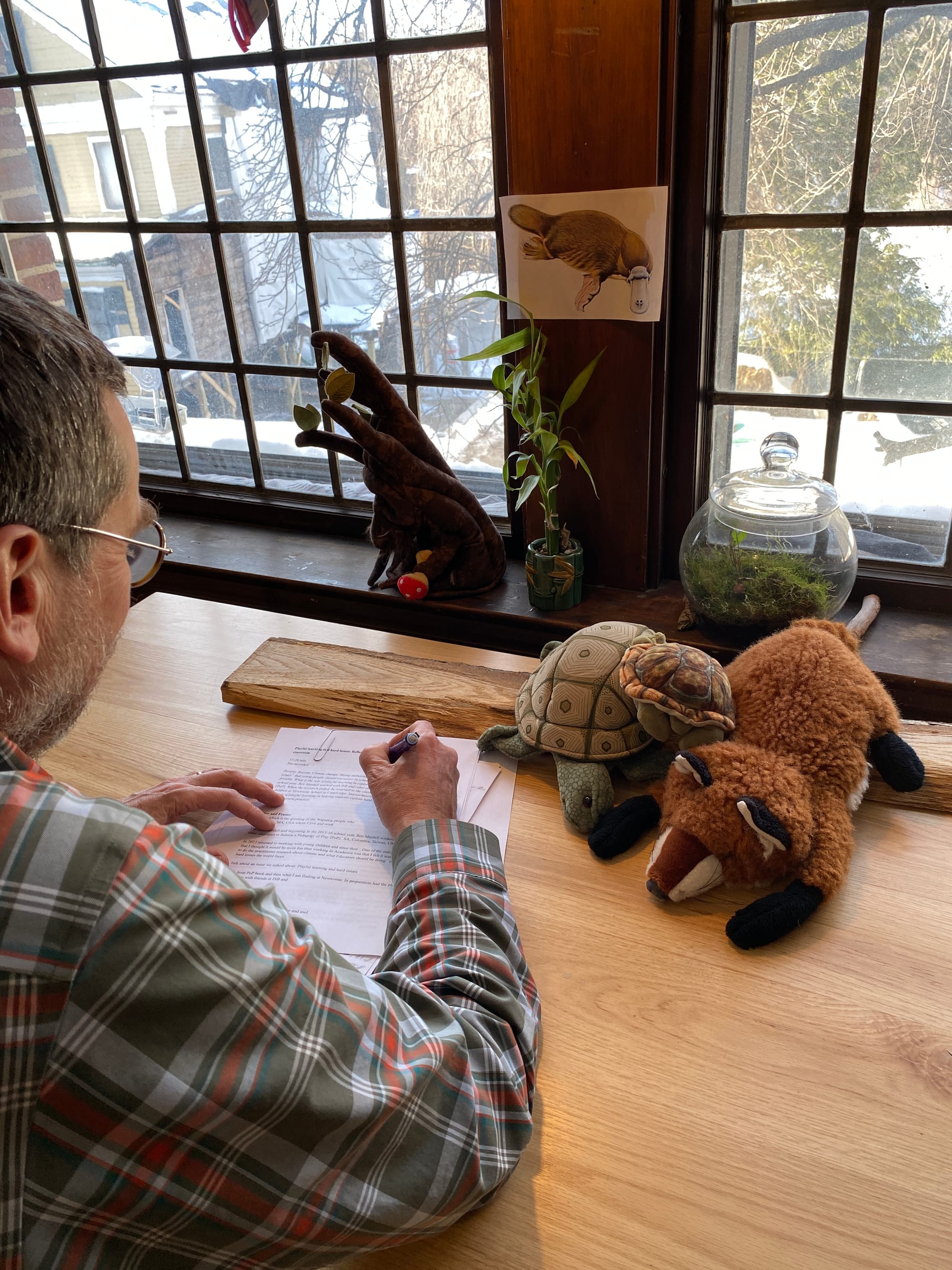
There can be a similar range of responses to how the platypus might inspire you. You can full on embrace platypusism, fashioning learning experiences adapted to the needs of your classroom, school, and community. You can take the platypus as permission (or a reminder) to borrow freely from other educators. Or you can print out a picture of a platypus and tape it near your desk as a reminder that, despite current pressures towards conformity and obedience, sometimes it is necessary to get weird and wacky.
Our thanks to Sam Mardell, Robbie Berg, Mara Krechevesky, Amy Rothschild, Caitlin Malloy, and Liz Merrill for their feedback on previous drafts.