“Be scared, not dead”: Children’s thoughts on taking care of friends, scary stories, and the news
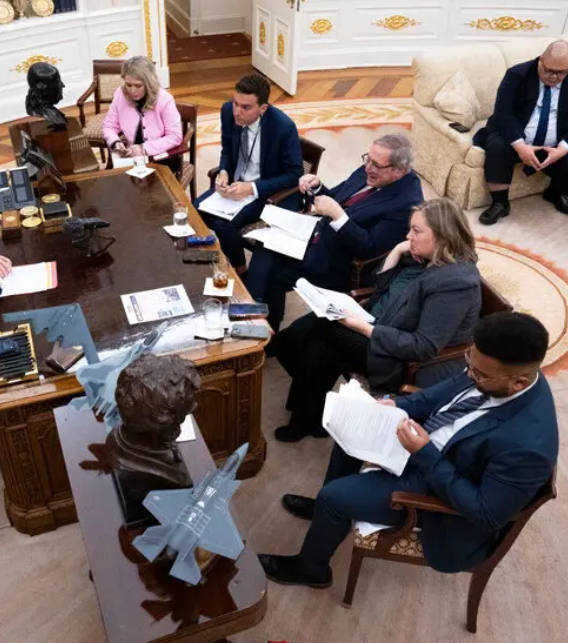
In January my former student Zolan Kanno-Youngs was in the news. Along with three of his New York Times colleagues he was part of a conversation in the Oval Office. There was a lot of talking. Some disturbing things were said.
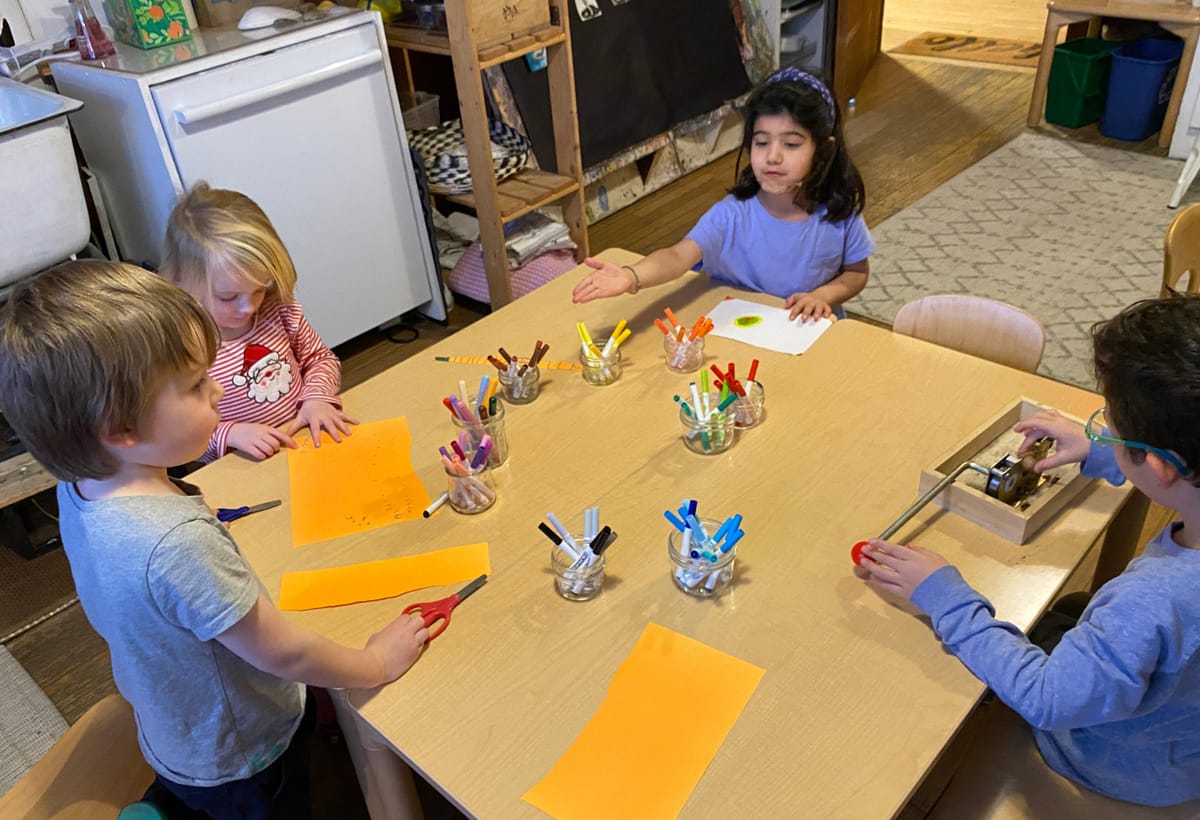
A few days later I was part of a conversation in the Newtowne studio with two other former students, Anika and Caleb (now six), along with three current students, Benjamin, Louise, and Theo (four). I did a lot of listening. Some insightful things were said.
I listened because, as Carlina Rinaldi explained, that while a conversation with young children, “Requires efforts, energies, hard work and sometimes suffering, it also offers wonder, amazement, joy, enthusiasm and passion.” I have found that listening to children as they reason out complex issues can provide insights into important issues.
In this essay, I share the children's ideas from the Studio conversation, and the insights they offer into taking care of friends, what to do when stories scare peers, and whether or not adults should listen to the news.
The genesis of the conversation
In a previous essay, Creativity is not enough: Further reflections on the Leaf People, I told of a controversy that emerged last year among the Green Dragonfly students (Anika and Caleb among them) about a book they had written, The Sharks vs. The Leaf People. In the story, the Leaf People (imaginary characters who are kind and like having adventures) die. Anika was upset by this. Caleb and others maintained this was fine because the Leaf People came back to life. While I had discussions with the Dragonflies about the situation, and different solutions were proposed, the issue was never resolved. The school year came to an end and we ran out of time.
Then I realized that maybe we had not run out of time. The current Blue Otter students (including Benjamin and Lousie), who as Purple Fish students loved the Leaf People books, continued to ask for them to be read. Perhaps there was an opportunity to resolve the issue after all.
So the next time I read some Blue Otters the Shark/Leaf People book–in this case to Benjamin, Louise, and Theo–I explained the situation. They immediately wanted to write a new story that would not be upsetting to Anika. In the Leaf People Go Away, The Leaf People Come Back, the trio tell how the Sharks and Leaf People become friends, move in together, help each other don wings, and eventually become astronauts and travel to outer space.
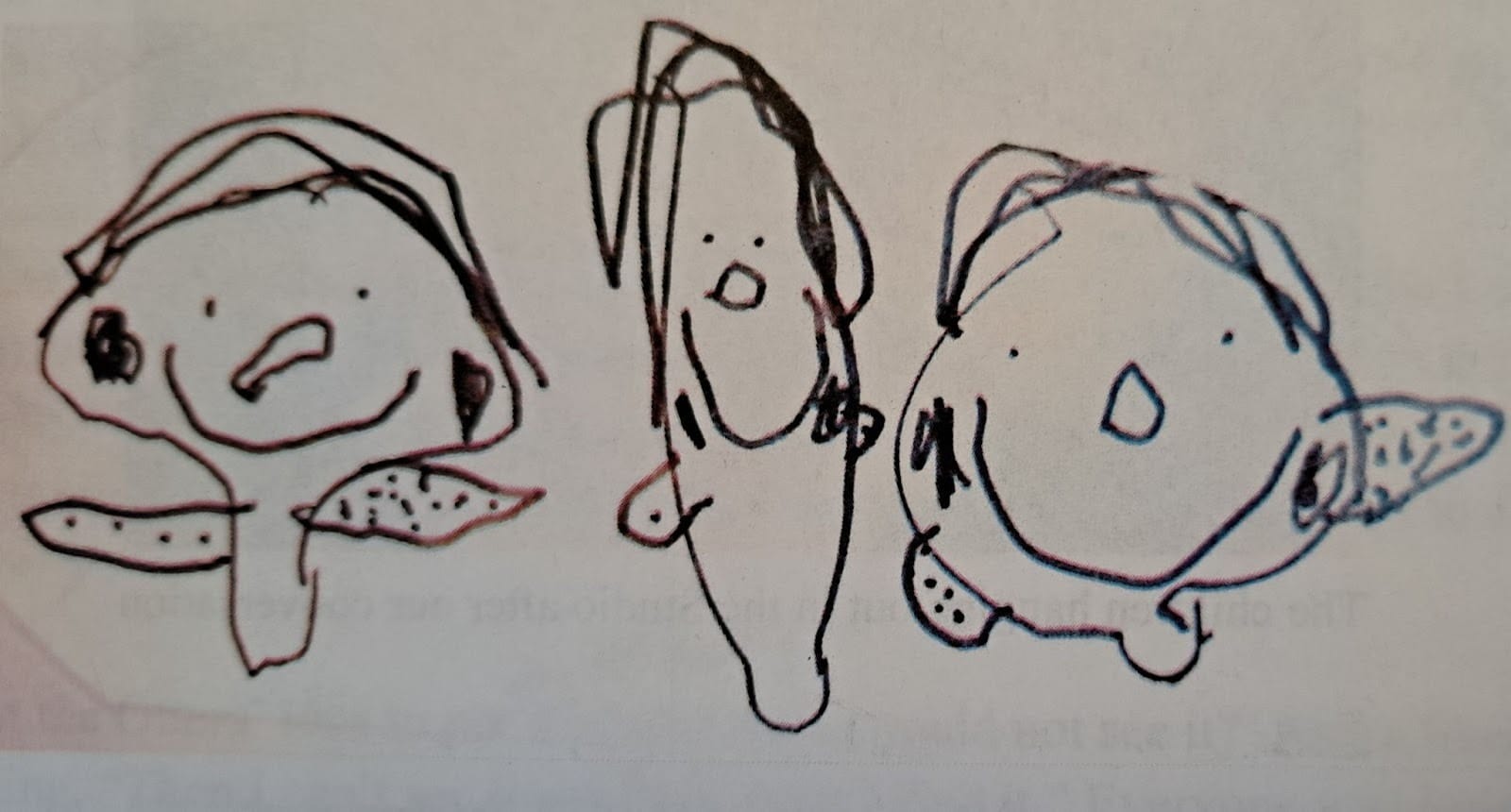
As for the original Shark/Leaf People book, Benjamin, Louise, and Theo agreed it should be put in a place where Anika would not see it.
How would Caleb and Anika feel about this new book and the proposed solution about the old one? I invited them to come back to Newtowne for a conversation. One afternoon after school, Anika and Caleb arrived in the studio with big smiles, clearly pleased to be back at their old school. I introduced the alums to Benjamin and Louise, who were able to join in person, and to Theo, who was at home at his father’s desk, joining via video chat.
Like my former student Zolan, who, along with his New York Times colleagues, carefully prepared for the Oval Office conversation, I thought extensively about the phrasing of my questions for the children and how to structure our time together. At the suggestion of my colleague Caitlin Malloy, we began with snacks so the children could get to know each other a bit. While Anika and Caleb chatted easily, the Blue Otters seemed a bit in awe of these two “big kids.” After comparisons of juice box flavors, we moved on to the conversation.
“They could just faint”: A do-over
To set up a collective effort to find an agreeable resolution to the controversy, my plan was to read the original Leaf People/Shark book, remind the children about the situation, and read the new book before asking for a solution. But Caleb had come with an idea he wanted to share. I told him I wanted to read the books first.
He was surprisingly insistent, so I invited him to share his idea. He explained that, “Instead of the Leaf People dying, they could just faint.” This was another surprise, since in the spring conversations Caleb was fine with the Leaf People dying. Anika liked the new idea and Caleb added that the Sharks and Leaf People could become friends.
I then read Benjamin, Louise, and Theo’s book where the Leaf People and Sharks do become friends. Anika and Caleb liked the new story, though Caleb feedback was, “it ended like a cliffhanger,” and suggested the Otters add more information about the Leaf People. Anika concurred. Benjamin, Louise, and Theo took the feedback in stride and agreed to do further work on their story.
What about the Otters’ idea to put the original book where Anika could not see it? Anika liked the suggestion, noting, “Then I can’t find it.” Everyone was satisfied.
I realized I was watching a lovely example of what my friend Susan MacKay calls do-overs. Explaining do-overs, Susan describes being in Caroline Wolfe’s preschool classroom at Opal School and seeing:
Kids do to each other things that you wouldn't characterize as very caring, but you would characterize as things kids do to each other. Normal early childhood behaviors like hitting each other. But instead of excommunicating them or punishing them for those behaviors, when it seemed they were calm enough, Carolyn had them just do it over. She’d ask, “What do you wish happened instead?” or say “Let's play it again and see what happens.” And inevitably things would work out. Because this was a classroom environment where we [the children and adults] had learned to trust that human beings wanted to do things that worked out well for each other because that just felt better for everyone.
Yes, this was an unusual do-over as it unfolded months after the problem occurred. But it was a do-over none the less. Caleb brought his idea forward because he wanted the situation to work out well for everyone involved. That just felt better.
A lot more could be said about the practice of do-overs and its relationship to care; it is well worth exploring what factors allow such an approach to flourish. For now, I will note that having been part of a culture where do-overs were the norm, Susan believes the impulse to want things to work out for everyone is part of human nature. Building such cultures should be a goal of all educators.
“They could cover their ears”: Customs about stories
In preparing for the conversation with the alums and Otters, I realized that upsetting content in stories was an issue the Blue Otters could be potentially facing in their classroom. They had just begun Vivian Paley’s practice of story telling/story acting, where teachers scribe children’s stories, which are then acted out at whole group gatherings. In the first week the children told tales with zombies, zambonies, and one with a zombie driving a zamboni.
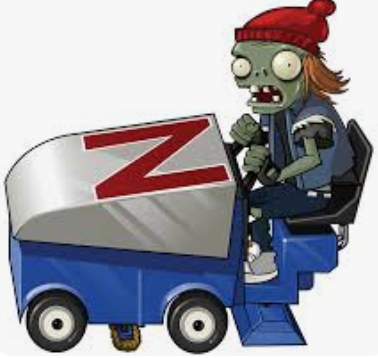
There were also stories with fire-breathing dragons, and various animals who ate one another. Scary characters and the specter of death. What should happen if, like Anika, an Otter was upset by a story?
I asked the group, who responded:
Caleb: For kids who are scared of people dying, it's not worth the risk to tell the story. You should do another one.
Louise: I agree.
Ben: Does that mean that if someone is scared, kids can’t tell the story they want?
Benjamin: They can tell the story they want.
Ben: And if it scares someone?
Louise: Give them head phones and head glasses so they won’t have to hear or see.
Theo: They could cover their ears.
Vivian Paley argued that storytelling/story acting “should confirm the notion that we will find a way to tell everyone’s story.” At the same time, she recognized that not all topics were appropriate for preschool classrooms. She explained that, just as societies do, classrooms should develop “customs” about appropriate topics and language for their stories.
Paley understood the classroom as a place of democratic practice and resisted the idea of adults imposing restrictions on stories (e.g., a zero tolerance policy on violence or guns). Rather, she believed that the children and adults should together formulate their customs. For the Blue Otters, perhaps zombies will be fine, but Leaf People dying not. Given the Studio conversation, I am confident that the children are capable of developing customs for their stories that will take care of everyone in the classroom.
“Be scared, not dead”: Do adults need to listen to the news?
Over the past year I have encountered family and friends who, when faced with scary stories in the news, are taking Theo’s advice and covering their ears. Whether the topic is climate change or rising authoritarianism, they talk of being overwhelmed by current events and taking “news fasts.” I am simultaneously sympathetic and critical. I am committed to staying informed and appreciate the sense of despair paying attention can engender. I wondered if the children might offer insights here, so I asked them about adults listening to the news (an adjacent question to scary stories for peers). The following unfolded:
Ben: There are some sad and hard things in the news that grown-ups listen to. I have a friend who doesn't want to listen to the news because it makes her sad. I think it's important to listen so you know what's happening to people because if you don't know what's happening you can't help people. What do you think?
Anika: You should listen to the news because people will die and no one will help them and there will be only less people on earth.
Caleb: One time my grandmother said there were two accidents. One there was this guy who was jogging and a car smacked into him. And another one, there was a teenager speeding and the teenager crashed and died.
Benjamin: One time my family had a car accident.
Ben: Should we tell people about the accident if it scares them?
Benjamin: We shouldn't tell them.
Anika: If it is an emergency, you should put it on the news. Things that are okay you don’t have to put on the news. Things that are bad, you should put on the news. Then everyone can help that person. I want everyone to know about things that are bad. Things that are okay, people can know, but they don't have to.
Louise: I disagree. I think it will scare them.
There was a short pause and then Anika spoke up again. Her response to the idea that adults do not have to listen to scary news took me aback in its bluntness.
Anika: I want to be scared, not dead.
Ben: Louise says people don't have to listen to the news if it's too scary. Anika is saying you should listen to the news because you won't know what's happening and then you can't help people.
Anika: That's not all I was saying. I was also saying if people don't know, there will be less and less people because if someone else gets hurt, if it's an emergency, and then two people are hurt and then no one knows anything about those two people it gets more and more dangerous.
Ben: So you need to know things that are dangerous and if you don't listen to the news then you don't know about that stuff?
Anika: Right.
Benjamin: I agree.
It was getting late in the afternoon and time for our conversation to end. To conclude, I asked the children if they had anything more they wanted to say about the Leaf People and Sharks, scary stories, or listening to the news.
Caleb: This might never happen, but if Trump starts a war here you have to know.
Theo: I'm thinking. [10 second pause] My brother (who is 3) doesn't like the news.
Louise: If it is important, just tell the grown ups.
Anika: I still want to say something about the news. I want everyone to know what’s happening. If there is a danger. You should take care of yourself. Make your own choice. If you want to die or stay alive. If you don’t listen to the news there will be less and less people and you might get hurt.
My Grandmother, Young Children, and the News
The conversation in the studio, especially the part about the news, got me thinking about my grandmother. One of my favorite teenage memories is having dinner at my Bubby Clara’s house. I loved eating and she loved feeding me. Everyone was satisfied.
But there was one aspect of the visits that, as a teenager, puzzled me. My grandmother was insistent on watching the nightly news. What puzzled me was how unhappy watching made her. Hearing of hurricanes, earthquakes, famines, and wars she would moan and exclaim in Yiddish “Vos a umglik (what a disaster) " and “di kinder (the children).” She would feel the pain of the people involved. I would ask her, “Bubby, why are you watching if it makes you so upset?” She would reply, “We have to.”
My Grandmother and I had very different childhoods. I grew up in a bubble of safety in suburban Chicago. While terrible things were happening in the 1970s, they rarely intruded directly into my life. I could choose to ignore the news, having the luxury of not having to be scared. Bubby Clara grew up in Ukraine at the of the Czarist Empire. Pogroms, organized acts of violence against Jews, were common. One Friday afternoon Bubby’s two younger siblings were tasked to take some challah, the ritual bread for the sabbath, to the synagogue. When they arrived, they found the rabbi murdered. Bubby and her family did not have the luxury not to be scared.
My luxury, and those of similar privileged backgrounds, is eroding. We need to pay attention. That said, there is more than one way to pay attention, and there are self-described news outlets that are about profit and propaganda. Stay away from those. And I agree with my grandmother and Anika that, despite the risk of being scared, we have to listen to the news.
What this means for young children is another question. At what age and to what degree of detail should news of climate change, racism, and war be shared with children is a question everyone who cares for children and young people must confront. These conversations made clear that children value being informed and are ready to engage in hard conversations. Our job is to figure out how.
In her Remake essay From Abundance to Enough, Amy Rothschild describes her struggles in deciding how to discuss water usage with her young son during a drought in our city of Cambridge, Massachusetts (USA). At the time her son was the age of the Green Dragonflies and Amy explains that being part of a well-resourced home in a well-resourced community, “means that scarcity, war, climate catastrophe remain abstractions, for the most part. My spouse and I get to make conscious choices about how much of the world’s suffering and problems to bring into view.” She notes that her and her son’s decision to save water by taking a shower rather than a bath is inconsequential when compared to local universities' decisions to continue watering their grass. She recalls how, as a schoolkid, a local power company taught her class the gospel of individual responsibility—implying that the students’ personal choices mattered more for the environment than the company’s own actions, even as it dragged its feet on transitioning to sustainable energy. The news can be spun in nefarious ways.
At Newtowne, we have also had the privilege of making choices about how much of the world’s problems to share with our children. My approach to climate change has been to focus on building children’s solidarity with the rest of nature rather than sharing information about global warming. While my colleagues and I have had many conversations about how to keep members of our community safe from ICE, we have not shared that information with the children.
Yet from Portland, Maine to Portland, Oregon, Federal agents are stopping families on the way to school and even arresting five-year-olds.
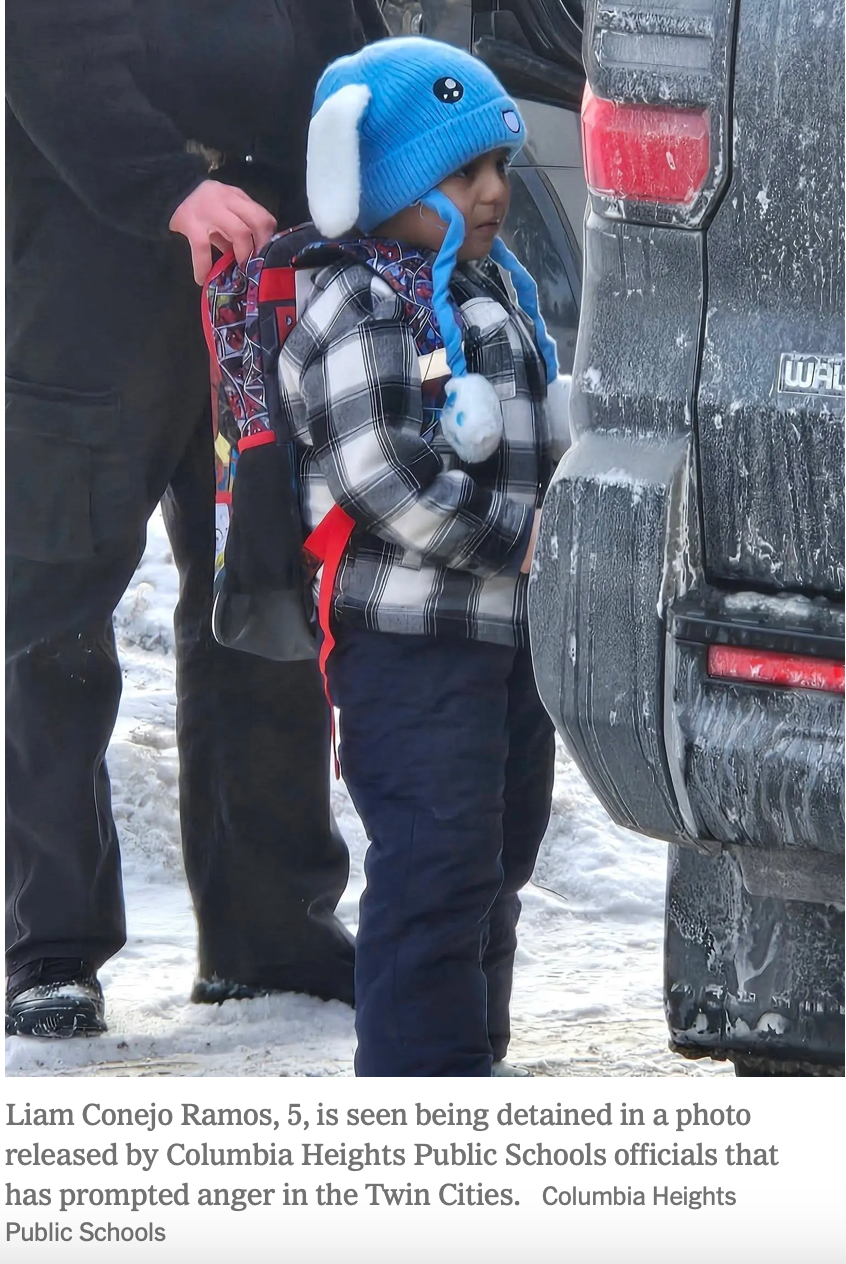
Climate change is increasingly impacting our children’s lives. When and how to share the news with my students, and then how to help them make sense of this news, is very much on my mind.
Thanks to Caitlin Malloy helping me prepare for the studio conversation. And to Caitlin, Liz Merrill, Amos Blanton for their comments on previous versions of this essay.